Growth of Firms and Mergers (Edexcel A-Level Economics A): Revision Notes
📚Revision Notes
Growth of Firms and Mergers
Let's look at how and why firms grow, the different methods of expansion available to businesses, and the implications of growth strategies for various stakeholders.
Understanding firms and their sectors
A firm is an organisation that combines various factors of production to create goods or services. Firms exist in different sectors and operate in many different ways.
Private and public sector firms
Most businesses operate in the private sector, meaning they are owned by private individuals or shareholders rather than the government. These firms typically aim to generate profits for their owners. Companies can range from small sole proprietorships, like a local corner shop, to massive transnational corporations such as Google.
The public sector consists of organisations owned and operated by the state. This includes central and local government bodies like the National Health Service, as well as some enterprises that have been taken into public ownership, such as Network Rail Ltd.
Some organisations operate as not-for-profit organisations, including charities. These entities make decisions based on different criteria than profit-maximising firms. They aim to cover their costs while pursuing social objectives, such as helping people or providing public services efficiently.
Note
It's important to recognise that traditional economic theory assumes private sector firms seek to maximise profits. Whilst this provides a useful working assumption for analysis, not all private firms necessarily operate this way in practice. Some may prioritise other objectives, such as market share growth or social responsibility.
Scale of operations
A crucial decision facing all firms concerns the scale at which they operate. This decision depends on several factors, including the nature of the market being served, the technology available in the sector, and the cost structure the firm faces.
Some firms need to expand significantly to compete with large-scale competitors in global markets. There are many reasons why businesses might wish to grow their operations, which we'll explore in detail.
In many sectors, you'll find both large and small firms operating successfully. For example, local gymnasiums are typically small enterprises, but there are also major players in the sports market, such as Chelsea FC or Sky. Similarly, whilst many taxi firms remain small and local, large companies like British Airways also operate in the transport sector.
The most efficient organisational form for a firm depends on the nature of its activities and its scale of operation. To operate successfully, firms must minimise the transaction costs associated with doing business.
Note
Some businesses may deliberately choose not to expand into large organisations. This could be because:
- Expansion would only be profitable through substantial cost increases, such as expanding premises
- Small firms may face greater bureaucratic or administrative burdens if they were to grow
- The owner might be content to continue running their enterprise at a manageable scale, avoiding the stress of expansion
- Staying small can provide flexibility in responding to customers and maintaining the quality of output or service provided
The principal-agent problem
One significant challenge for larger firms, particularly public limited companies, is that owners may not be directly involved in running the business. This situation gives rise to the principal-agent problem (or agency problem).
In a public limited company, shareholders (the principals) delegate day-to-day operational decisions to managers (the agents) who act on their behalf. The degree of accountability that managers have to owners may be limited, especially when shareholders are a disparate group of individuals.
When agents fully align with the objectives of the owners, there is no problem, and managers will make exactly the decisions that owners would prefer. However, problems arise when there is conflict between the aims of the owners and those of the managers. Shareholders (the owners) typically want the firm to maximise its profits, but managers may have different motivations.
Important
Common Manifestations of the Principal-Agent Problem:
One simple explanation for this problem is that managers prefer a comfortable life and therefore don't push to make as much profit as possible. They do just enough to keep shareholders satisfied. Herbert Simon referred to this as "satisficing" behaviour, where managers aim to produce satisfactory profits rather than maximum profits.
Another possibility is that managers become negligent because they aren't fully accountable. One manifestation of this may be organisational slack in the organisation: costs won't be minimised, as the firm isn't operating as efficiently as it could.
The principal-agent problem arises primarily from asymmetric information. This occurs because the agents possess better information about the effects of their decisions than the owners (the principals), who aren't involved in the day-to-day running of the business. To overcome this, owners need to improve their monitoring of managers' actions, or provide managers with incentives to make decisions that align with the owners' objectives. For example, offering bonuses related to profit would make managers more likely to try to maximise profits.
The growth of firms
A notable feature of the economic environment in recent years has been the increasing size of firms. Some companies, such as Facebook, Walmart and Google, have become giants. Why is this happening?
Firms may wish to increase their size to gain market power within the industry in which they operate. A firm that can gain market share, and perhaps become dominant in the market, may be able to exercise some control over the price of its product, thereby influencing the market.
Organic growth
Organic growth occurs when a firm grows internally by reinvesting profits or borrowing from banks. Some firms grow simply by being successful. A well-executed marketing campaign may increase a firm's market share and provide it with a flow of profits that can be reinvested to expand the firm even further. Some firms may choose to borrow to finance their growth, for example by taking out loans from a bank.
Such organic growth may encounter limits. A firm may find that its product market is saturated, meaning it can only grow further at the expense of other firms in the market. If its competitors can maintain their own market shares, the firm may need to diversify its production activities by finding new markets for its existing product, or perhaps by offering new products.
Example
Examples of Growth Through Diversification:
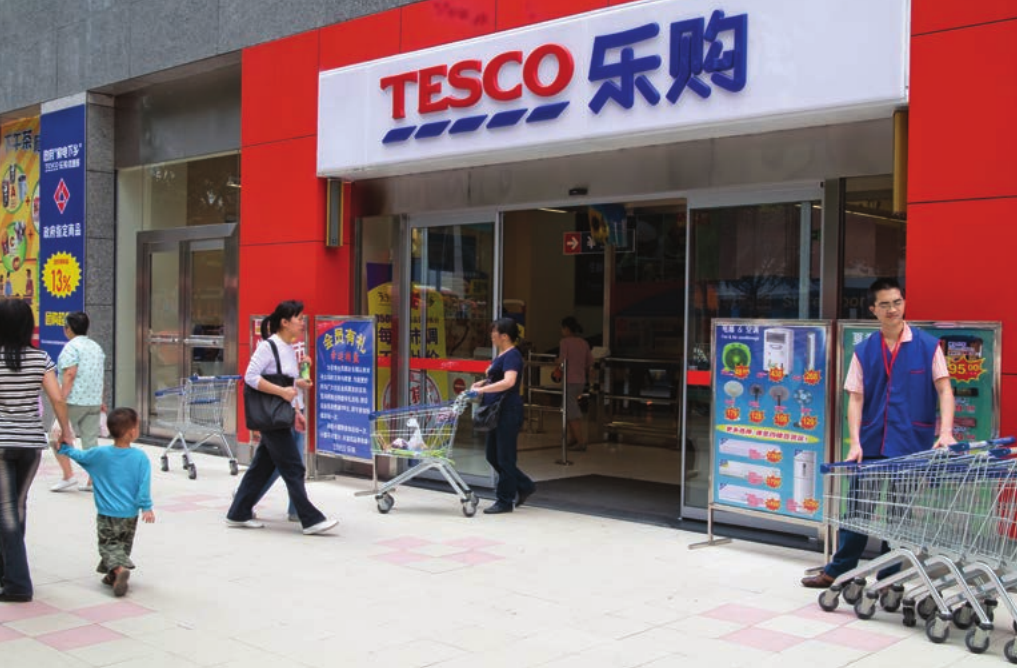
Tesco - A leading UK supermarket, launched itself into new markets by opening branches overseas. It has also introduced a range of new products, including financial services, to its existing customers.
Microsoft - Famously used this strategy in the past, by selling first its internet browser and later its media player as part of its Windows operating system, in an attempt to persuade existing customers to buy its new products. This aggressive approach attracted the attention of regulatory authorities in the USA and Europe.
Important
Risks of Diversification:
Diversification may be a dangerous strategy: moving into a market in which the firm is inexperienced and where existing rival firms already know the business may pose quite a challenge. In such circumstances, much may depend on the quality of the management team. However, diversification may reduce risk if the firm's products don't follow the same cycle of activity through time.
Mergers and acquisitions
Instead of growing organically (based on the firm's own resources), many firms choose to grow by merging with, or acquiring, other firms. The distinction here is that an acquisition (or takeover) may be hostile, whereas a merger may be the coming together of equals, with each firm committed to forming a single entity.
Growth in this way has a number of advantages. For example, it may allow a business to reorganise its structure to become more cost-effective, perhaps by consolidating its accounting function within a single unit to avoid duplication. On the other hand, firms tend to develop their own culture, or way of doing things, and some mergers have foundered because of an incompatibility of corporate cultures.
Mergers and acquisitions seem at first glance to be an attractive option for a firm wishing to expand. Organic growth may offer a controlled environment for growth, as it builds on the known existing strengths of the growing firm. However, it may be a slow process, as the rate of growth may be constrained by the availability of finance, whereas a merger offers instant expansion of market share and of the expertise available within the merged firm. It also seems to offer the potential for cost savings through rationalisation of key functions within the internal organisation of a firm.
Types of mergers
Mergers (or acquisitions) can be of three different types.
Horizontal mergers
A horizontal merger is a merger between firms operating in the same industry and at the same stage of the production process. For example, the merger of two car assembly firms. The car industry has been characterised by such mergers in the past, including the takeover of Rover by BMW in 1994 and the merger of Daimler-Benz with Chrysler in 1998. A more recent example was the integration of Facebook, WhatsApp, Instagram and Messenger. The result of such a merger is known as horizontal integration.
A horizontal merger can affect the degree of market concentration, because after the merger takes place there are fewer independent firms operating in the market. This may increase the market power held by the new firm.
Note
Advantages and Disadvantages of Horizontal Mergers:
In the case of a horizontal merger, the advantages may be seen as providing:
- Instant access to increased economies of scale
- An increase in market share, perhaps leading to increased market power
In practice, this may also be a disadvantage, because such gains in market share may attract the attention of the regulator, as will be discussed in Chapter 23.
Vertical mergers
A car assembly plant merging with a tyre producer is an example of the second type of merger: a vertical merger. Vertical mergers may be either upstream or downstream. If a car company merges with a component supplier, that is known as backward integration, as it involves merging with a firm that is involved in an earlier part of the production process. Forward integration entails merging in the other direction, as for example if the car assembly plant decided to merge with a large distributor. An example of backward integration is when Hotel Chocolat acquired its own cocoa plantation in St Lucia.
Vertical integration may allow rationalisation of the process of production. Car producers often work on a just-in-time basis, ordering components for the production line only as they are required. This creates a potential vulnerability, because if the supply of components fails then production has to stop. If a firm's component supplier is part of the firm rather than an independent operator, this may improve the reliability of, and confidence in, the just-in-time process, and in consequence may make life more difficult for rival firms. However, vertical mergers have different implications for concentration and market power.
A vertical merger, whether forward or backward, offers greater control over the supply chain. If the firm after the merger now has its own suppliers of components, or its own distribution chain, it is clearly less subject to interruptions in supply, and has more control over the margins at each stage of the production process. However, when interruptions to supply do occur, such as with Brexit, the coronavirus (COVID-19) pandemic and the war in Ukraine, a vertically merged firm may face serious issues.
Conglomerate mergers
The third type of merger, a conglomerate merger, involves the merging of two firms that are operating in quite different markets or industries. For example, companies like Unilever, Tata and Nestlé operate in a range of different markets, partly as a result of acquisitions. Sainsbury's acquired Argos in 2016, thus expanding its non-food business. In 2018, Nestlé announced a global coffee alliance, whereby it would pay Starbucks $7.1 billion to sell its coffee, thus extending its supply chain downwards.
One argument in favour of conglomerates is that they reduce the risks faced by firms. Many markets follow fluctuations that are in line with the business cycle but are not always fully synchronised. By operating in a number of markets that are on different cycles, the firm can even out its activity overall. However, this is not necessarily an efficient way of doing business, as the different activities undertaken may require different skills and specialisms.
Note
Benefits and Challenges of Conglomerate Mergers:
A conglomerate merger may offer advantages because:
- A diversified portfolio of production activities may leave the firm less vulnerable to recession
- Different activities may be affected to different degrees by fluctuations in the general level of economic activity
- Possibilities for cost savings exist if the merged firms can find synergies in core business functions such as financial accounting or marketing
However, there may be managerial diseconomies if the management team does not understand all aspects of the new diversified business. The merged firm is likely to consolidate functions, shedding staff and perhaps relocating some functions.
Globalisation and transnational companies
Since the 1980s, advances in the technology of transport and communications and deregulation of international markets have led to a process known as globalisation. This has had a significant effect on the growth of firms. The whole process of marketing goods and services has been revolutionised with the spread of the internet and e-commerce. Amazon is a prime example of a firm that has been built on online technology.
Transnational companies will make a number of appearances in the following chapters of the book, and their increasing role in the global economy will be evaluated. One motive for mergers and acquisitions has been defensive, that is, to try to compete with other large firms in the global market. However, there are many firms that aspire to operate as transnationals in order to have access to larger international markets, to obtain competitively priced resources or to become more efficient by outsourcing parts of their production chain.
Constraints on the growth of firms
In practice, there may be constraints on the growth of firms. The size of the market may be an important factor here. If a firm is operating in a niche market, there may be clear limits on the size to which the firm can grow. It may also be that the market for a good or service is localised, so that there may be limited scope for expansion. An example might be hairdressing salons, which tend to have a local and loyal clientele. The technology of the production process may also limit the extent to which a firm is able to grow.
Note
Why Some Firms Choose to Remain Small:
Some firms may choose to remain small-scale for various reasons:
- The owner does not feel the need to expand - a sole proprietor may prefer to stay in charge rather than handing over control to a management team
- Small businesses may find it more difficult to raise finance for expansion, and be limited by their own resources
- Having reached a certain size, firms may not wish to grow further for fear of attracting the attention of the regulator
For example, the owner of a market stall or greengrocer shop may not be able to obtain a bank loan to expand, and may not wish to do so.
Demergers
In practice, not all mergers turn out to be as successful as had been expected. In some cases, it may be that the costs of integrating the managements of two different firms are underestimated before the event. Computer or production systems may not be compatible, and it may not be as easy as expected to make staff cuts. Corporate cultures may collide, especially where the merger takes place across national borders. This may mean that the expected gains in market share or profits do not materialise.
If the expected cost savings do not seem to be reaped, or if shareholder value does not seem to be enhanced as a result of the merger or acquisition, then it could be that the firm has to admit failure and seek to reverse the process by demerging. This may simply be a case of the firm realising that the merger was a mistake, or it may be that the regulator steps in and insists that the firms demerge. For example, in 2008, the British Airports Authority was forced by the regulator to sell some of the airports that had come under its control, including Gatwick. In 2018, Whitbread announced its decision to spin off Costa Coffee. Once two firms have merged, reversing the process by separating can turn out to be costly and acrimonious.
Impact on businesses
From the perspective of the firm, a demerger may allow a renewed focus on the core business, or may simply enable the firm to remove loss-making sections of the firm. This may allow an improvement in efficiency. It may also be the case that the demerged segments of the firm face less regulation, or improved control over the production process.
Important
Challenges of Demergers:
A demerger is potentially disruptive for the firm. Where the original merger was effectively an acquisition, in which a large firm took over a smaller firm and tried to assimilate it, there may be little possibility of the smaller firm recovering the position it held before the merger. The surviving demerged parts of the firm may find costs increase because of the need to duplicate functions such as finance or recruitment that were previously performed in the merged firm.
Impact on workers
From the workers' point of view, those who remain with the firm after the demerger may have enhanced job security or enhanced opportunities for promotion in the demerged company. However, there is likely to be a negative impact on workers who are displaced or discharged.
Impact on consumers
A demerger may be confusing for the consumers, although a more focused company may be better able to provide the products that they wish to buy and may be able to pass cost savings on to their customers. However, in the short run, supply could be interrupted, or prices may rise until efficiency gains set in.
Case study: Acquiring Homebase
Example
Case Study: The Homebase Acquisition
Homebase is a British home improvement retailer and garden centre, founded in 1979 as Sainsbury's Homebase. In 1995, the company tripled in size through the acquisition of Texas Homecare. Sainsbury's sold Homebase in 2000 in a £969 million deal. Homebase changed hands again in 2002, before becoming part of the Home Retail Group plc (HRG) in 2006. HRG was the parent company of Argos and Habitat.
The Situation in 2015/16:
By 2015/16, Homebase was facing difficult times. It had underperformed for a number of years, and was set to close several stores. HRG was interested in acquiring HRG to gain control of Argos, but did not want to reacquire Homebase.
Wesfarmers' Entry:
Wesfarmers is an Australian conglomerate, one of its companies being Bunnings, the number one garden centre chain in Australia. Bunnings was keen to gain a foothold in the UK market, which was seen to have a large number of old houses, high home ownership and keen gardeners. Homebase looked to be a good match. Wesfarmers bought Homebase for £340 million in February 2016, claiming to have saved hundreds of workers from redundancy.
The Strategy:
One of the first steps taken by Bunnings was to axe the entire Homebase senior management team and about 160 middle managers, replacing them with an Australian leadership team, assuming that the UK market would welcome the Bunnings warehouse style of retailing. The Australian DIY chain had been famous for low prices of sausage sizzles. The firm also ditched its previously popular kitchen and bathroom ranges, and ousted concessions such as Laura Ashley, Habitat and Argos.
The Results:
Sainsbury's subsequently acquired Argos through its takeover of HRG. Homebase under the Bunnings management made a pre-tax loss of £28 million in the 6 months to the end of 2016, followed by a loss of £54 million in the first 6 months of 2017 and an expected £97 million loss in the second half of 2017. Competition from Screwfix and other incumbent firms may have contributed to the situation.
Remember!
Summary
Key Points to Remember:
- Firms can grow organically through reinvesting profits or borrowing, or externally through mergers and acquisitions
- The three main types of mergers are:
- Horizontal (same industry, same stage)
- Vertical (same industry, different stages)
- Conglomerate (different industries)
- Vertical integration can be backward (towards suppliers) or forward (towards distributors), offering greater control over the supply chain
- The principal-agent problem arises when managers' objectives differ from those of shareholders, potentially leading to satisficing behaviour rather than profit maximisation
- Globalisation and technological advances have enabled the growth of transnational companies operating across multiple countries, though constraints such as market size, finance availability, and regulatory concerns may limit firm expansion