Case Study → 2011 Tohoku earthquake and tsunami (Edexcel A-Level Geography): Revision Notes
📚Revision Notes
Case Study → 2011 Tohoku earthquake and tsunami
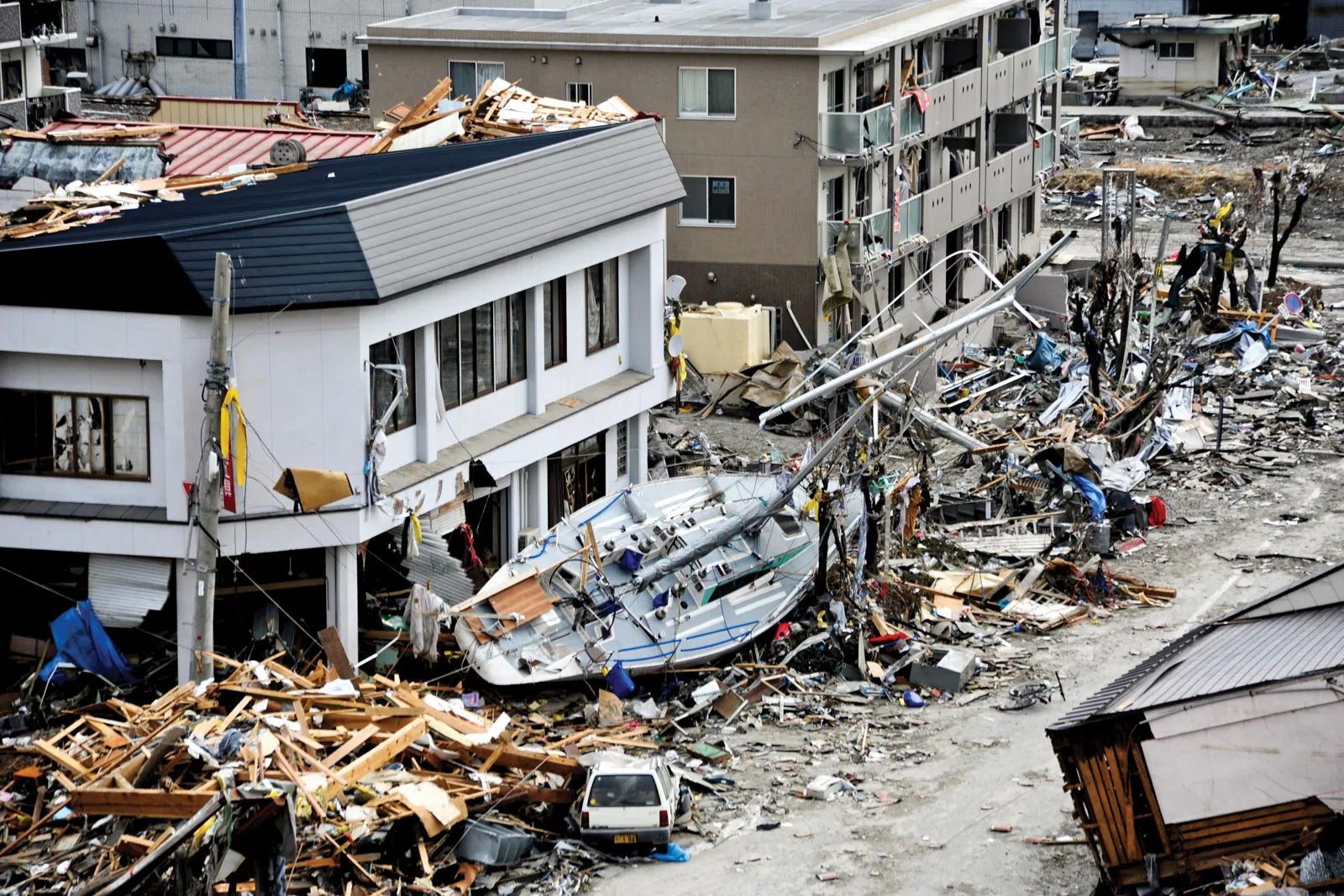
-
2011 Tohoku earthquake*
| Aspect | Details |
|---|---|
| Context | • Magnitude 9.0 earthquake • Category VI (highest) on the Tsunami Intensity Scale • March 2011 • Epicentre was approx. 70 km east of the Oshika Peninsula of Tohoku • Focus at an underwater depth of approx. 32 km • Japan located at the point of 3 tectonic plates (Eurasian, Pacific, and Philippine plates) • Largest earthquake ever recorded in Japan • Had a significant nuclear impact • Land subsided by 1-2 metres, lowering sea walls and exacerbating the tsunami impact |
| Vulnerability | • Coastline was vulnerable as most of the population lives near the coast • The upper 10m of soil in the zone was vulnerable as waves amplified in the soil, causing liquefaction • High literacy rate: 99% |
| Capacity to Cope | • Japan has a high capacity to cope as earthquakes and tsunamis are common • 40% of Japan's coastline has sea walls up to 10m high • Japan has the Japanese Meteorological Agency, which predicts earthquakes and tsunamis • Buildings in Japan are designed to be earthquake-resistant, with advanced engineering and materials like Mediatheque lattice columns for strength in Sendai |
| Response (Short-term) | • Japanese government deployed specially trained people like the Self-Defence Forces
• International search and rescue teams from the UK and other countries assisted
• NGOs and aid agencies helped; Japanese Red Cross reported $1 billion in donations
• 100,000 Japanese soldiers were deployed for search and rescue
• Tsunami warning issued 3 minutes post-quake
• Temporary evacuation zones and shelters were opened |
| Response (Long-term) | • 6 days after the quake, a motorway was repaired
• Facilities were rebuilt over time
• A tsunami defence system was installed
• Assistance from 116 countries and 28 international organisations
• Approximately 10 tonnes of equipment were shipped out |
| Social Impacts | • Approx. 16,000 dead (approx. 60% were aged 60+, 90% died from drowning)
• Approx. 6,000 injured
• Approx. 4,000 missing
• Approx. 350,000 displaced people faced shortages of food, water, shelter, medicine, and fuel
• Fukushima power plant destroyed, leading to public distrust in nuclear energy
• 4.4 million homes lost power
• Approx. 46,000 buildings destroyed, 150,000 damaged
• 600 roads and 32 bridges destroyed
• Factories destroyed, leading to unemployment |
| Economic Impacts | • Capital costs of nuclear power station construction increased due to safety measures
• Global prices of Liquified Natural Gas increased
• Worldwide availability and affordability of LNG affected by Japan's demand
• Treatment of nuclear damage was costly
• Recovery cost estimated at $235 billion
• Tokyo stocks fell |
| Environmental Impacts | • Radioactive release from 3 cooling reactors into the sea and local fishing grounds
• 5000km² of coastal plains hit, destroying farmland and settlements
• Ruptured gas pipes led to fires
• Natural habitats and vegetation damaged
• Liquefaction covered large areas in mud
• Many animals were killed |