Theoretical Frameworks to explain Plate Movements (Edexcel A-Level Geography): Revision Notes
📚Revision Notes
Theoretical Frameworks to explain Plate Movements
There are 2 different types of crusts given below:
- Oceanic (high density, mainly basalt)
- Continental (low density, mainly granite)
Structure of the Earth:
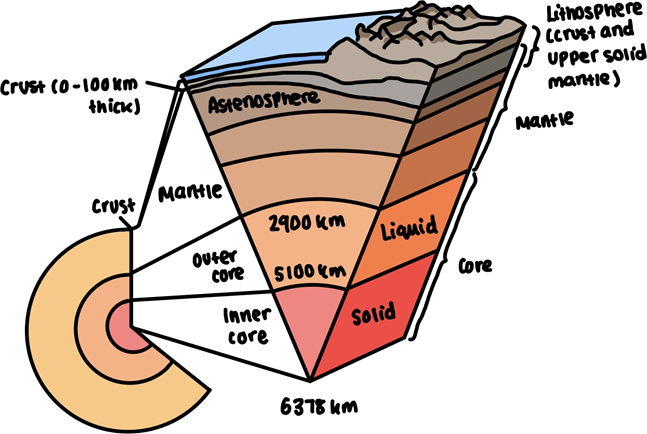
Structure of the Earth
| Temperature | Distance | Composition | |
|---|---|---|---|
| Crust | 400oC at base | 7-70km | Granite/basalt Solid Less dense |
| Mantle ↳ Has a temp gradient | 870oC | 2890km | Peridotite Mixed density layers Solid & liquid layers |
| Outer core | 4400oC to 6100oC | 5150km | 88% Iron Dense Liquid |
| Inner core | 7000oC | 80% Iron Dense Solid |
Plate Tectonic Theory:
The following evidence supports the theory:
1. Mantle Convection:
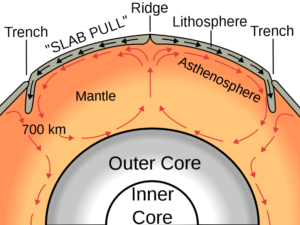
- The heat derived from the Earth's core rises within the mantle to drive the convection currents ∴ moving the tectonic plates.
- Heat radiating from the inner core through the mantle material causes it to convect as it behaves like a viscous liquid.
- The convection cells make contact with the base of the crust, causing friction, and so drag the crust along in the general direction.
2. Palaeomagnetism:
- The outer core is mostly liquid iron & it convects.
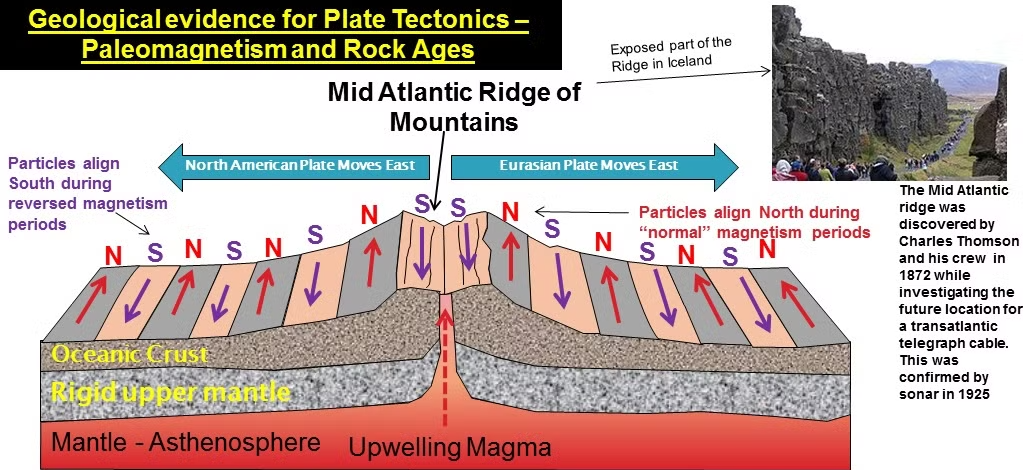
- This movement creates a magnetic field for the earth (direction changes every 100000 yrs).
- When new igneous rocks, inc lavas, cool to form solid rock, they trap in the magnetic field direction of the time.
- Geological records of magnetic directions are symmetrical either side of constructive plate boundaries, proving that the oceanic crust has been moving apart in places for a very long time.
Note
A technique called palaeomagnetism can be used to date the age of the new tectonic crust. Paleomagnetism: Changing in polarity of the Earth means the orientation of minerals in rocks changes ∴ can differentiate between two bands of rock
3. Subduction and Slab Pull:
-
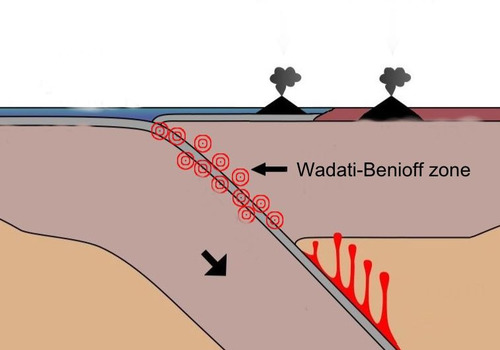
At destructive plate boundaries, the denser oceanic plate is subducted under the less dense continental plate.
-
As the slab of the oceanic plate descents, it pulls the rest of the plate with it. The Benioff zone:
-
An area of seismicity corresponding with the slap being thrust downwards in a subduction zone.
-
The different speeds and movement of rock at this point produces numerous earthquakes.
Seafloor spreading:
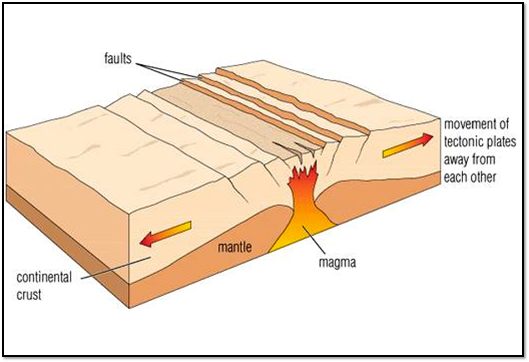
- Occurs at divergent boundaries under the oceans.
- Seafloor spreading is a continuous input of magma forming a mid-ocean ridge.