Alternatives to fossil fuels: costs and benefits (Edexcel A-Level Geography): Revision Notes
📚Revision Notes
Alternatives to fossil fuels: costs and benefits
Renewable and Recyclable Energy
Key Terms
- Recyclable Energy → Forms of waste that can be reused to produce more energy
- Photovoltaic Cells → The main method by which solar power is generated - they convert energy from the sun into an electric current
- Insolation → Incoming solar radiation
- Biofuel → Fuel derived from organic matter, such as agricultural crops, timber etc
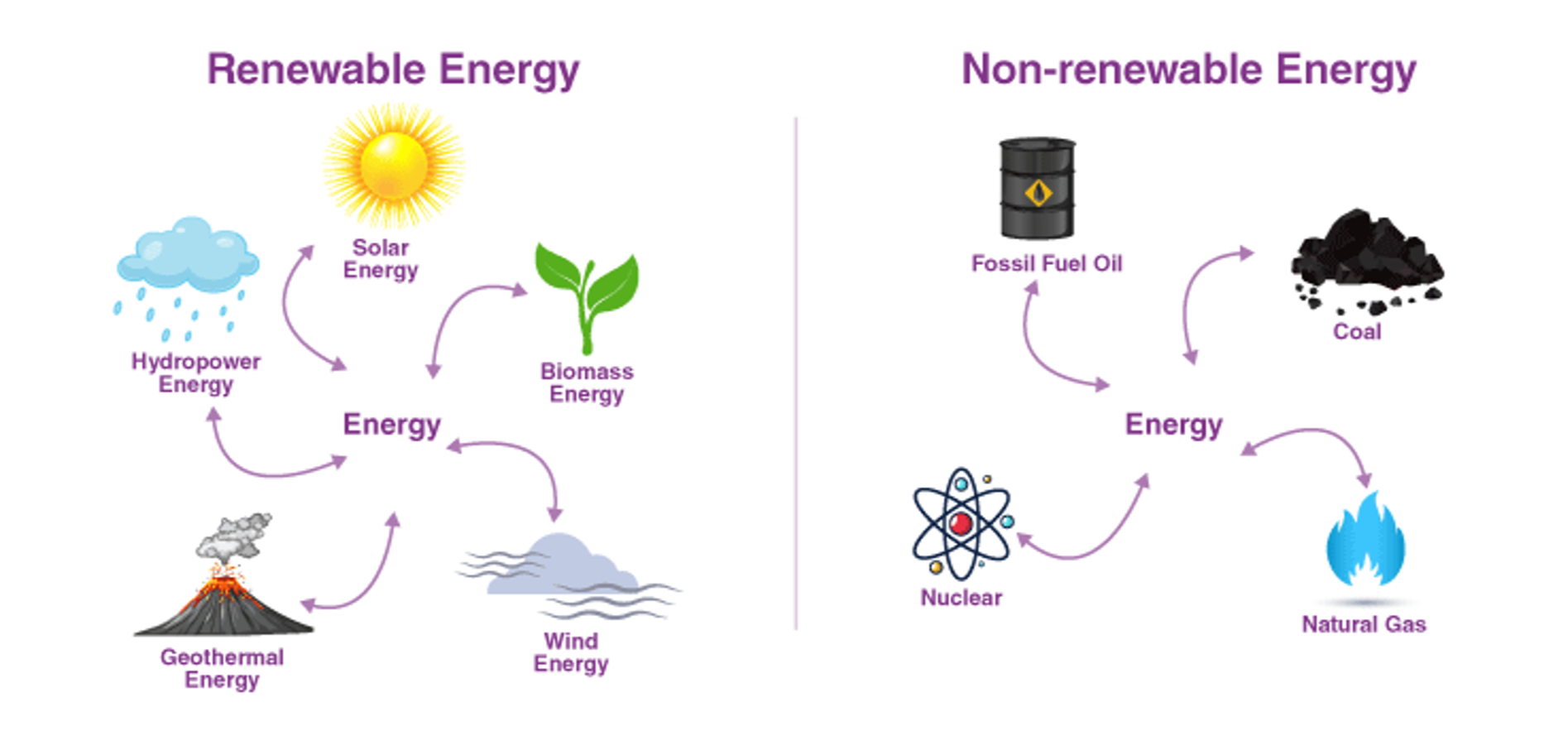
*Sources Of Energy *
Energy Sources
| Energy source | Nature | Benefits | Costs |
|---|---|---|---|
| Nuclear power | Use of radioactive energy produced by nuclear reaction Heat released by the reaction is used to produce steam, which drives turbines to generate electricity | ● Only small amount of Uranium are needed to produce a given output of heat compared w/ other forms of fuel ● There is no shortage of Uranium and operating costs are v competitive ● Produces less CO2 than fossil fuel sources (low carbon footprint) ● Very efficient ● Safety is improving | ● Expensive to construct and decommission ● Disposal of radioactive waste ● Technological demands are complex and high ● Risks related to safety (accidents) & security ● Threats of large-scale disaster eg. Chernobyl, Fukushima |
| Wind power | Using the force of wind in exposed areas and offshore Turbines often grouped together in farms | ● Many land and sea areas have potential for wind power ● The time profile is favourable, wind is strongest in the winter (favours countries w/ more variable weather) ↳ Can be used yr round ● Low running costs | ● Large areas of land and offshore are needed ● Some people regard them as unsightly, noisy & dangerous for birds |
| Solar power | Generation if electricity by the use of photovoltaic cells Often grouped in 'farms' | ● Generates large amounts of electricity where there are high levels of sun ● Costs are decreasing rapidly ● Large potential in desert areas | ● Some large population areas are distant from suitable sites ● Less effective in clouds and low angle of incidence areas ● Not very efficient yet |
| Tidal power | Incoming tides drive turbines in a similar way to hydropower | ● Has significant potential ● Reliable source of energy once installed | ● Very expensive ● Few schemes currently operating in the world ● Impact on marine life |
| Geothermal | Water is pumped beneath the ground to hot areas and the steam from the water drives turbines to produce electricity | ● Low maintenance costs ● Suitable where other technologies may not be | ● High installation cost ● Risk during earthquakes etc |
Costs and Benefits of Renewable and Recyclable Energy
Overall
- Claims that renewable energy can completely replace non-renewable Unlikely because…
- Many countries do not have renewable sources to exploit for geographic reasons (eg. no coasts, lack of strongly flowing rivers)
- Financial costs
- Often has environmental impacts
- NIMBYism - although people are pro renewables, they do not like it if construction occurs near to where they live
| | Benefits | Costs |
|---|---|---|
| Economic | ● Can be used at scales suitable for developing countries
● Low maintenance costs once running
● Cheap costs once economies of scale reached
● Reduces dependence on fossil fuels for electricity production | ● Needs investment in new technology
● Electricity costs per unit may be higher than from conventional sources
● Dependence on fossil field is only reduced if they are directly substituted | | Social | Solar and wind
● Safe and clean
● Can be used by individual houses | ● Nuclear produces radioactivity
● Solar may take up farmuland, reducing food production | | Environmental | ● No greenhouse gas emissions once operations
● No air pollution | ● Solar and wind need large areas, can spoil scenery
● Nuclear produces radioactivity | | Energy Security | ● Electricity produced can be used or transmitted by existing systems | ● Difficult to store for later use
● Solar and wind are climate dependent |
Biofuels
↳ A fuel derived immediately from living matter, such as agricultural crops, forestry or fishery products and various forms of waste. They come in both Primary and secondary forms:
- Primary biofuels → Inc fuelwood, wood chops and pellet, and other organic materials that are used in an unprocessed form, primarily for heating, cooking or electricity generation
- Secondary biofuels → Derived from the processing of biomass and inc liquid biofuels such as ethanol and biodiesel, which can be used by vehicles in industrial processes Biomass → Organic matter used as a fuel, es;cially in power stations for the generation of electricity
Issues with Biofuels
-
Large-scale cultivation could change carbon fluxes between soil, vegetation and atmosphere and reduce food production (& ↑ fuel prices) and water availability of irrigation used
-
In some countries there may be forced changes in land ownership, taking land away from small farmers and reducing incomes for disadvantaged groups
-
Deforestation may take place to make room for biofuel crops, so decreasing CO2 absorption
-
Cultivation in marginal farming areas could stress the natural environment
Radical Technologies
| Carbon Capture & Storage | ● Involves capturing the CO2 released by the combustion of fossil fuels and burying it deep underground + Suitable for fixed points + Can reduce emissions by 75% - High costs can be passed on to consumers due to the complex tech involved - Concerns that the CO2 may leak to the surface - Concerns about the pressure in rocks may cause a small earthquake |
|---|---|
| Hydrogen Fuel Cells | ● Combine hydrogen and oxygen to produce electricity, heat & water + Will produce electricity as long as H is supplies + Can be used as a source of heat & electricity for buildings and as a power source + The only by-product is water + H is available from several sources + Can be used in vehicles - It is not a primary energy source, instead a method of storing energy - A lot of energy is needed to extract the H from its sources and emits greenhouse gases |
| Electric Vehicles | + On avg there is a 70% reduction in emissions compared w/ petrol vehicles - Emissions depend on vehicle and manufacturing processes and how the electricity for the vehicles is produced |