F = ma (Edexcel A-Level Mathematics): Revision Notes
📚Revision Notes
3.2.1 F = ma
Newton's Second Law ()
Note
Statement: This law states that the acceleration of an object is proportional to the force applied to the object. If multiple forces are applied to an object, it is the resultant force we consider. Note:
- An object will only accelerate if a force is applied.
- An object at constant speed has no resultant force and will not accelerate (this constant speed could be zero).
Note
Example:
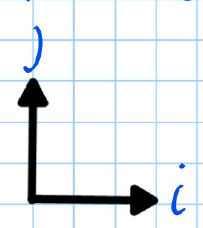
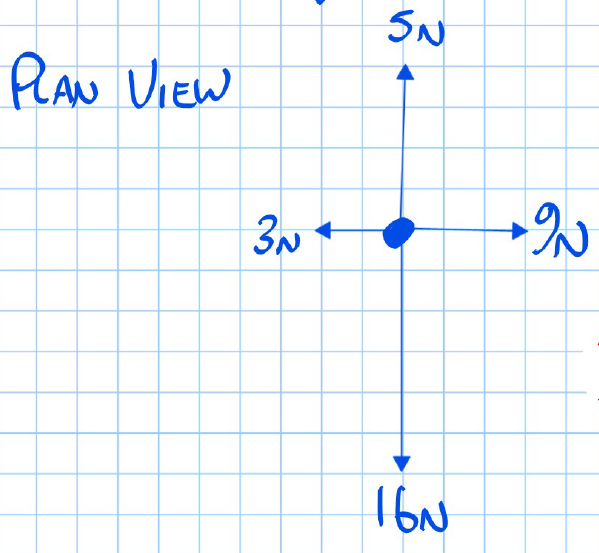
Problem: The following particle has forces applied. Find the acceleration vector, the magnitude of acceleration, and the direction of acceleration.
Given:
- Forces acting on the particle:
- to the right ( direction)
- upward ( direction)
- to the left ( direction)
- downward ( direction)
- Mass of the particle:
Solution:
Step 1: Resolve Forces in the and Directions
- In the :
- In the :
- Resultant Force :
Step 2: Use to Find Acceleration
- Given :
Step 3: Find Magnitude and Direction use previously taught methods
- Magnitude:
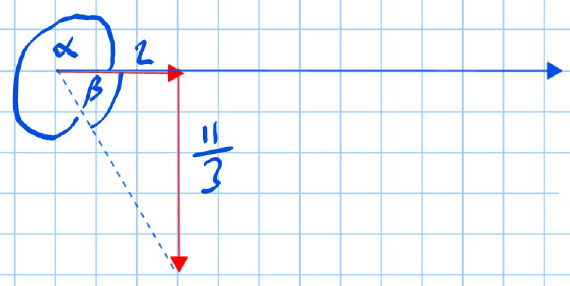
- Direction:
Problem: Particle with a Parachute
Note
Given:
- A particle with a parachute has a mass of 8 kg.
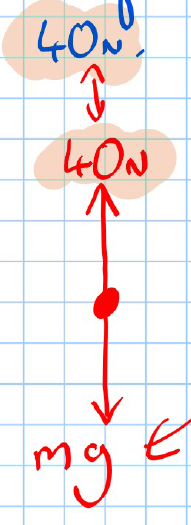
- The parachute provides a resistive force of 40 N.
- The particle is moving downwards under the influence of gravity. Question: Find the acceleration of the particle.
Solution:
- Understand the Forces:
- The weight of the particle is given by mg, where .
- The resistive force due to the parachute is acting upward.
- The force of gravity .
- Set Up the Equation of Motion:
- Since gravity is acting downwards and is greater than the resistive force, the particle will accelerate downwards.
- The resultant force is the difference between the gravitational force and the resistive force:
- Apply Newton's Second Law :
Tips:
Note
- Identify all forces: Draw a free body diagram to visualise all the forces acting on the object (e.g., tension, weight, normal force, friction). Label the forces clearly.
- Resolve forces: Break forces into horizontal and vertical components if needed. This is crucial for angled forces, where and .
- Apply ( F = ma ) in each direction: Use for horizontal forces and for vertical forces, ensuring you use the correct mass and acceleration in each direction. Solve the equations to find unknowns like force, acceleration, or mass.