Greater governmental intervention in the national economy (Edexcel A-Level Politics): Revision Notes
📚Revision Notes
21.3.2 Greater governmental intervention in the national economy
Position: Democratic Beliefs on Economic Intervention
Note
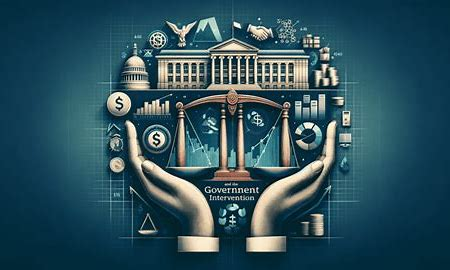
The Democratic Party advocates for a greater role of the government in the national economy. This belief is rooted in modern liberalism, which emphasises the importance of the state in ensuring economic stability, growth, and the protection of citizens' welfare. The Democrats support policies that involve the government taking an active role in regulating the economy, providing social services, and ensuring that economic growth benefits all citizens.
Modern Liberalism
- Belief: Modern liberalism within the Democratic Party holds that the government should play a significant role in the economy to ensure fairness, stability, and equality of opportunity.
Note
- Example: The party supports regulatory frameworks like the Dodd-Frank Wall Street Reform and Consumer Protection Act of 2010, which was enacted to increase oversight of the financial industry following the 2008 financial crisis. This act aimed to prevent another financial meltdown by establishing more stringent regulations on financial institutions, thereby protecting consumers and maintaining economic stability.
Positive Freedom and the Enabling State
- Belief: Democrats believe in "positive freedom," where the government acts as an enabling force to empower citizens to achieve their potential. This involves the state taking proactive steps to ensure that citizens have access to the resources and opportunities they need to succeed.
Note
- Example: The party supports the Buffett Rule, a tax proposal that suggests that millionaires should not pay a smaller share of their income in taxes than middle-class families. This reflects the Democrats' belief in a tax system that is progressive and ensures that wealthier individuals contribute a fair share to the economy, helping to fund public services and reduce income inequality.
Keynesian Economics
- Belief: The Democratic Party strongly aligns with Keynesian economic principles, which advocate for government intervention to manage economic cycles. This involves using fiscal policy (government spending and taxation) to influence the economy, particularly to achieve full employment and stimulate economic growth during downturns.
Note
- Example: The Democrats have historically supported stimulus packages during economic recessions to boost demand and create jobs. For instance, the American Recovery and Reinvestment Act of 2009, passed under President Obama, was a Keynesian-style response to the Great Recession, involving $787 billion in government spending and tax cuts to spur economic recovery.
| Policy/Approach | Explanation and Examples |
|---|---|
| Support for Progressive Taxation | Democrats generally advocate for a progressive tax system where higher-income individuals and corporations pay a larger percentage of their income in taxes. This is designed to reduce income inequality and fund government programmes. For example, President Biden proposed increasing the corporate tax rate from 21% to 28% to fund infrastructure projects and social programmes. |
| Government-Led Infrastructure Investment | Democrats support large-scale federal investments in infrastructure to stimulate economic growth and create jobs. Biden's $1.2 trillion Infrastructure Investment and Jobs Act (2021) is a recent example, focusing on rebuilding roads, bridges, and broadband expansion. This policy is seen as both an economic stimulus and a way to modernise the U.S. economy. |
| Minimum Wage Increases | Democrats often push for increasing the federal minimum wage to ensure that workers earn a livable income. President Biden and many Democrats support raising the federal minimum wage to $15 an hour. This reflects their belief that government intervention is necessary to ensure fair wages in a market economy. |
| Expansion of Social Safety Nets | The Democratic Party promotes expanding social programmes such as healthcare, unemployment benefits, and food assistance. For example, the Affordable Care Act (2010) (also known as Obamacare) was a landmark effort to increase government involvement in healthcare to provide more Americans with access to affordable health insurance. Democrats also pushed for the expansion of unemployment benefits during the COVID-19 pandemic to support those impacted by economic downturns. |
| Regulation of Corporations | Democrats advocate for increased regulation of businesses, especially in industries such as finance, healthcare, and the environment. The Dodd-Frank Act (2010) was introduced after the 2008 financial crisis to increase oversight and prevent risky financial practices. Additionally, Democrats support strong environmental regulations, as seen in Biden's push to rejoin the Paris Climate Agreement and introduce stricter emissions standards for industries. |
| Government Role in Healthcare | Democrats argue for greater government involvement in healthcare, aiming to expand access and reduce costs. The Affordable Care Act (ACA) is a key example of this, where the government played a more active role in regulating the insurance market and expanding Medicaid. Some Democrats, such as Bernie Sanders and Elizabeth Warren, advocate for a Medicare for All system that would expand government control over healthcare even further. |
| Investment in Renewable Energy | Democrats often support government intervention to combat climate change and promote renewable energy industries. Biden's Build Back Better plan proposed large investments in clean energy, electric vehicles, and efforts to reduce carbon emissions. These policies are framed as both economic stimulus measures and a necessary response to environmental challenges. |
| Childcare and Family Support Programs | Democrats advocate for expanding government-funded programmes that provide support to families, such as childcare subsidies and paid family leave. The American Rescue Plan (2021) included provisions for expanding the Child Tax Credit, which aimed to reduce child poverty by providing direct payments to families. These interventions are seen as necessary to ensure that economic growth benefits all citizens, not just the wealthy. |
| Economic Stimulus and Relief Measures | During economic crises, Democrats typically favour government intervention through stimulus packages and relief programmes to support individuals and businesses. For instance, the American Rescue Plan (2021) provided $1.9 trillion in economic relief during the COVID-19 pandemic, including direct payments to individuals, expanded unemployment benefits, and aid to state and local governments. This reflects the belief that government action is necessary to stabilise the economy during downturns. |
| Universal Pre-K and Education Investment | Democrats have pushed for expanding government-funded education programmes to increase access to early childhood education. For example, Biden's Build Back Better plan proposed universal Pre-K for all American children. Democrats argue that investing in education through government intervention is essential for creating equal opportunities and boosting long-term economic growth. |
These policies reflect the Democratic Party's broader belief that greater government intervention is necessary to reduce inequality, promote economic stability, and provide essential services to all citizens.
Summary:
The Democratic Party's economic philosophy is grounded in modern liberalism, which supports significant governmental intervention in the economy to ensure fairness, economic stability, and the welfare of all citizens. Through regulatory reforms, progressive taxation, and Keynesian economic policies, the Democrats aim to create an economy that works for everyone, particularly in times of economic hardship. Their support for policies like the Dodd-Frank Act and the Buffett Rule exemplifies their commitment to these principles.