Original sin and its impacts (Edexcel A-Level Religious Studies): Revision Notes
📚Revision Notes
Original sin and its impacts
Augustine's teaching that Original Sin is passed on through sexual intercourse and is the cause of: Human selfishness and lack of free will o Lack of stability and corruption in all human societies
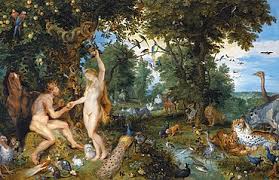
Augustine thought that we could explain humanity's sinful nature after the fall by looking at the state of ignorance which is the inevitable consequence of choosing a path of cupiditas.
Note
Adam and Eve had chosen this path and consequentially passed on the tendency to sin to future generations through sexual intercourse, this is known as 'original sin' which is the inherited nature to sin that orientates us towards cupiditas and away from Caritas.
The idea that original sin is passed through sexual intercourse is based on the view that this nature is inherited by Adam, supported by the quotes: "we are seminally present in the loins of Adam" and "through one man came death" (1 Corinthians 15:21)
Human selfishness and lack of free will
💡 Augustine argues that post-fall, human nature is in a state where it craves money, power, and lust. So, as a result of the fall and its consequences on cupiditas and Caritas, Augustine argues that humans now experience a weakness of will (akrasia in Latin).
Humans still have free will, but, because of disharmony between cupiditas and caritas, it is weak. Augustine believed that because of this divided will, people still have the ability to reason and recognise right from wrong, but, that they are always inclined to do wrong and be selfish and lustful, even I they don't want to. This idea is shown Biblically by Paul in Romans 7 when he said "I do not what I want, the very thing I hate is what I do". Augustine is inspired by Paul's writings and references a time when as a child, he had stolen a pear from someone's garden, even though he was not hungry. For him, this was a clear indicator that human nature is corrupt.
Lack of stability and corruption in all human societies
Before the fall, Augustine argued that humans could live together harmoniously. After the fall, this changed. He argued that after the fall, people needed a forceful political authority, otherwise, humans would behave according to their sinful nature of greed, violence, and lust.
Augustine argued that before the fall, human societies would have been led by shepherds, rather than Kings, guiding and protecting people rather than enforcing restrictions on them. After the fall, original sin dictates that Earthly peace can only be obtained through a repressive rule that controls sinful natures by force. Augustine points out that some of the so-called virtues necessary for people to live in Earthly peace are only necessary because of original sin. If Adam and Eve had never sinned, there would be no need for these qualities.
✔️ Augustine gave the metaphor of 'a pilgrim in a foreign land' to explain how the Christian should behave in relation to the advantages of human society. The Christian has to live in an Earthly society and therefore needs to live as Earthly people do, but, they should keep their eyes on the destination which is the City of God, until the time comes when they can enter heavenly society and heavenly peace. This heavenly society is known as 'ecclesia' and is the perfect way to live. Earthly society is only a very partial, corrupted, poor reflexion of heavenly society which people will only come to know fully after death and through the grace of God in the summum bonum.