The Three Domains (OCR A-Level Biology A): Revision Notes
📚Revision Notes
The Three Domains
Historical development of the domain system
In the late 1900s, advances in molecular biology, biochemistry, and cell biology revealed new information about prokaryotic organisms. Scientists discovered that prokaryotes were not a single uniform group, as previously thought.
Note
In the 1970s, researchers made a groundbreaking discovery: prokaryotic organisms living in extreme environments that had never been studied before. These organisms, called extremophiles, challenged our understanding of the limits of life.
These extremophiles were found in:
- Hot springs with temperatures reaching
- Highly saline salt lakes
- Environments with extremely high or low pH values
- Deep-sea hydrothermal vents (black smokers)
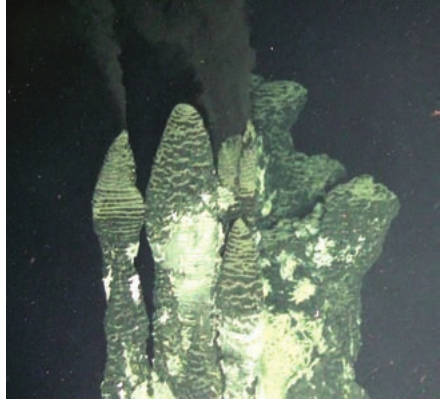
These hydrothermal vents, or black smokers, release mineral-rich superheated water from the ocean floor at depths of up to . The organisms living around these vents survive in conditions that would kill most other life forms.
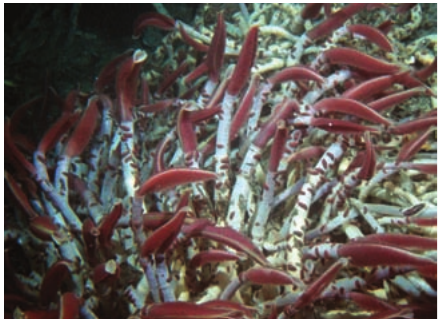
Example
Example: Life in Extreme Conditions
The giant tubeworm Riftia pachyptila lives entirely on organic compounds produced by bacteria inside its cells. These bacteria oxidize sulfur to gain energy and fix carbon dioxide. This demonstrates how organisms can thrive in environments once thought impossible for life.
Introduction of the domain as a taxonomic rank
When scientists analyzed these extremophiles using molecular biology techniques, they discovered something unexpected. Features such as:
- Ribosomal RNA (rRNA) sequences
- Protein synthesis mechanisms
- Cell membrane structure
- Flagella structure
All showed that extremophiles shared characteristics with both bacteria and eukaryotes. They were prokaryotic in structure but had molecular features similar to eukaryotes.
Important
In 1990, microbiologist Carl Woese introduced a revolutionary concept: a new taxonomic rank called the domain. This rank sits above kingdom in the taxonomic hierarchy, making it the highest level of biological classification.
Domain: The highest taxonomic rank, positioned above kingdom. It groups organisms based primarily on fundamental molecular and biochemical differences rather than physical features alone.
Woese classified life into three domains based on molecular evidence. This system gives greater importance to molecular biology than to physical characteristics, representing a major shift in how we classify organisms.
The three domains
The domain system divides all life into three groups:
- Bacteria – prokaryotic organisms including most familiar bacteria
- Archaea – prokaryotic organisms initially discovered in extreme environments, with some eukaryote-like molecular features
- Eukarya – all organisms with eukaryotic cells (animals, plants, fungi, protoctists)
Note
Since Woese's initial work, scientists have discovered archaea in many non-extreme environments as well. The key point is that archaea are molecularly distinct from both bacteria and eukaryotes, despite sharing some features with each group.
Distinguishing features of the three domains
Each domain has characteristic features that distinguish it from the others:
| Feature | Bacteria | Archaea | Eukarya |
|---|---|---|---|
| Cell structure | Prokaryotic – no nucleus, no membrane-bound organelles | Prokaryotic | Eukaryotic – nucleus and membrane-bound organelles present |
| Cell wall composition | Peptidoglycan present | No peptidoglycan | No peptidoglycan |
| Cytoskeleton | Absent | Absent | Present |
| Membranous organelles (mitochondria, endoplasmic reticulum, etc.) | Absent | Absent | Present |
| DNA organization | Circular | Circular | Linear (in nucleus); circular in chloroplasts and mitochondria |
| Introns (non-coding sequences in genes) | Absent | Present in some genes | Present |
| Histone proteins (associated with DNA) | Absent | Present | Present |
| RNA polymerase types | One type | Several types | Several types |
| Growth at | Cannot survive | Some species can | Cannot survive |
| Response to diphtheria toxin | Not affected | Poisoned | Poisoned |
| Sensitivity to streptomycin | Sensitive | Not sensitive | Not sensitive |
Understanding Bacteria
Bacteria are prokaryotic organisms with:
- Peptidoglycan cell walls (a complex polymer unique to bacteria)
- Circular DNA not enclosed in a nucleus
- Single type of RNA polymerase enzyme
- No histone proteins associated with DNA
- No introns in genes
- Sensitivity to the antibiotic streptomycin
Understanding Archaea
Important
Archaea represent a unique intermediate group with a distinctive combination of features. They are prokaryotic in structure but possess some eukaryote-like molecular characteristics, making them fundamentally different from both bacteria and eukaryotes.
Prokaryotic characteristics (shared with bacteria):
- No nucleus or membrane-bound organelles
- Circular DNA
- No cytoskeleton
Eukaryote-like characteristics:
- Histone proteins associated with DNA
- Several types of RNA polymerase (like eukaryotes)
- Introns present in some genes
- Poisoned by diphtheria toxin (like eukaryotes)
Unique characteristics:
- Some species can survive and grow at
- Cell walls lack peptidoglycan
- Not sensitive to streptomycin
- Different cell membrane structure compared to bacteria
Understanding Eukarya
Eukarya includes all eukaryotic organisms:
- True nucleus containing linear DNA
- Membrane-bound organelles (mitochondria, endoplasmic reticulum, Golgi apparatus, etc.)
- Cytoskeleton for structural support
- Histone proteins packaging DNA
- Several types of RNA polymerase
- Introns present in genes
- Circular DNA in mitochondria and chloroplasts (evidence of ancient prokaryotic origin)
The domain Eukarya includes the kingdoms: Animalia, Plantae, Fungi, and Protoctista.
Molecular evidence for the domain system
The three-domain classification relies heavily on molecular evidence rather than observable physical features. Key types of molecular evidence include:
Ribosomal RNA (rRNA)
Ribosomal RNA (rRNA): RNA molecules that form part of the structure of ribosomes.
Note
The sequence of nucleotides in rRNA genes differs significantly between the three domains. Comparing rRNA sequences allows scientists to determine evolutionary relationships. Organisms with more similar rRNA sequences are more closely related.
Protein synthesis mechanisms
While all three domains use ribosomes to synthesize proteins, the detailed mechanisms differ:
- Bacteria use one type of RNA polymerase enzyme
- Archaea and Eukarya use several different types of RNA polymerase
- The response to protein synthesis inhibitors (like diphtheria toxin and streptomycin) differs between domains
Cell membrane structure
The chemical composition and structure of cell membranes differ between the three domains, particularly between archaea and bacteria. This includes differences in the lipids that form the membrane bilayer.
Flagella structure
Important
Although bacteria and archaea both have flagella for movement, the molecular structure and mechanism of these flagella are completely different. This indicates they evolved independently rather than being inherited from a common ancestor – a phenomenon called convergent evolution.
Evolutionary relationships between domains
The molecular evidence suggests all three domains descended from a universal ancestor – a hypothetical ancient organism from which all life evolved.
Note
Studies of molecular similarities suggest:
- Archaea and Eukarya may share a more recent common ancestor with each other than either does with Bacteria
- The three domains represent very ancient evolutionary divergences
- Each domain has since diversified into many different groups
The domain system reflects our understanding that the most fundamental division in the living world is not between prokaryotes and eukaryotes, but between three molecularly distinct groups: Bacteria, Archaea, and Eukarya.
Remember!
Summary
Key Points to Remember:
-
Domain is the highest taxonomic rank, introduced by Carl Woese in 1990, positioned above kingdom.
-
The three domains are Bacteria, Archaea, and Eukarya – this system gives priority to molecular evidence over physical characteristics.
-
Archaea are prokaryotic organisms that share some molecular features with eukaryotes (histones, several RNA polymerases, some introns) but remain structurally prokaryotic.
-
Key distinguishing features include cell wall composition (only bacteria have peptidoglycan), histone proteins (absent in bacteria), and DNA organization (circular in prokaryotes, linear in eukaryotic nuclei).
-
Molecular evidence from rRNA sequences, protein synthesis mechanisms, membrane structure, and flagella structure provided the foundation for recognizing three domains rather than two (prokaryotes vs eukaryotes).