Adaptation (OCR A-Level Biology A): Revision Notes
📚Revision Notes
Adaptation
Introduction to variation and adaptation
Organisms display remarkable diversity in their characteristics, and understanding the sources of this variation is essential for comprehending how species adapt to their environments. Variation arises from both genetic and environmental factors, and these differences provide the raw material upon which natural selection can act.
Note
Adaptation refers to any modification of structure, function, or behaviour that enhances an organism's ability to survive and reproduce in its particular habitat. Adaptations encompass all aspects of an organism, including its external appearance (morphology), internal structure (anatomy), physiological processes, cellular biochemistry, and behavioural patterns.
Causes of variation
Discontinuous variation
Characteristics showing discontinuous variation are controlled primarily or entirely by genes, with minimal or no environmental influence. Blood group provides a clear example – an individual's blood type cannot change based on diet or upbringing. The alleles inherited at conception determine blood group permanently, regardless of environmental conditions encountered throughout life.
Continuous variation
Features displaying continuous variation result from the combined effects of genetic and environmental factors. Body mass in mice demonstrates this interplay effectively. Environmental factors such as food availability, ambient temperature, and fat storage all influence body mass. However, specific genes also play important roles in determining this characteristic.
Note
The Leptin Gene and Appetite Regulation
One particularly informative example involves the leptin gene in mice. This gene encodes leptin, a hormone produced by adipose (fat) tissue as it accumulates. Leptin regulates appetite by signalling the brain to reduce food intake when fat stores increase.
A mutant recessive allele fails to produce functional leptin. Mice homozygous for this obesity allele lack the ability to regulate appetite, continuing to eat excessively and accumulating abnormal quantities of body fat.
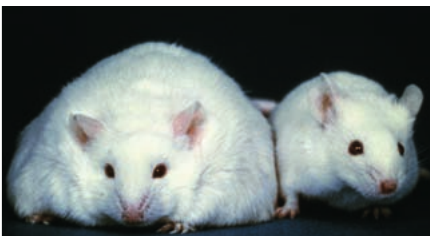
Mice carrying the obesity mutation grow to fatter than normal mice by middle age, even when provided with low-fat diets. This demonstrates how a single genetic change can have profound effects on phenotype, whilst also showing that both genetic and environmental factors contribute to determining body mass.
Environmental variation
Some forms of variation arise solely from environmental causes rather than genetic differences. Physical damage to organisms may persist as permanent scars – for example, where branches break from trees or where animals sustain injuries during combat.
Note
Sperm whales frequently bear scars inflicted by giant squid during encounters in the deep ocean. These features are entirely environmental in origin and cannot be passed to offspring through inheritance.
Biochemical variation
Modern analytical techniques, particularly electrophoresis, have revealed extensive variation at the biochemical level. This has expanded our understanding of phenotype to include molecular differences between individuals.
Allozymes are enzyme variants encoded by different alleles of the same gene. Heterozygous individuals may possess two slightly different versions of the same enzyme within their cells. These variants typically catalyse the same reaction but may differ in efficiency or optimal conditions.
Isozymes represent a different form of variation – these are enzymes that catalyse identical reactions but are encoded by different genes. Isozymes may function optimally at different temperatures, potentially allowing organisms to acclimatise when migrating between regions or adjusting to seasonal changes. This could represent biochemical adaptation, though it might alternatively constitute variation providing raw material for natural selection to act upon.
What is adaptation?
For organisms to thrive in any environment, they must possess features enabling survival and reproduction. Adaptations involve modifications across multiple biological levels:
- Morphology: External appearance and form
- Anatomy: Internal structural organisation
- Physiology: Function of body systems and organs
- Biochemistry: Chemical processes occurring within cells
- Behaviour, reproduction and life cycles: Patterns of activity and reproductive strategies
Important
Adaptations become particularly evident when examining organisms inhabiting extreme environments, where selective pressures are intense and specialised features prove essential for survival.
Types of adaptations
Biologists categorise adaptations into three main types, though these categories often overlap in practice:
Structural adaptations
Physical features of an organism's body that enhance survival. These include anatomical modifications to organs, tissues, or body parts that improve function in specific environments.
Behavioural adaptations
Actions or patterns of behaviour that increase survival chances. These may be innate (genetically programmed) or learned responses to environmental challenges.
Physiological adaptations
Internal biochemical or metabolic processes that enable organisms to function effectively in their habitats. These adaptations involve the chemistry and function of cells, tissues and organ systems.
Adaptations in extreme environments
Extreme environments provide excellent case studies for understanding adaptation, as organisms living in such conditions display clear specialisations for survival.
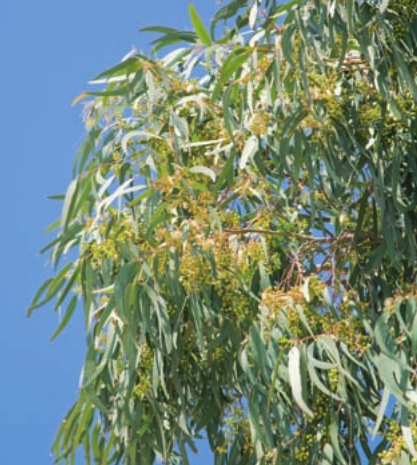
Southern blue gum (Eucalyptus globulus)
This eucalyptus species is endemic to Australia and thrives in hot, dry environments where water conservation and fire resistance prove essential for survival.
Note
Structural adaptations:
- Leaves hang vertically rather than horizontally, reducing light exposure and consequently decreasing water loss through transpiration
- Thick bark provides protection from fire damage, allowing the tree to survive periodic bushfires common in Australian ecosystems
Behavioural adaptations:
- Seeds are released following fires, giving seedlings reduced competition from other plants destroyed by fire and improving their establishment success
Physiological adaptations:
- Leaves synthesise toxic compounds that deter most grazing herbivores. However, some species have evolved counter-adaptations – koalas (Phascolarctos cinereus) and greater gliders (Petauroides volans) possess mechanisms protecting them from these toxins, allowing them to feed on eucalyptus leaves
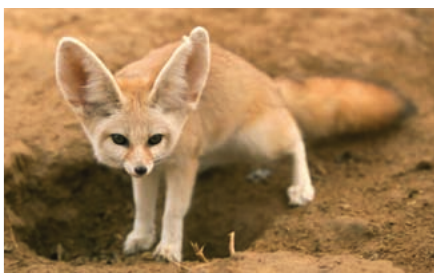
Fennec fox (Vulpes zerda)
Fennec foxes inhabit the deserts of North Africa, where extreme heat during the day and cold nights, combined with water scarcity, create challenging conditions.
Note
Structural adaptations:
- Enlarged ears and eyes enhance hearing and vision for detecting prey in low-light conditions. Large ears additionally increase surface area for heat dissipation during hot days
- Thick fur provides insulation, retaining body heat during cold desert nights when the fox hunts actively
Behavioural adaptations:
- Nocturnal activity pattern – remaining underground in burrows during intense daytime heat reduces water loss and heat stress. This behaviour also provides protection from eagles, the fennec fox's primary predator
Physiological adaptations:
- Kidneys possess exceptional water reabsorption capacity, producing extremely concentrated urine and minimising water loss. This adaptation is so effective that fennec foxes can survive indefinitely without drinking water, obtaining all required moisture from their food
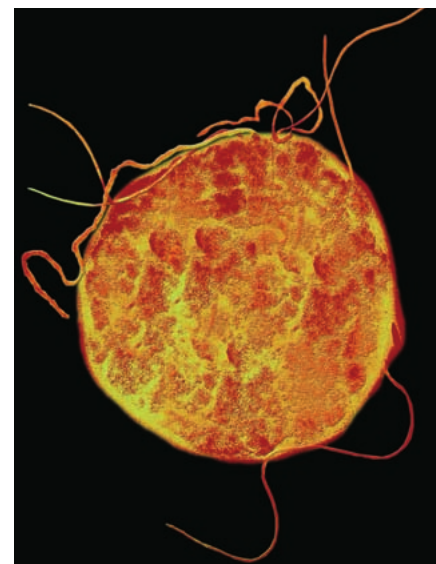
Sulfolobus acidocaldarius
This thermophilic archaean survives in volcanic springs with temperatures around , pH approximately , and high sulfur concentrations – conditions lethal to almost all other life forms.
Note
Structural adaptations:
- Cell membrane lipids contain ether linkages rather than ester linkages. Ether bonds are stronger and more stable at high temperatures than ester bonds, preventing membrane breakdown
- DNA contains a high proportion of cytosine-guanine (C–G) base pairs rather than adenine-thymine (A–T) pairs. C–G pairs form three hydrogen bonds compared to two for A–T pairs, providing greater stability at high temperatures
- An enzyme supercoils DNA, making it highly compact and resistant to heat-induced denaturation. At near-boiling temperatures, normal DNA would denature as hydrogen bonds between polynucleotide strands break
- Proteins contain numerous polar amino acids, forming extensive hydrogen bonds and ionic bonds that stabilise tertiary structure and resist thermal denaturation
Behavioural adaptations:
- Formation of biofilm matrices, where cells embed themselves in protective extracellular material, helps colonies withstand extreme temperatures
Physiological adaptations:
- Heat shock proteins are synthesised when temperatures rise, protecting cellular components from thermal damage
- Heat-resistant DNA polymerase enzyme enables DNA replication to proceed at temperatures approaching , where most enzymes would denature and lose function
Convergent evolution
Ecosystems across different geographical regions often provide similar ecological niches. Sometimes, unrelated organisms evolving in these similar niches independently develop comparable adaptations – a phenomenon termed convergent evolution.
Important
Understanding Convergent Evolution
Marsupials migrated to Australasia approximately million years ago and subsequently diversified to occupy numerous ecological niches. Two marsupial mole species inhabit Australian deserts, living underground and rarely emerging to the surface. Despite being marsupials, they share remarkable similarities with the European mole (a placental mammal) and golden moles from southern Africa.
These similarities might suggest descent from a common mole-like ancestor. However, evolutionary analysis reveals their common ancestor bore no resemblance to a mole. These features evolved independently in different taxonomic groups as adaptations to subterranean lifestyles and the opportunities provided by underground habitats.
Shared adaptations among these unrelated mole species include:
- Short, powerful limbs with enlarged front claws specialised for digging through soil
- Absence of external ears – ear canal openings lie beneath the fur, preventing soil entry during burrowing
- Reduced vision – marsupial moles possess tiny, non-functional eyes whilst European moles have small eyes detecting only light presence
- Similar fur texture – silky in marsupial moles and velvety in placental moles, allowing smooth movement through soil in either direction
Despite these convergences, differences persist. Marsupial moles possess a hardened shield on their head front, whilst European moles have thin snouts. Marsupial moles also display a unique mammalian feature – fused neck vertebrae providing additional support for digging, an adaptation absent in other mole species.
Remember!
Summary
Key Points to Remember:
- Adaptation encompasses any structural, functional, or behavioural modification that enhances survival in a specific environment
- Variation arises from genetic factors (discontinuous variation), environmental factors, or both combined (continuous variation)
- Adaptations are categorised as structural (physical features), behavioural (actions and patterns), or physiological (internal processes)
- Organisms in extreme environments display particularly clear and specialised adaptations for survival
- Convergent evolution produces similar adaptations in unrelated species occupying comparable ecological niches, demonstrating that natural selection can independently produce similar solutions to similar environmental challenges