What Is Evolution? (OCR A-Level Biology A): Revision Notes
📚Revision Notes
What Is Evolution?
The development of evolutionary theory
The idea that species change over time developed gradually during the eighteenth and nineteenth centuries as scientists made observations about fossils and living organisms. Two distinct theories emerged:
Note
Evolution consists of two complementary theories that work together to explain how life changes over time:
- The general theory describes what happens (organisms change)
- The special theory explains how it happens (through natural selection)
The general theory of evolution states that organisms have changed over time and continue to change. Evidence from fossils, such as those discovered by Mary Anning in Jurassic rocks at Lyme Regis, showed that extinct species once existed, indicating that life forms have altered over millions of years.
The special theory of natural selection explains the mechanism by which evolution occurs. This theory was developed independently by Charles Darwin (1809–1882) and Alfred Russel Wallace (1823–1913).
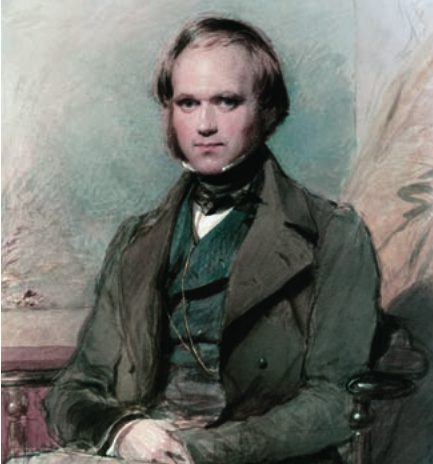
Darwin spent over years gathering evidence during and after his voyage on HMS Beagle (1831–1836), collecting specimens and making observations in South America, the Galápagos Islands, Australasia, and Mauritius. His observations convinced him that species were not unchanging – they evolved over time.
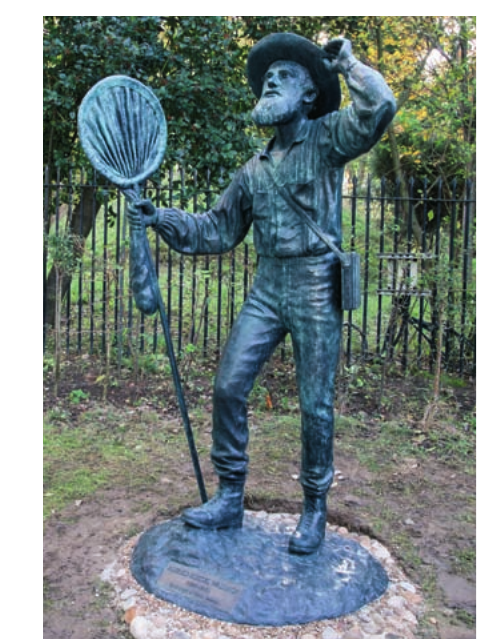
Wallace independently arrived at the same conclusion through his travels in South America and South-East Asia. In 1858, Wallace wrote to Darwin describing his ideas about natural selection. This led to a joint presentation at the Linnaean Society in London, followed by Darwin's publication of On the Origin of Species in November 1859.
Important
The phrase 'descent with modification' – used extensively by Darwin – provides a clear way to understand evolution: organisms inherit characteristics from their ancestors but these characteristics may change over generations.
Variation: the foundation of evolution
Variation refers to differences that exist both between species and within species. No group of organisms is completely identical. Even clones with identical genotypes show slight phenotypic differences due to environmental factors.
Types of variation
Genetic variation describes differences in genotypes within a species. Phenotypic variation encompasses all observable or detectable differences, including physical appearance, biochemistry, and behaviour. For example, your blood group is part of your phenotype, just as much as your height or eye colour.
Interspecific variation
Interspecific variation describes differences between species. These differences help us identify and classify organisms.
Example
Comparing Related Bird Species: Shags and Cormorants
The shag (Phalacrocorax aristotelis) and great cormorant (Phalacrocorax carbo) are closely related birds from the same genus:
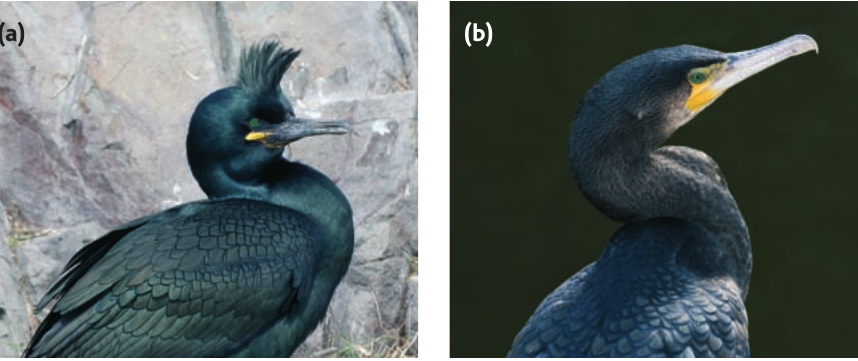
Although similar, they differ in:
- Size (shags are smaller and slimmer)
- Bill shape (shags have thinner bills)
- Breeding plumage (shags develop a single crest)
- Tail feathers (shags have , cormorants have )
Despite living in the same coastal habitats, these species occupy different niches, feeding in different ways and roosting in different places to avoid direct competition.
Interspecific variation can be even more pronounced:
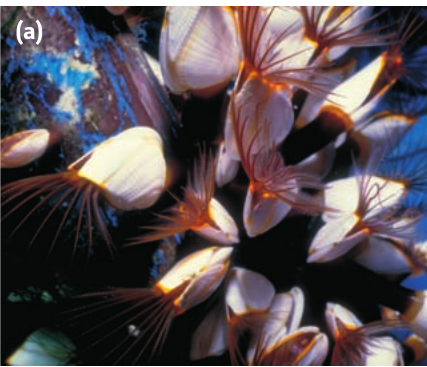
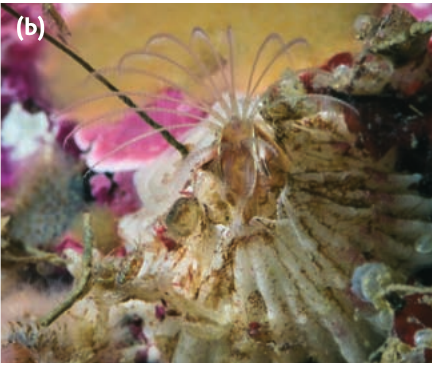
These two barnacle species show obvious morphological differences and inhabit different environments.
Note
Even microorganisms exhibit interspecific variation. Although many bacteria appear similar, they differ in:
- Morphology (Vibrio cholerae has a flagellum; Mycobacterium tuberculosis does not)
- Cell wall structure and composition
- Metabolism (e.g., toxin production, enzyme activity)
- Biochemical responses to environmental conditions
Intraspecific variation
Intraspecific variation describes differences within a single species. This variation provides the raw material for natural selection.
Darwin studied intraspecific variation extensively in domesticated animals, particularly pigeons. Selective breeding by humans has 'released' variation that rarely appears in wild populations:
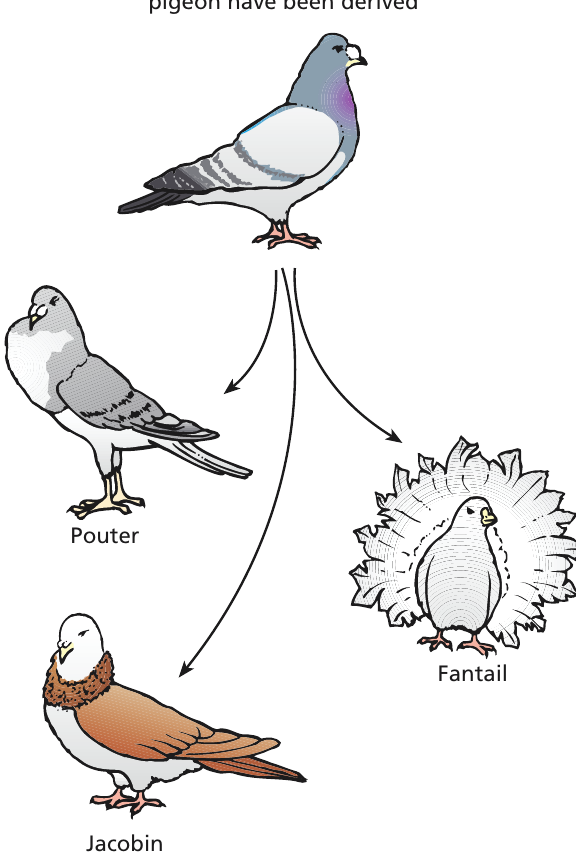
All domestic pigeon varieties descended from the rock dove (Columba livia), yet selective breeding has produced dramatically different forms such as Pouters, Fantails, and Jacobins.
Other examples of intraspecific variation include:
Morning glory (Ipomoea purpurea) shows genetic variation in flower colour:
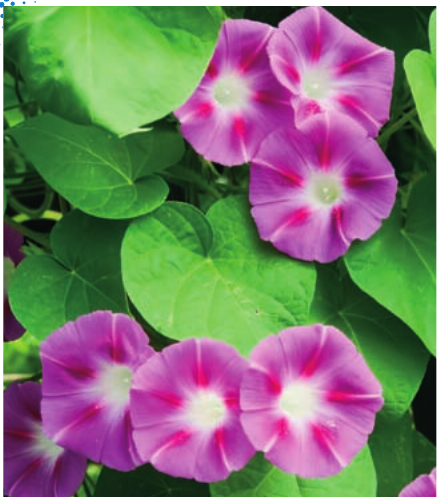
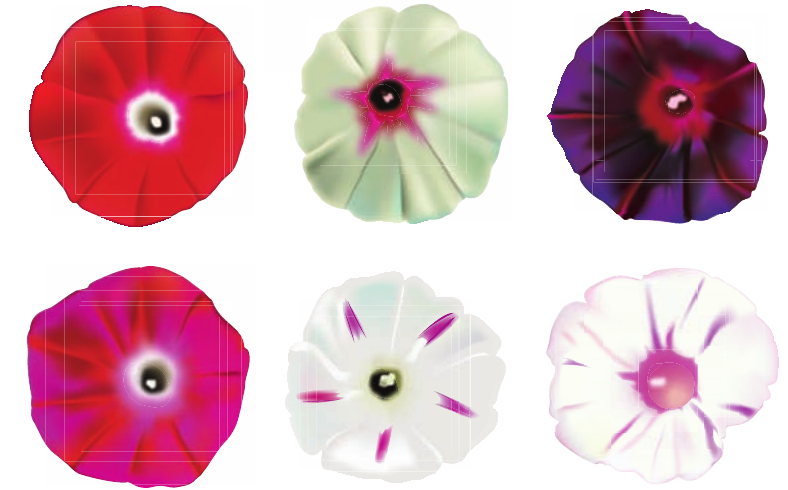
Three genes interact to produce this diversity of colours and patterns.
Yeast (Saccharomyces cerevisiae) exhibits metabolic variation. Different strains possess different enzymes and membrane transport proteins, making some better suited for baking, others for brewing, and still others for biofuel production. Researchers have identified over genes controlling metabolite levels across more than related strains.
Types of variation
Variation can be classified into two main categories based on how characteristics are distributed within a population.
Discontinuous variation
Discontinuous variation (also called qualitative or discrete variation) produces distinct categories without intermediates.
Examples include:
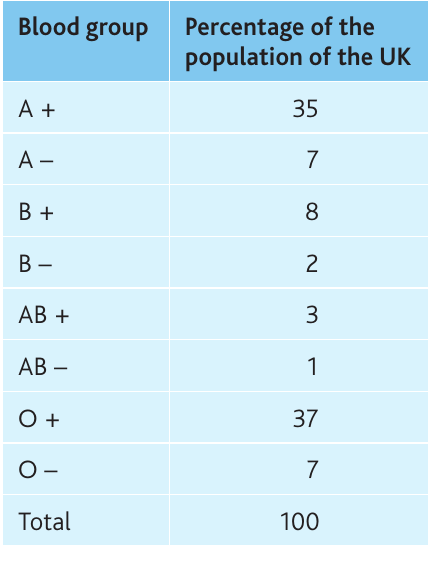
- Human blood groups (ABO and Rhesus systems)
- Flower colour in snapdragons (red, pink, or white)
- Drug resistance in Mycobacterium tuberculosis (resistant or susceptible)
Important
Most discontinuous variation is controlled solely by genes; environmental factors typically have no effect. Usually, a single gene with two or a few alleles controls these characteristics.
Human blood groups
The ABO blood group system illustrates discontinuous variation well:
Example
Worked Example: Genetics of the ABO Blood Group System
A gene on chromosome controls ABO blood groups. It codes for an enzyme that adds a sugar molecule to glycoproteins on red blood cell membranes. Three alleles exist:
- (codes for type A antigen)
- (codes for type B antigen)
- (codes for no antigen)
and are co-dominant; both dominate . Therefore:
- Genotype produces phenotype AB
- Genotype produces phenotype A
Genetics of the Rhesus system: A gene on chromosome controls the Rhesus system with two alleles: R and r. The allele R codes for a red blood cell transmembrane protein, while r produces no protein. Individuals who are RR or Rr are Rhesus positive; those who are rr are Rhesus negative.
Continuous variation
Continuous variation (also called quantitative variation) produces a range of phenotypes between two extremes with many intermediates.
Any measurable characteristic shows continuous variation:
- Plant height
- Leaf width
- Animal mass
- Tail length
Note
Both genes and environment control continuous variation. An animal with genes for large size will not reach its potential if food is scarce during growth. Conversely, a plant with dwarfism genes cannot grow tall even in optimal conditions.
Polygenic inheritance
Multiple genes typically influence continuously varying characteristics. Consider a simplified example where four genes (A, B, C, D) control plant height. Each gene has two alleles:
- Allele adds to height
- Allele adds to height
The alleles are co-dominant (both expressed in heterozygotes):
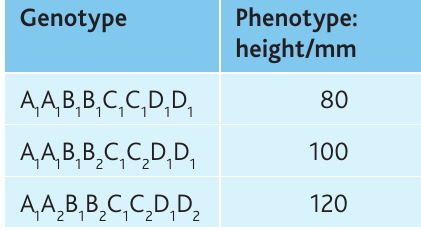
Genes controlling characteristics this way are called polygenes, and the characteristic is described as polygenic.
Analyzing continuous variation
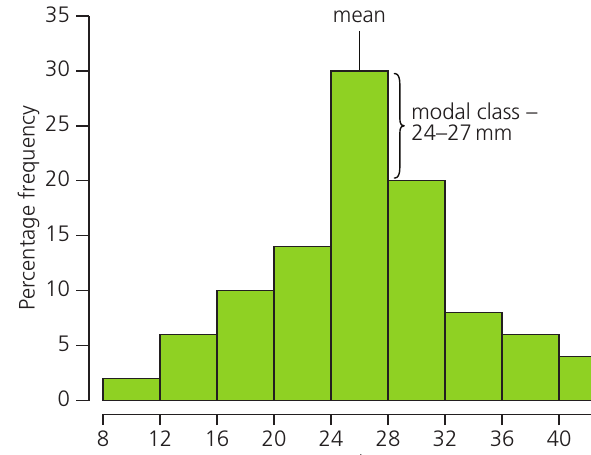
Data on continuous variation requires organization and analysis. Consider leaf length measurements from leaves:
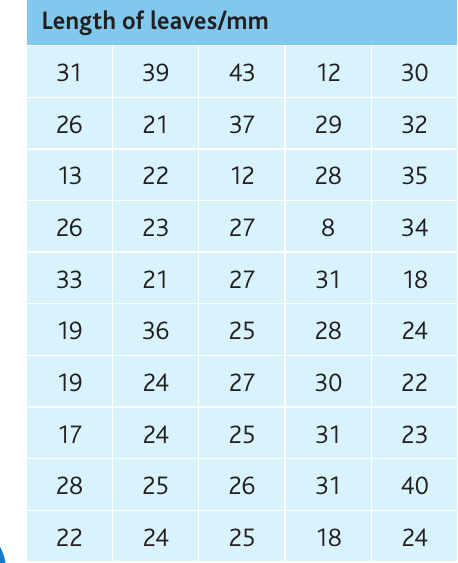
To identify patterns, raw data must be organized into classes (categories):
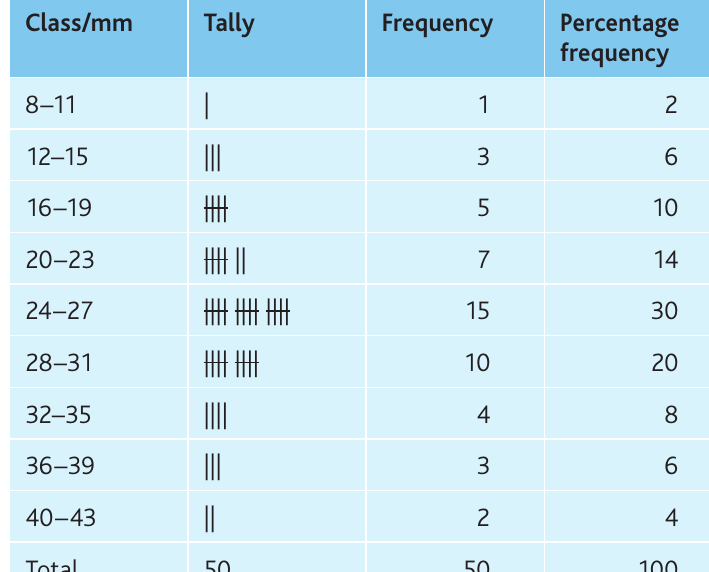
This organized data can be presented as a frequency histogram:
Example
Interpreting the Histogram
The histogram reveals:
- The modal class (–) contains the most leaves
- The mean falls within the modal class
- The distribution appears roughly symmetrical
Drawing a line through the center of each bar 'smooths' the histogram:
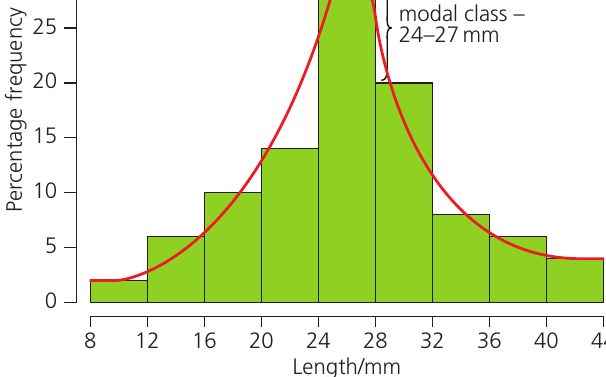
This reveals a normal distribution – a symmetrical, bell-shaped curve where:
- Most individuals cluster around the mean
- of individuals fall below the mean
- fall above the mean
- The mean lies within the modal class
Note
Not all distributions are normal. Some are skewed (more individuals at one extreme) or bimodal (most individuals at either extreme with few in the middle).
The standard deviation (SD) quantifies how widely data is dispersed:
- of results lie within of the mean
- of results lie within of the mean
Causes of variation
The relative contributions of genes and environment differ among characteristics.
Genetic control
Characteristics showing discontinuous variation are controlled mainly or entirely by genes. Environmental factors have minimal or no effect. Your blood group, for instance, is determined at conception and cannot change based on diet or lifestyle.
Environmental and genetic interaction
Characteristics showing continuous variation are influenced by both genes and environment.
Example
Worked Example: Body Mass in Mice
Body mass in mice illustrates the interaction between genetic and environmental factors:
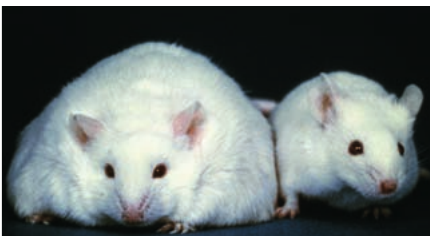
Environmental factors affecting mouse body mass include:
- Food availability (quantity and quality)
- Environmental temperature
- Activity levels
Genetic factors also influence body mass. One gene codes for leptin, a hormone produced by fat tissue that regulates appetite. The brain responds to increased leptin concentration by reducing appetite.
A recessive mutation at this gene produces no leptin. Mice homozygous for this allele never feel satiated, eat continuously, and become obese – even with unlimited food access.
Purely environmental variation
Some variation results entirely from environmental factors. Examples include:
- Scars from physical damage (e.g., broken tree branches)
- Wounds from fighting or predation
- Accidental injuries
Biochemical variation
Modern techniques such as electrophoresis have revealed variation at the molecular level, extending the concept of 'phenotype' to include biochemical differences.
Allozymes are enzyme variants coded by different alleles of the same gene. Heterozygous individuals produce two slightly different versions of the same enzyme.
Isozymes are enzymes that catalyze the same reaction but are coded by different genes. They may function optimally at different temperatures, potentially allowing organisms to acclimatize to seasonal changes or migration. This represents either biochemical adaptation or simply variation available for selection.
Summary
Key Points to Remember:
- Evolution encompasses two theories: the general theory (organisms change over time) and the special theory (natural selection as the mechanism)
- Darwin and Wallace independently developed the theory of natural selection, presenting their ideas jointly in 1858
- Variation exists both between species (interspecific) and within species (intraspecific), providing the foundation for evolution
- Discontinuous variation produces distinct categories controlled mainly by single genes; continuous variation produces a range of phenotypes controlled by multiple genes (polygenes) and environment
- Characteristics showing continuous variation can be analyzed using frequency histograms, revealing patterns such as normal distribution, with statistical measures like mean, modal class, and standard deviation describing the data