Factors Affecting Biodiversity (OCR A-Level Biology A): Revision Notes
📚Revision Notes
Factors Affecting Biodiversity
Human population growth represents the most significant threat to global biodiversity. The human population has expanded from billion in to over billion in . This rapid growth has intensified pressure on natural ecosystems through multiple pathways.
Note
This unprecedented population growth - a sevenfold increase in just over 200 years - has created environmental pressures on a scale never before experienced in human history. Each additional billion people increases demand for resources, living space, and food production.
The primary threats to biodiversity arising from human population growth include:
- Destruction of natural habitats and environmental degradation
- Unsustainable exploitation of biological resources
- Modern agricultural practices including monoculture and agrochemical use
- Global climate change
Habitat destruction
Habitat loss occurs when natural environments are destroyed or significantly degraded. Land clearance for agriculture, industry, housing, transport infrastructure, leisure facilities, waste disposal, and water storage removes natural vegetation, eliminating or fragmenting habitats for numerous plant and animal species.
Habitat fragmentation describes the division of continuous habitats into smaller, isolated patches. When populations become divided through fragmentation, they face increased risks of inbreeding and localized extinction events due to reduced genetic diversity and smaller population sizes.
Important
Fragmented populations face a double threat: not only is their total habitat area reduced, but isolation between fragments prevents gene flow between populations. This isolation can lead to inbreeding depression, reduced adaptive capacity, and ultimately local extinctions - even if the total remaining habitat area might theoretically support the species.
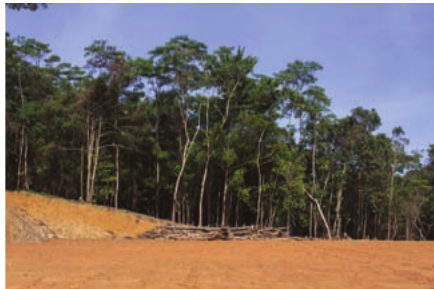
Deforestation
Historical forest loss in the northern hemisphere began approximately years ago when humans transitioned to agricultural food production. In contrast, extensive southern hemisphere forests in South-East Asia, Africa, Amazonia, and Central America remained largely intact until the twentieth century.
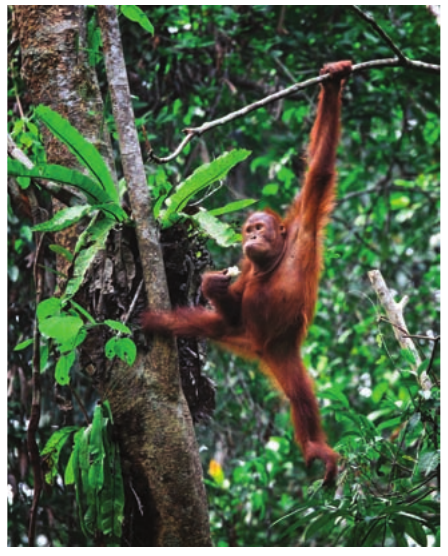
Deforestation has caused severe biodiversity loss in many regions. Madagascar, renowned for its unique endemic species, has lost almost all its natural forest cover. Cleared forest areas are frequently replaced with cattle ranches and oil palm plantations, which support considerably lower biodiversity than natural forests.
Note
Tree roots perform critical ecosystem functions beyond just anchoring the tree itself. Their extensive root systems create a three-dimensional network that stabilizes soil structure, prevents erosion, and maintains the soil's capacity to absorb and retain water. When forests are removed, these essential functions are lost.
Tree roots bind soil particles and absorb rainfall. Forest removal leads to:
- Increased surface water runoff and flooding risk
- Severe land degradation through soil erosion
- Loss of soil nutrients
- Reduced water infiltration
| Type of forest | Forest cover in 2000 (km² thousands) | Gross forest cover lost 2000-2005 (km² thousands) |
|---|---|---|
| Boreal | ||
| Humid tropical | ||
| Dry tropical | ||
| Temperate | ||
| Total | 32 687 | 1011 |
Important
Current habitat loss occurs most rapidly in tropical rainforests, tropical dry forests, and savannahs. These ecosystems contain the highest concentrations of biodiversity on Earth, making their loss particularly devastating for global species diversity.
Marine ecosystem destruction
Marine ecosystems face destruction from human activities including:
- Dynamiting coral reefs as a fishing method
- Bottom trawling with nets dragged across the seabed (the North Sea has lost virtually all natural seabed ecosystems)
- Dredging coastal waters and coastal development for industry, housing, and tourism
- Increased sedimentation from tree removal, ploughing, and urban runoff entering coastal waters
Overexploitation
Overexploitation occurs when natural resources are harvested faster than they can regenerate naturally.
Timber resources
Much industrial timber comes from managed fast-growing coniferous forests that are replanted after harvesting. However, slow-growing hardwood species such as teak and mahogany are often felled at rates exceeding natural regeneration capacity, representing unsustainable resource use.
Note
The contrast between fast-growing softwoods and slow-growing hardwoods is stark. While pine and spruce trees may reach harvestable size in 20-30 years, hardwoods like teak can take 80-100 years to mature. This difference makes sustainable hardwood harvesting much more challenging to achieve economically.
Fish stocks
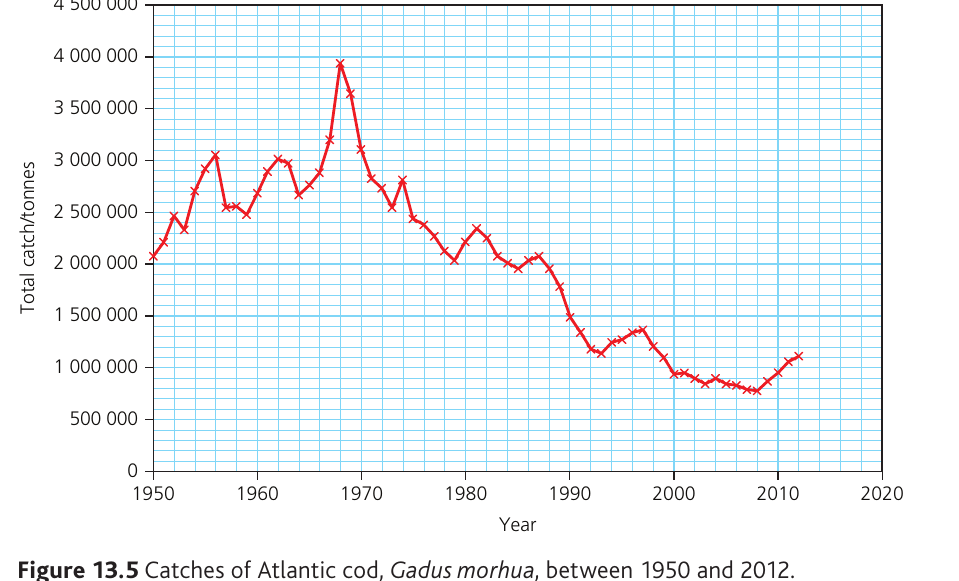
Several Atlantic cod (Gadus morhua) stocks collapsed during the 1990s due to overfishing, declining by over of their maximum historical biomass. These stocks have failed to recover even with fishing cessation.
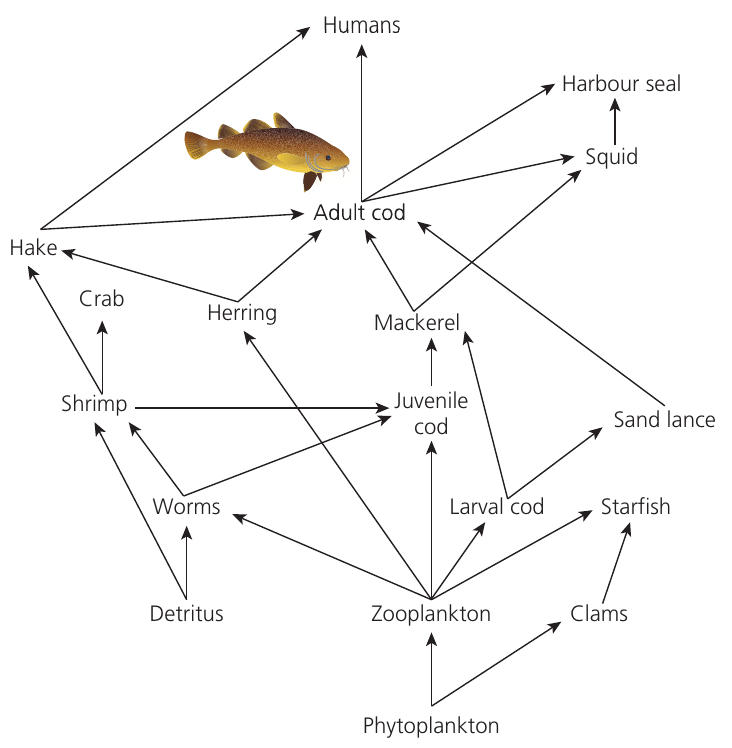
The fishing industry has responded to declining large predatory fish populations by targeting smaller species at lower trophic levels. This pattern, particularly pronounced in northern hemisphere fisheries, initially increases catches before eventual decline, demonstrating unsustainable exploitation.
Important
Many fisheries have declined or collapsed, including:
- Cod on the Grand Banks (North Atlantic)
- Herring in the North Sea
- Multiple species in the East China Sea
Removing large predatory fish reduces food availability for larger fish, marine mammals, and seabirds, causing further biodiversity loss. Current estimates suggest oceans now contain only of the large animals present before human exploitation began.
A sustainable resource is one renewed by biological activity at rates sufficient to prevent depletion through human use.
Hunting and collection
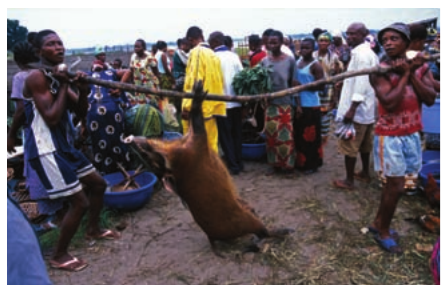
Bush meat
In many regions, particularly Africa and South America, people harvest wild animals for protein. Road development into forests for logging has expanded accessible areas for hunting. Species at particular risk include:
- Primates (monkeys and chimpanzees)
- Other mammal species
- Reptiles
Plant collection
Plants face equivalent pressures through removal from natural habitats for sale or consumption. Surveys in East Africa revealed dangerously low wild populations of African violet (Saintpaulia), a common cultivated plant, due to collection from natural habitats.
Agriculture
Monoculture
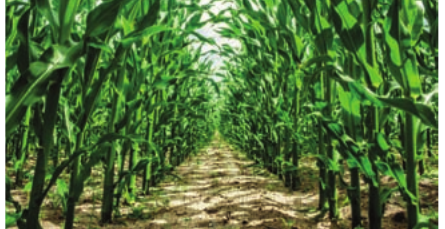
Monoculture describes growing a single crop species (such as wheat, maize, or soya) across extensive land areas, often for multiple consecutive years. The term also applies to intensive livestock farming and single-species tree plantations (typically conifers for timber and paper pulp).
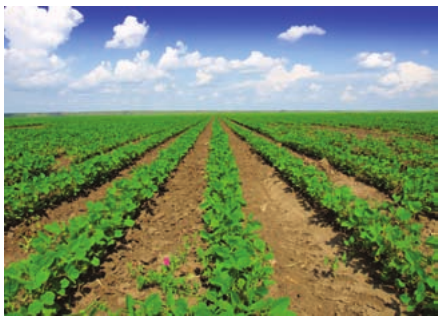
Arable farmers often cultivate identical crops annually across large fields, enabling specialization, use of large machinery, minimal labour requirements, and high yields per hectare. This intensive farming depends on substantial inputs:
- Chemical fertilisers
- Crop protection chemicals (pesticides)
- Fossil fuels (machinery operation and agrochemical manufacture)
Note
Monocultures enable more efficient land cultivation, requiring less total area than mixed farming systems with higher wastage. However, monocultures typically exhibit substantially reduced biodiversity compared to natural habitats they replace. This creates a trade-off between agricultural efficiency and environmental conservation.
Agricultural intensification impacts
Crop cultivation requires resource provision. Growing identical crops repeatedly rapidly depletes soil mineral reserves. Farmers replenish these through chemical fertiliser application. Crops also require irrigation, increasing water demand.
Competition from weeds reduces crop yields and interferes with mechanised harvesting. Herbicides control weeds competing for resources. Plant pathogens (fungi, bacteria, viruses) threaten crop growth and yields. Fungicides control disease outbreaks.
Monocultures provide unlimited food supplies for pest species, enabling exponential population growth under favourable conditions. Insecticides control insect pests like boll weevils and aphids.
Agrochemical impacts on biodiversity
Important
Agrochemicals negatively affect wild species through multiple pathways:
- Fertilisers create nutrient-rich soils, potentially promoting fast-growing plant species that shade slower-growing species, reducing light availability
- Herbicides kill weeds competing with crops and may eliminate non-target species in field margins, reducing surrounding biodiversity. Broad-spectrum herbicides introduced since the 1970s kill diverse plant species
- Insecticides kill target pest insects but also non-target species, including pest predators, parasites, and important pollinators. Persistent pesticides may kill detritivores (organisms breaking down dead organic matter)
UK farmland biodiversity loss
Modern UK agriculture has reduced plant, arthropod (insects and spiders), bird, and mammal biodiversity. Contributing factors include:
- Habitat destruction through hedgerow, woodland, and scrub removal to create larger fields, eliminating nesting sites
- Ploughing to field edges, removing plant and insect habitats
- Reduced habitat structural diversity (some farmland bird species prefer tussocky grass not favoured by livestock farmers)
- Improved seed cleaning methods reducing weed seed presence
- Loss of wild food plants for butterflies and hoverflies through herbicide use
- Pasture conversion to arable land reducing soil invertebrate populations, decreasing food for farmland birds and mammals
- Land drainage forcing soil invertebrates deeper, making them less accessible to birds and mammals
- Autumn cereal sowing (starting 1970s) rather than leaving stubble until spring, reducing food availability for birds and mammals
Note
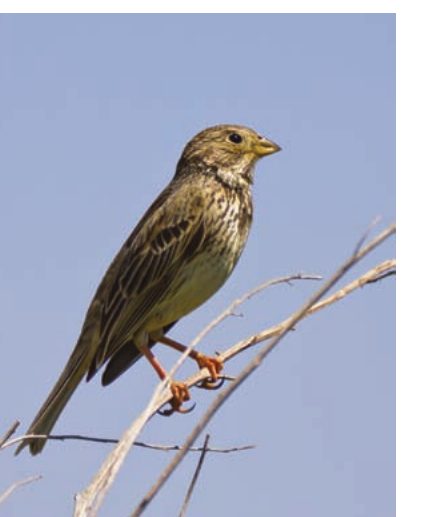
Records of 19 farmland bird species since 1970 reveal significant population changes. Specialist species (those living almost entirely in farmland) declined by approximately , while all farmland birds declined by roughly from 1970 to 2013. Generalist species (living in various habitats including farmland) showed stable populations.
Agricultural pollution
Three main agricultural pollution sources affect biodiversity:
- Fertilisers
- Pesticides
- Intensive livestock waste products
Fertiliser pollution and eutrophication
Fertilisers applied to increase crop yields can pollute water if excess fertiliser is used or application precedes heavy rainfall. Fertiliser draining into rivers and lakes causes eutrophication – enrichment of waters with plant nutrients, primarily nitrate and phosphate ions.
Nitrate represents the main nutrient in arable land runoff. While not typically limiting algal and plant growth in freshwaters (streams and rivers), nitrate limits growth in marine waters, causing marine algal blooms.
Example
Example: The Gulf of Mexico Dead Zone
Fertiliser and sewage runoff from the Mississippi River stimulate massive plankton growth in the Gulf of Mexico. When this plankton rapidly dies, bacterial decomposition depletes oxygen levels in the water.
Result: Each spring, a square kilometre 'dead zone' develops where most marine life cannot survive. This represents an area roughly the size of New Jersey becoming uninhabitable for marine organisms annually.
Over ocean areas regularly experience oxygen depletion from algal bloom decomposition, with dead zone numbers increasing.
Pesticide impacts
Pesticides can select for resistant pest and weed strains. Widespread organochlorine pesticide use (such as DDT) caused eggshell thinning and reproductive failure in peregrine falcons (Falco peregrinus) from the 1950s. In India, vulture populations decreased between 1980 and 2010 due to diclofenac poisoning (a veterinary drug for cattle treatment). India's nine vulture species now face severe extinction risk.
Important
The pesticide-vulture case demonstrates how chemicals can have devastating unintended consequences. Diclofenac was used to treat cattle, but when vultures fed on dead cattle carcasses, the drug caused fatal kidney failure. This shows how agricultural chemicals can move through food chains and affect species far removed from the original target organisms.
Climate change
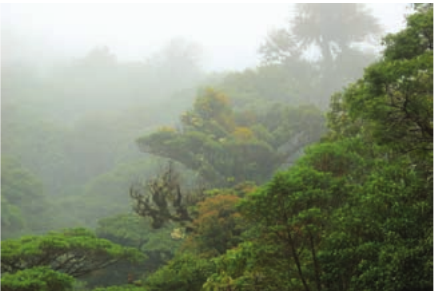
Throughout Earth's history, climate has changed continuously, with accompanying ecosystem changes and species evolution and extinction. However, these historical changes occurred over relatively long timescales. Current climate change proceeds much faster, likely exceeding species' adaptation rates and potentially causing substantial biodiversity loss.
Important
The critical difference between current climate change and historical climate shifts is the rate of change. Species can adapt to gradual environmental changes over thousands of years through evolution and migration. However, when climate changes over decades rather than millennia, many species simply cannot adapt or relocate quickly enough to survive.
Global climate change produces two main effects:
- Modified weather patterns
- Increased frequency of extreme weather events (hurricanes, typhoons, floods, droughts)
Species distribution changes
With global warming, many species' distributions shift towards poles and higher altitudes. Species entering new ecosystems may be poorly adapted and face competition from better-adapted resident species. As conditions warm, species adapted to current high-altitude and high-latitude conditions may not survive competition from species migrating from warmer regions.
Polar region threats
Global climate change poses specific polar biodiversity threats. Arctic ice loss may eliminate an entire biome. The Arctic ecosystem includes ice-underside algae functioning as producers for this productive ecosystem supporting numerous invertebrates, fish, birds, and marine mammals.
Ocean acidification
Decreased seawater pH (ocean acidification) represents another marine habitat threat. Carbon dioxide's high water solubility means increased atmospheric concentrations result in greater dissolved amounts in seawater, decreasing pH.
Note
Lower pH impedes calcium carbonate shell formation by:
- Tiny planktonic organisms with shells
- Coral polyps forming coral reefs
Organism calcium carbonate skeletons function as long-term (millions of years) carbon 'sinks'. Reduced biological activity decreases atmospheric removal into these oceanic long-term stores.
Ocean acidification represents one threat to coral reef ecosystem survival. Coral reefs, containing approximately of ocean biodiversity, are predicted to disappear by 2050.
Ocean stratification
Ocean water warming may cause stratification, preventing surface water mixing with nutrient-rich deep water. This would limit phytoplankton (the ocean's primary producers) growth, reducing food availability for diverse marine life.
Summary
Key Points to Remember:
- Human population growth from billion (1800) to over billion (2014) represents the primary biodiversity threat
- Habitat destruction through deforestation and development causes habitat loss and fragmentation, particularly in tropical regions
- Overexploitation of timber and fish stocks (Atlantic cod declined ) demonstrates unsustainable resource use
- Monoculture agriculture reduces biodiversity through habitat replacement and agrochemical use (fertilisers, herbicides, insecticides)
- Agricultural pollution causes eutrophication in freshwater and marine systems, creating oxygen-depleted 'dead zones'
- Climate change drives species distribution shifts, threatens polar ecosystems, causes ocean acidification, and may lead to coral reef extinction by 2050