Impact of the Cultural Revolution (economic, social and political) (OCR A-Level History A): Revision Notes
📚Revision Notes
Impact of the Cultural Revolution (economic, social and political)
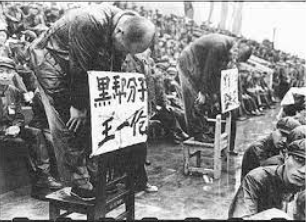
Struggle sessions of the Red Guards
Political Effects of the Cultural Revolution
With the help of the Red Guards, political purges also occurred outside the national government.
- Local government officials were purged through the initiative of the Red Guards. Some officials were sent to May 7th Cadre Schools in which they experienced intensive re-education with the works of Mao and Karl Marx.
- Posters with slogans were printed promoting loyalty to the People's Liberation Army (PLA). It controlled the revolutionary committees.
- Around 28,000 CCP officials linked to Liu and Deng were arrested. Around 70% were sent to labour camps for re-education.
- By 1967, the Red Guards, acting on their devout loyalty to Mao, took over entire major Chinese towns and cities and installed revolutionary committees.
Social Effects
The Cultural Revolution was a double-edged sword on the part of the government. As they wanted to tighten its control in China by spreading Mao Tse-tung's socialist ideals, it brought misery to millions of people. According to the official statistics, around 36,000 people died during the revolution.
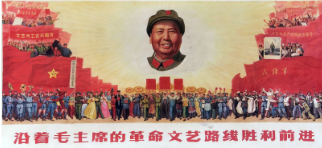
Cultural Revolution poster
However, some historians argue that it reached up to 400,000 deaths due to struggle sessions, torture and imprisonment. Several accounts suggest that around 750,000 to 1.5 million people died as major towns and cities were greatly affected and rural policies were stopped or extremely modified. In the country's memorial, five to 10 million deaths were accounted for.
Education
In 1966, several universities were shut down as the students joined the Red Guards. Moreover, educators were a prime target for attack and, as a result, all schools, colleges and universities were closed for two years. Several intellectuals, including professors and academics, were arrested, tortured and killed. Those who weren't killed were sent to re-education camps.
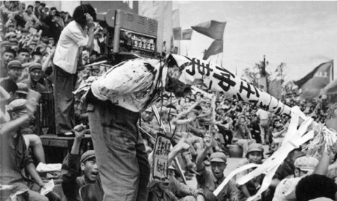
Struggle session
The funding for private education of children of the Chinese Communist Party (CCP) officials was cut off and diverted to rural-based students to encourage equality. Furthermore, with the establishment of the Down to the Countryside Movement in 1968, educated youths known as zhishi qingnian were sent to rural areas to do agrarian chores as part of re-education. Hence, depriving the zhishi qingnian or rusticated educated youths the opportunity for higher education.
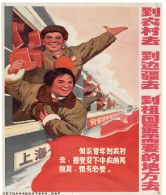
Down to the Countryside Movement poster
Part of the re-education of the people was the Little Red Book, or the Quotations from Chairman Mao Tse-tung compiled by the People's Liberation Army (PLA), published from 1964 to about 1976. It was widely popular amongst the youth as it served as a political and military inspirational book.
Mao introduced a five-year compulsory education programme across the country. This increased the number of primary schools in the countryside 15-fold by 1976. Children from the lower classes had better access to education. Students wishing to enter university could offer references rather than academic grades. Youth literacy rose to 91% by 1981 while adult literacy rose to 65% in 1982.
Economic Effects
The difference between the Great Leap Forwards and the Cultural Revolution was that the former focused on economic growth while the latter on socio-cultural growth. Hence, the latter did not produce positive economic changes.
- Small workshops and industries were set up in the countryside. Hence, the countryside economy grew by 3%.
- Experts, scientists, technicians and managers were mainly killed in the Cultural Revolution. They were replaced by revolutionary committees, which resulted in a skills gap.
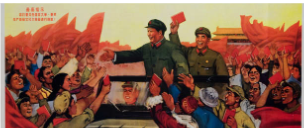
Cultural Revolution poster
- Factories became more egalitarian – everybody worked for the state so no more incentives or bonuses were issued.
- It resulted in a 14% decline in industrial production and totally halted economic growth until 1972.
- Private farming ended/was reduced, which only consisted of 5% of the Chinese countryside. Moreover, the government set prices for farm crops.