The Role of Chromosomes & Hormones (OCR A-Level Psychology): Revision Notes
📚Revision Notes
10.2.1 The Role of Chromosomes & Hormones
Note
The role of chromosomes and hormones (testosterone, oestrogen and oxytocin) in sex and gender
Chromosomes
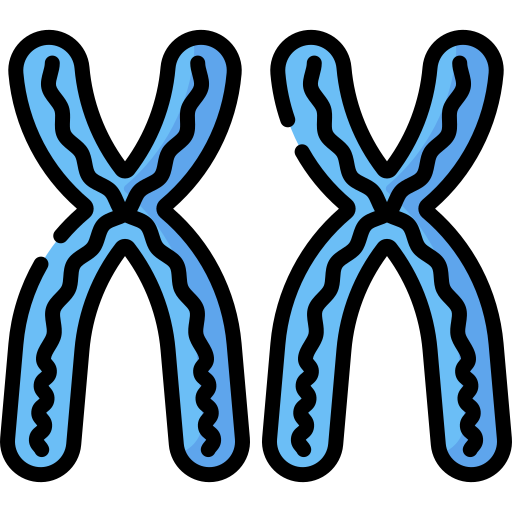
Chromosomes are structures made from DNA that carry genes, which determine the characteristics of living organisms. Humans have 46 chromosomes (23 pairs), and the last pair determines biological sex: XX for females and XY for males. The sex of a baby is determined by the sperm, which can carry either an X or Y chromosome. The Y chromosome contains the SRY (Sex-determining Region Y) gene, which triggers the development of testes in an XY embryo, leading to the production of male sex hormones (androgens).
Hormones
Hormones are biochemical substances that circulate in the blood and affect target organs. They play a crucial role in brain development, the development of sex organs, and the onset of puberty, triggering secondary sexual characteristics such as pubic hair.
Testosterone is a male hormone, though it is also present in small quantities in females. It controls the development of male sex organs during foetal development. High levels of testosterone are linked to aggression, which is considered adaptive as it allows males to compete for mating opportunities.
Oestrogen is a female hormone responsible for female sexual characteristics and the regulation of the menstrual cycle. It can cause heightened emotions and irritability during menstruation, known as premenstrual syndrome (PMS), which has even been used as a defence in legal cases. Oestrogen also increases the effect of oxytocin.
Oxytocin is produced in large quantities by women, especially after childbirth. It stimulates lactation, reduces stress hormones like cortisol, and promotes bonding with the baby. Because men produce less oxytocin, it has contributed to the stereotype that men are less interested in intimacy.
Biological Theory and Gender Development
The biological theory posits that gender and sex are developed simultaneously, with chromosomes and hormones playing a crucial role in determining both.
Evaluation
Support for Biological Influences on Gender
Batista Boys Case Study:
- Point: The Batista Boys case provides support for the role of chromosomes and hormones in determining gender identity.
- Evidence: These individuals were born as females but later revealed their male sex due to a delay in the production of dihydrotestosterone. Once their male sex was revealed, the boys quickly adopted male gender roles.
- Explanation: This case suggests that biological factors, such as chromosomes and hormones, are more influential than environmental factors in shaping gender identity, as the boys' gender role adoption aligned with their biological sex once it was expressed.
Critique of the Biological Perspective
Environmental Influences on the Batista Boys:
- Point: Despite the biological explanation, environmental factors may have played a significant role in the quick adoption of male roles by the Batista Boys.
- Evidence: The Dominican Republic, where the boys were raised, was a highly patriarchal society at the time. Males were valued more than females, and the boys were referred to as "little miracles" because they could bring more financial resources into the family.
- Explanation: This cultural context suggests that the boys' rapid adoption of male roles may have been influenced by societal attitudes, indicating that gender identity may not be solely determined by biological factors, but also by the environment.
Criticism of Reductionism
Reductionist View of Biological Theories:
- Point: A limitation of the biological approach is that it is reductionist, as it reduces gender to the influence of chromosomes and hormones, ignoring other factors.
- Evidence: The cognitive approach highlights the role of thought processes and gender schema in understanding gender. Similarly, the psychodynamic approach would consider the impact of early childhood experiences and family interactions.
- Explanation: This suggests that gender is a complex construct influenced by more than just biological factors. The reductionist view of the biological approach may therefore be too simplistic, as it does not account for the cognitive and social factors that also contribute to gender identity.
Case Study: David Reimer
Importance of Biological Factors:
- Point: The case of David Reimer provides evidence of the importance of biological factors in gender identity.
- Evidence: David Reimer, born Bruce, suffered a surgical accident that resulted in the removal of his genitals. Psychologist John Money attempted to raise him as a girl, Brenda, believing that gender identity could be environmentally conditioned. However, Brenda always felt more masculine and eventually reverted to living as a male, David, despite being raised as a girl.
- Explanation: This case highlights the importance of biological factors like chromosomes and hormones in determining gender identity. Despite an environmental upbringing as a female, David's identification with his biological sex was so strong that it led to severe psychological distress, ultimately resulting in a tragic outcome. This case underscores the limitations of the view that gender identity is entirely flexible and shaped by environmental factors.