Adaptations, Interdependence & Competition (AQA GCSE Biology Combined Science): Revision Notes
📚Revision Notes
7.1.4 Adaptations
Note
Adaptations are features or behaviours that allow organisms to survive and thrive in their specific environments. These adaptations can be categorised into three main types:
- Structural Adaptations
Note
DEFINITION: Physical features of an organism's body that help it survive.
Example
EXAMPLES
- Sharp teeth in carnivores: Used to tear meat apart, making feeding more efficient.
- Camouflage: The tan/brown coat of a lioness helps her blend into the savannah, making it easier to approach prey without being detected.
- Insulation: Species in cold environments, like polar bears, have a thick layer of fat (blubber) and dense fur to retain heat and protect against the cold.
- Behavioural Adaptations
Note
DEFINITION: Actions or behaviours that organisms perform to survive.
Example
EXAMPLES
- Playing dead: Some animals, like opossums, play dead to avoid predators.
- Basking in the sun: Reptiles, such as lizards, bask in the sun to absorb heat and regulate their body temperature.
- Courtship rituals: Many animals, like peacocks, perform elaborate displays to attract mates.
- Functional Adaptations
Note
DEFINITION: Internal processes that help organisms survive, often related to metabolism and reproduction.
Example
EXAMPLES
- Delayed implantation of embryos: Some species, like kangaroos, can delay the development of embryos until environmental conditions are favourable.
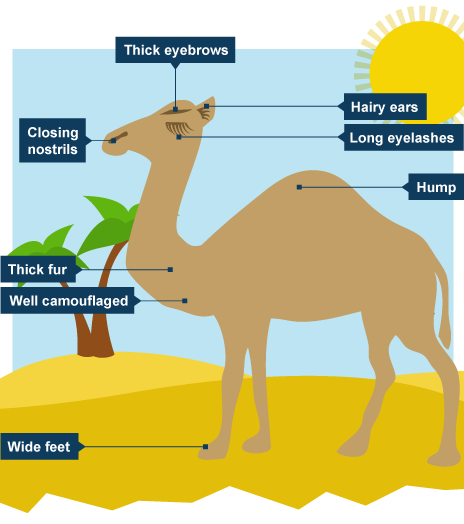
- Water conservation: Desert animals, such as camels, conserve water by producing very concentrated urine and minimising sweat.
Extremophiles
Note
DEFINITION: Organisms that live in environments with extreme conditions, such as high temperatures, high pressures, or high salt concentrations.
Example
EXAMPLES
- Bacteria living in deep-sea hydrothermal vents thrive under extreme pressure and temperature conditions that would be lethal to most other forms of life.
Examples of Adaptations for Specific Environments
- Cold Climates:
- Smaller surface area to volume ratio: Reduces heat loss by minimising the surface area exposed to the cold.
- Insulation: Thick layers of blubber or dense fur help retain body heat.
- Dry Climates:
- Kidney adaptations: Efficient kidneys that produce highly concentrated urine to conserve water.
- Behavioural adaptations: Activity is often restricted to cooler parts of the day, such as early morning or evening, to avoid the intense midday heat.
- Large surface area to volume ratio: Some desert animals have large ears or other adaptations that help dissipate heat.
- Plant Adaptations:
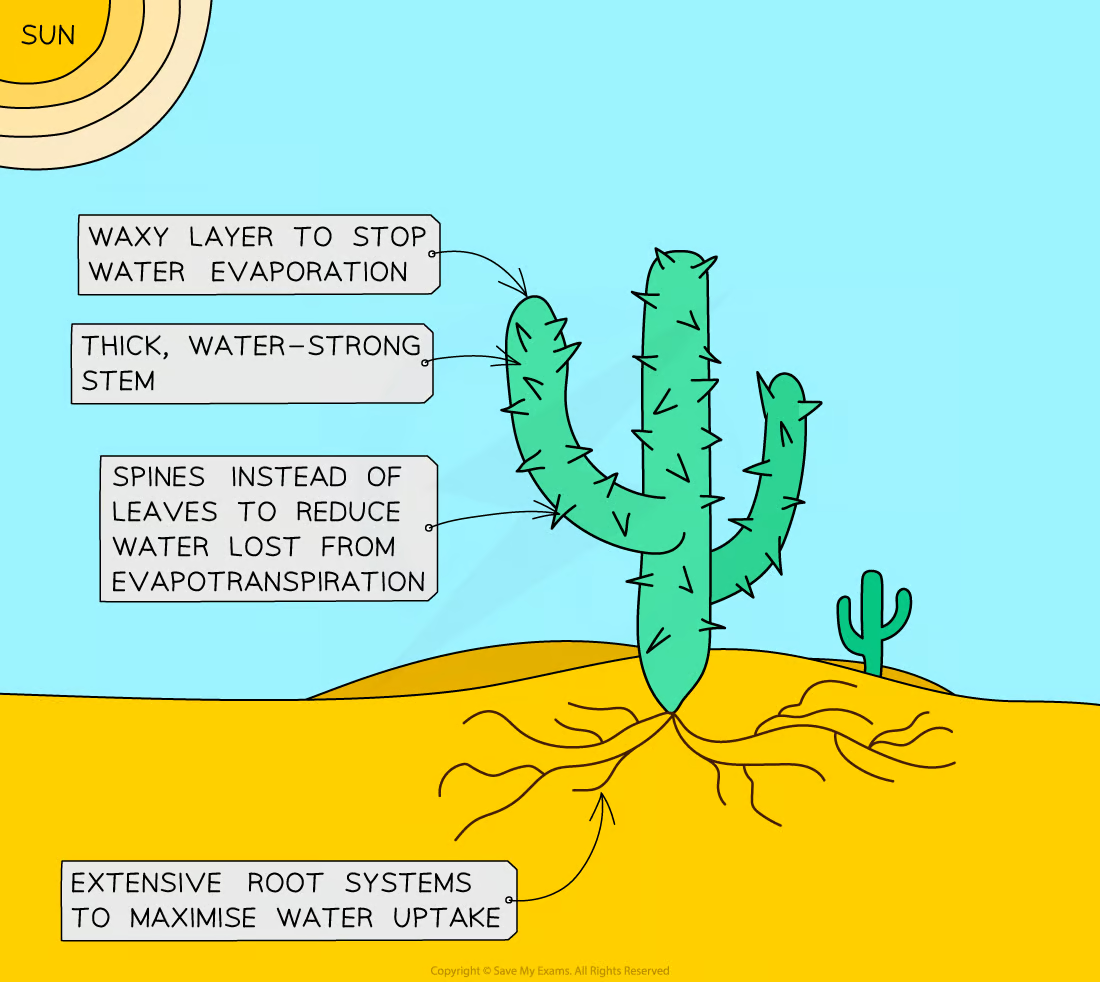
- Curled leaves: Reduce water loss by minimising the surface area exposed to the sun and wind.
- Extensive root systems: Allow plants to absorb as much water as possible from deep or spread-out sources.
- Waxy cuticle: A thick, waxy layer on leaves reduces water evaporation.
- Water storage: Succulent plants, like cacti, store water in their stems to use during dry periods.