Principles of Organisation (AQA GCSE Biology Combined Science): Revision Notes
📚Revision Notes
2.1.1 Principles of Organisation
Note
Cells are the basic building blocks of all living organisms. They are the smallest units of life, carrying out essential functions that sustain the organism.
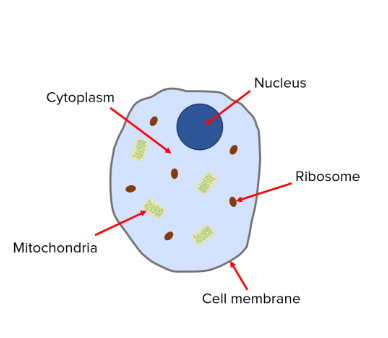
Animal Cell
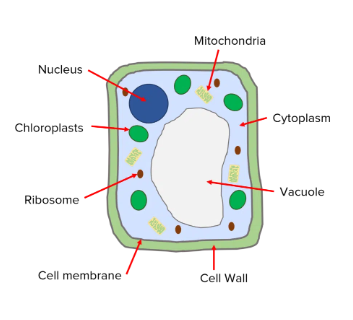
Plant Cell
- Tissues are groups of specialised cells that have a similar structure and work together to perform a specific function. Tissues can consist of one or more types of cells. For example:
- Muscular tissue: Composed of muscle cells, it is responsible for movement.
- Epithelial tissue: Made up of epithelial cells, it covers and protects surfaces both inside and outside the body, such as the lining of the stomach or the skin.
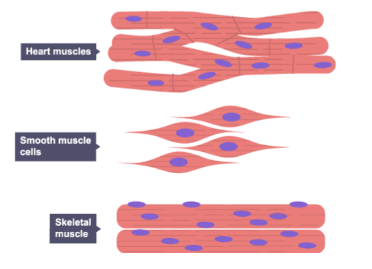
Muscular tissue
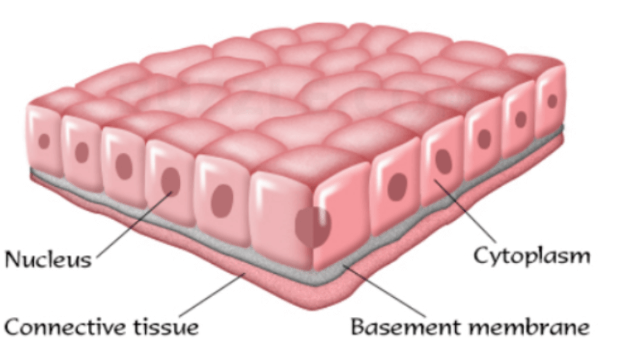
Epithelial tissue
- Organs are structures made up of different types of tissues working together to carry out a particular function. Each tissue within an organ contributes to the organ's overall role. For instance:
- The stomach is an organ that plays a critical role in digestion. It contains:
- Muscular tissue: Helps churn and mix food.
- Epithelial tissue: Protects the stomach lining and secretes digestive enzymes.
- Organ systems are groups of organs that work together to perform complex functions necessary for the body's survival. Each organ within the system has a specific role that contributes to the system's overall function. For example:
- The digestive system includes the stomach, liver, small intestine, and other organs that work together to break down food, absorb nutrients, and eliminate waste.
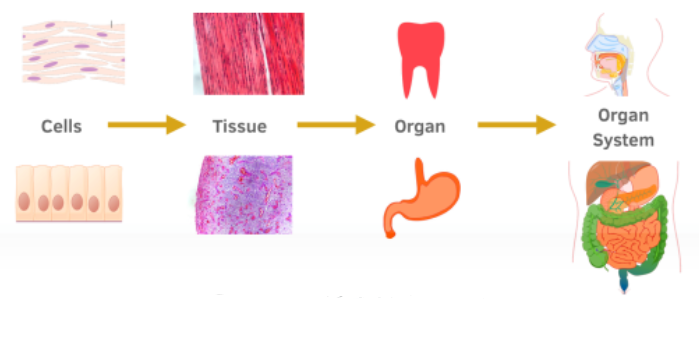
- The digestive system includes the stomach, liver, small intestine, and other organs that work together to break down food, absorb nutrients, and eliminate waste.
Note
These levels of organisation—from cells to tissues, organs, and organ systems—form the complex structures that allow living organisms to function efficiently and effectively.