Variation & Evolution (AQA GCSE Biology): Revision Notes
📚Revision Notes
6.2.5 Cloning
Note
Cloning is the process of producing genetically identical copies of an organism.
Methods of Plant Cloning
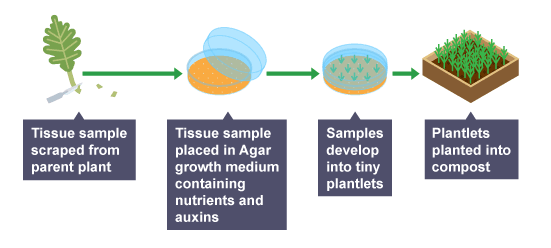
- Tissue Culture:
- Used to preserve rare plant species or for commercial purposes.
- Plant cells are extracted and placed in a growth medium containing nutrients and hormones.
- These cells develop into new plants that are genetically identical to the parent plant, making them clones.
- Cuttings:
- A traditional, simpler method of cloning plants.
- A section of the plant, such as a stem cutting, is taken from a plant with desirable traits.
- The cutting is planted and grows into a new plant that is genetically identical to the original.
Cloning in Animals
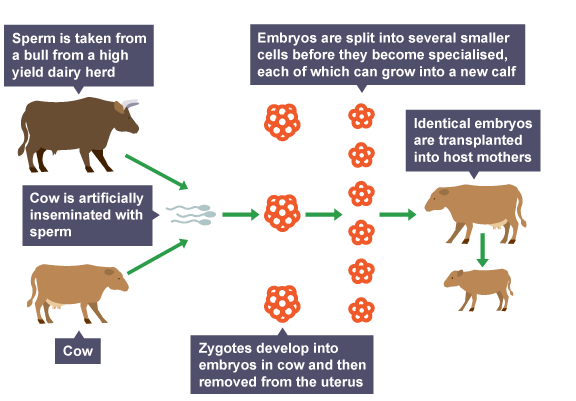
- Embryo Transplants:
- Sperm and egg cells from parents with desirable traits are collected.
- Fertilisation occurs in the lab, creating an embryo.
- The embryo is allowed to divide multiple times before being implanted into a host mother.
- The resulting offspring are genetically identical, carrying the desirable traits of the parents.
- Adult Cell Cloning:
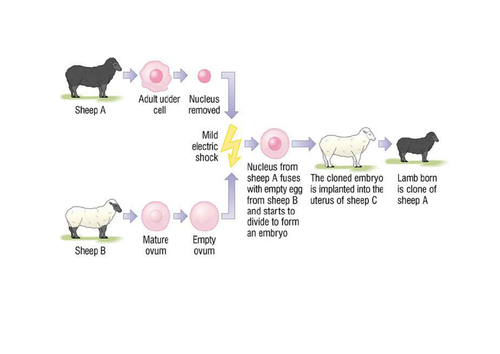
- The nucleus is removed from an unfertilized egg cell.
- The nucleus from an adult body cell is inserted into the enucleated egg.
- An electric shock stimulates the egg cell to divide and form an embryo.
- The embryo is then implanted into a surrogate mother's womb.
- The offspring produced is a clone of the organism from which the adult body cell was taken.
Benefits and Risks of Cloning
| Benefits of Cloning | Risks of Cloning |
|---|---|
| Enables the production of numerous offspring with specific desirable traits. | Reduces genetic diversity, which can make populations more vulnerable to diseases. |
| Can advance research into embryo development and genetic diseases. | Clones often have a lower survival rate and may suffer from genetic abnormalities. |
| Potentially helps in the conservation of endangered species or even the revival of extinct species. | Raises ethical concerns, including the possibility of human cloning. |