Ethical and environmental considerations (AQA GCSE Business): Revision Notes
📚Revision Notes
Environmental issues
Introduction to environmental challenges for businesses
Companies today face increasing pressure to consider their environmental impact. While businesses are legally required to comply with environmental legislation, many choose to go beyond the minimum requirements by implementing additional environmental policies. This decision often connects directly to a company's ethical stance and values.
In recent years, environmental concerns have grown significantly, leading to more UK laws governing business environmental practices. Key areas such as pollution control, waste recycling, and energy conservation have created new standards that increase operational costs for companies. However, these additional expenses are frequently passed on to consumers through higher prices.
Note
The trend towards stricter environmental regulations reflects growing public awareness and concern about climate change and sustainability. This shift has fundamentally changed how businesses must operate and plan for the future.
Understanding environmental considerations
Environmental policies create a complex web of effects that impact both businesses and their customers. Companies must navigate various environmental challenges while balancing cost implications and consumer expectations. Interestingly, consumers often show willingness to pay premium prices for products that demonstrate environmental responsibility, such as organic goods.
Note
Consumer behaviour research shows that environmental consciousness is becoming a significant factor in purchasing decisions, particularly among younger demographics. This trend creates both opportunities and challenges for businesses seeking to balance profitability with sustainability.
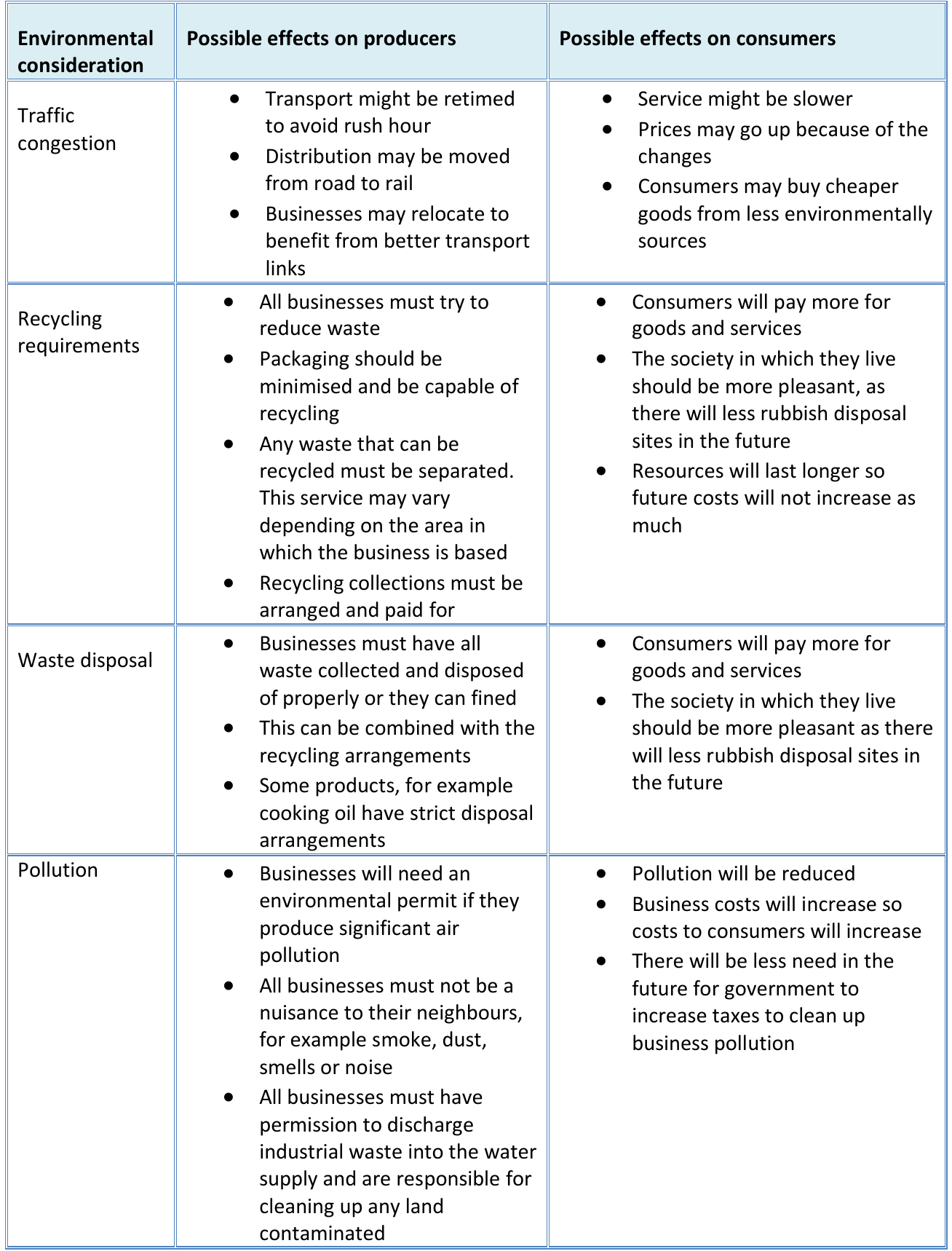
Key environmental policy areas
Traffic congestion management
When addressing traffic-related environmental concerns, businesses face several operational adjustments. Companies may need to reschedule their transport operations to avoid peak traffic periods, which can help reduce emissions and fuel consumption. Some businesses choose to relocate their operations to areas with better transport connections, while others shift their distribution methods from road transport to more environmentally friendly rail systems.
For consumers, these changes often mean slower delivery services and potentially higher prices due to the additional costs of implementing these measures. However, some consumers may choose to purchase from less environmentally conscious suppliers to access cheaper alternatives.
Important
The shift away from road transport requires significant planning and investment. Companies must carefully weigh the environmental benefits against potential disruptions to their supply chains and customer service levels.
Recycling requirements and waste reduction
Recycling policies require all businesses to actively reduce their waste output and implement comprehensive recycling systems. Companies must ensure their packaging materials are designed for easy recycling and establish proper waste separation processes. The complexity of these systems can vary depending on the business location and available local recycling infrastructure.
Businesses must also arrange and fund collection services for recyclable materials, adding to operational costs. From the consumer perspective, these initiatives typically result in higher prices for goods and services. However, society benefits from reduced rubbish disposal sites and longer-lasting natural resources, which helps control future cost increases.
Note
The effectiveness of recycling programmes depends heavily on local infrastructure and consumer participation. Businesses often need to educate both employees and customers about proper recycling practices to maximise the programme's success.
Waste disposal compliance
Proper waste disposal represents a significant environmental consideration for businesses. Companies must ensure all waste is collected and disposed of correctly, or face substantial fines. This often involves combining disposal services with recycling programmes to maximise efficiency.
Certain products, particularly those involving cooking oils and hazardous materials, require special disposal arrangements that can be costly to implement. While consumers pay higher prices for these compliance measures, society benefits from reduced waste disposal sites and a cleaner environment.
Important
Non-compliance with waste disposal regulations can result in severe penalties, including hefty fines and potential legal action. Companies must stay informed about changing regulations and ensure all staff understand proper disposal procedures.
Pollution control measures
Pollution control requires businesses to obtain environmental permits when their operations might produce significant air pollution. Companies must also ensure they don't create nuisances for neighbouring properties through excessive smoke, dust, unpleasant odours, or noise pollution.
For businesses that discharge industrial waste into water supplies, special permissions are required, and companies become responsible for cleaning up any land contamination they cause. While these measures increase business costs that are passed to consumers, they result in reduced overall pollution levels and decrease the future need for government intervention and taxation to address environmental cleanup.
Note
Environmental permits often require regular monitoring and reporting, creating ongoing administrative responsibilities for businesses. The permit application process can be lengthy and requires detailed environmental impact assessments.
Balancing costs and benefits
Environmental policies create both challenges and opportunities for businesses and consumers. Companies face increased operational costs through compliance requirements, new equipment purchases, and additional administrative processes. However, these investments often lead to long-term benefits including improved efficiency, better public image, and access to environmentally conscious consumer markets.
For consumers, environmental policies typically mean higher prices in the short term, but they also contribute to a cleaner, more sustainable environment and reduced future environmental costs. The success of environmental initiatives depends on finding the right balance between immediate costs and long-term environmental benefits.
Note
Many businesses discover that environmental initiatives, while costly initially, can lead to significant savings through improved efficiency, reduced waste, and lower resource consumption. This creates a positive feedback loop that supports further environmental investment.
Remember!
Summary
Key Points to Remember:
- Environmental legislation is mandatory for all businesses, but many companies choose to exceed minimum requirements
- Environmental policies create costs for producers that are typically passed on to consumers through higher prices
- Four key environmental areas affect businesses: traffic congestion, recycling requirements, waste disposal, and pollution control
- Consumers often willingly pay premium prices for environmentally responsible products and services
- Environmental compliance creates both short-term costs and long-term benefits for society as a whole