Giant Covalent Structures (AQA GCSE Chemistry): Revision Notes
📚Revision Notes
2.2.7 Giant Covalent Structures
What Are Giant Covalent Structures?
Note
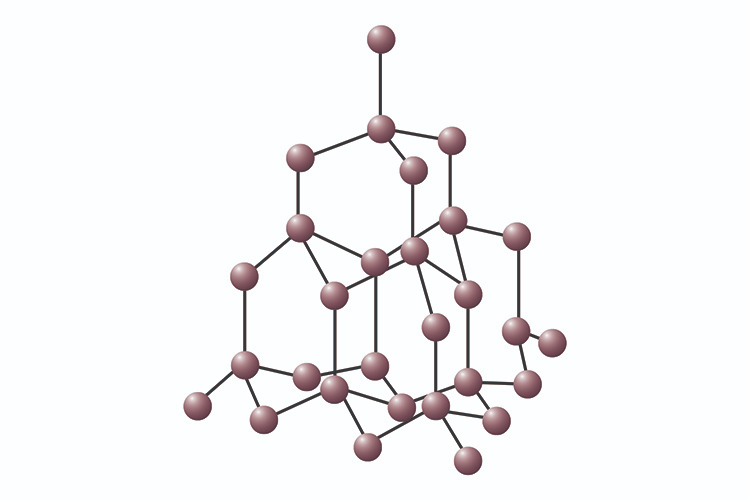
Giant covalent structures are huge networks of atoms bonded together by covalent bonds. Examples include diamond, graphite, and silicon dioxide (silica).
Properties of Giant Covalent Structures:
- High Melting and Boiling Points: These structures have strong covalent bonds that require a lot of energy to break, resulting in very high melting and boiling points.
- Do Not Conduct Electricity: Most giant covalent structures cannot conduct electricity because they don't have free-moving charged particles. The exception is graphite:
Special Case: Graphite:
- Layers: Graphite is made of layers of carbon atoms arranged in hexagons. These layers can slide over each other easily because they are held together by weak forces, making graphite soft and slippery.
- Electrical Conductivity: In graphite, each carbon atom forms only three bonds, leaving one electron free. These free electrons can move through the layers, allowing graphite to conduct electricity.