Conservation of Mass & Balancing Chemical Equations (AQA GCSE Chemistry): Revision Notes
📚Revision Notes
3.1.1 Conservation of Mass & Balancing Chemical Equations
What is the Conservation of Mass?
Note
The law of conservation of mass tells us that during a chemical reaction, the total mass of the substances you start with (reactants) is always equal to the total mass of the substances you end up with (products). This happens because no atoms are created or destroyed in the reaction—they're just rearranged to form new substances.
Balanced Chemical Equations:
Note
Why Do We Need to Balance Equations?: When we write chemical equations, it's important to show that the number of atoms for each element is the same on both sides of the equation. This is what we mean by a "balanced" equation, and it reflects the conservation of mass.
Note
How to Balance a Chemical Equation: The reaction between magnesium iodine and chlorine.

- Write the Unbalanced Equation: Start by writing down the chemical formulas for all the reactants and products.
- Count the Atoms: Look at the number of atoms of each element on both sides of the equation.
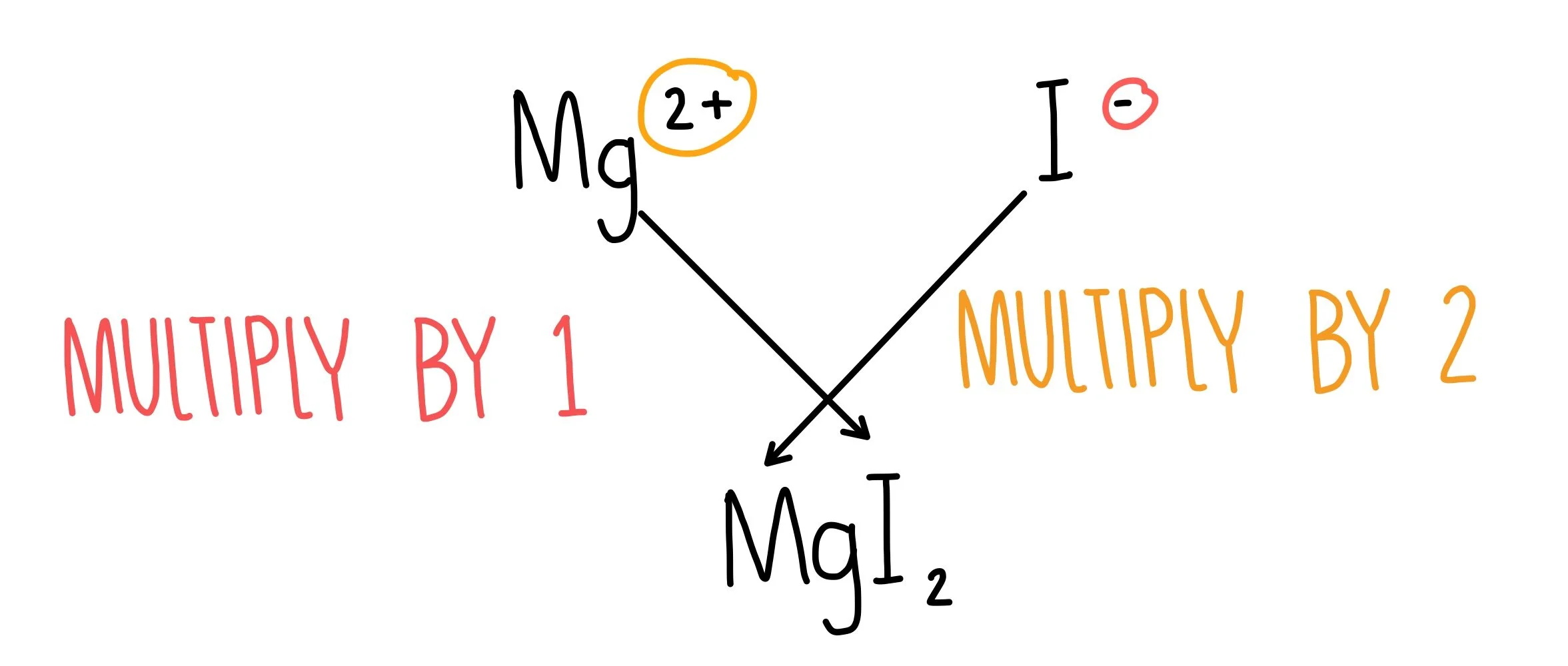
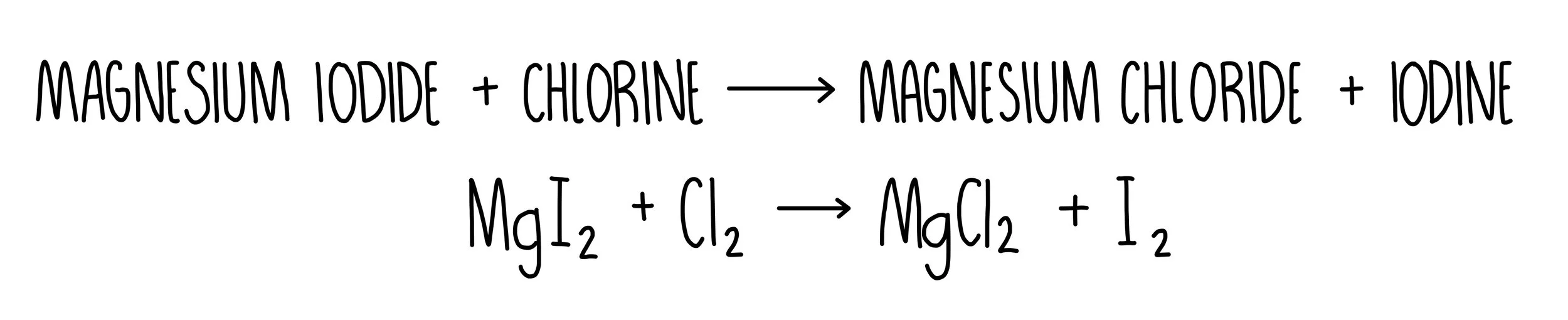
-
Balance the Equation: Adjust the numbers in front of the formulas (called coefficients) to make sure you have the same number of each type of atom on both sides. For example, if you have 2 oxygen atoms on the left side, you need 2 oxygen atoms on the right side too.
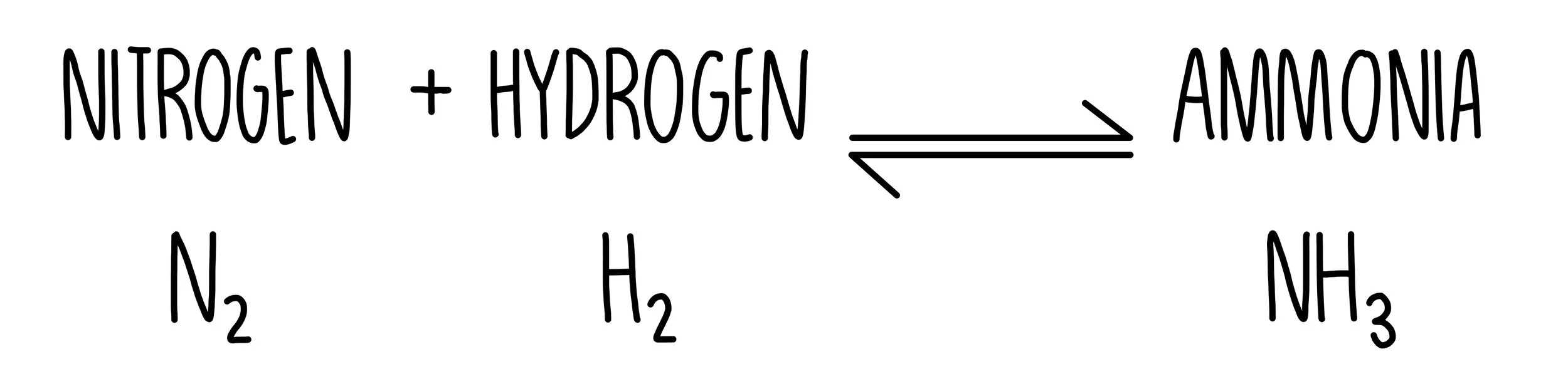
-
Check Your Work: Double-check that the equation is balanced by counting the atoms again. On the left-hand side of the equation, we have 2 hydrogen atoms but 3 on the right. We also have an unbalanced number of nitrogen atoms – 2 on the left and 1 on the right. We can start balancing the nitrogens by putting a big number 2 in front of the ammonia molecule. This changes the number of hydrogens on the right-hand side to 6, which means that we can put a big number 3 in front of the hydrogen molecule on the left to get equal numbers on both sides.
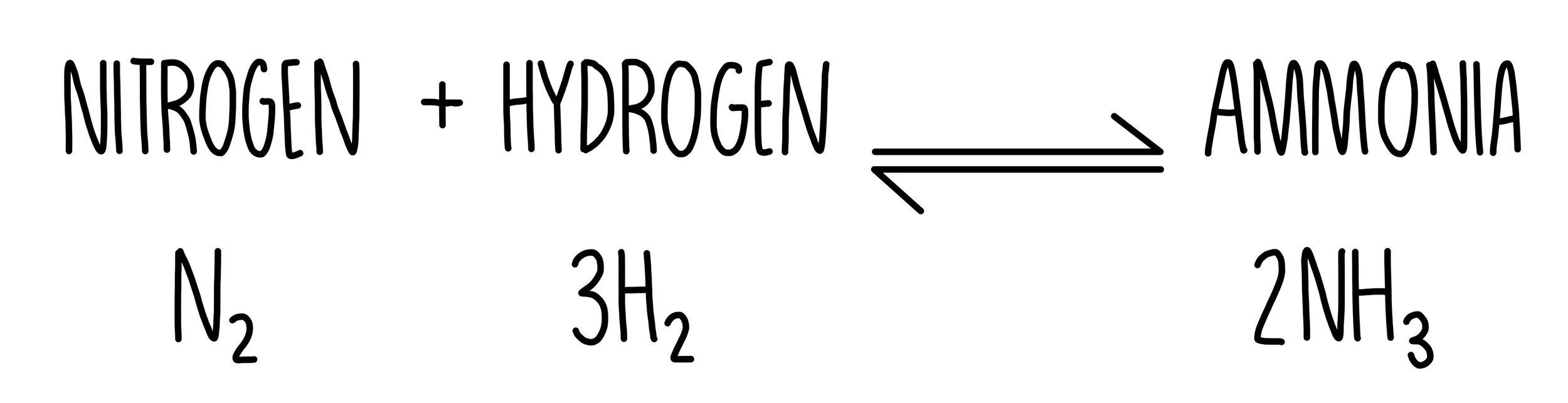
- If you have a balanced chemical equation, the sum of the formula masses (Mr) of the reactants is equal to the sum of the formula masses (Mr) of the products.
Example
Example 2: The reaction between hydrogen and nitrogen to form ammonia :
- First, count the atoms:
- Left side: 2 nitrogen (N) atoms and 2 hydrogen (H) atoms.
- Right side: 1 nitrogen (N) atom and 3 hydrogen (H) atoms. To balance, adjust the coefficients:
- Now, both sides have 2 nitrogen atoms and 6 hydrogen atoms.
Relative Formula Mass (Mr):
Note
Relative Formula Mass is the total mass of all the atoms in a compound. It's calculated by adding up the relative atomic masses (Ar) of all the elements in the compound.