Selecting papers and boards (AQA GCSE Design and Technology): Revision Notes
📚Revision Notes
Selecting papers and boards
When designing products using paper and board materials, you need to make informed decisions about which materials will work best for your specific project. This selection process involves balancing multiple factors to ensure your design is functional, cost-effective, and suitable for its intended purpose.
Design consideration framework
Note
Successful material selection relies on evaluating twelve key factors that influence how well your chosen paper or board will perform. These factors work together to help you make the best choice for your specific design needs.
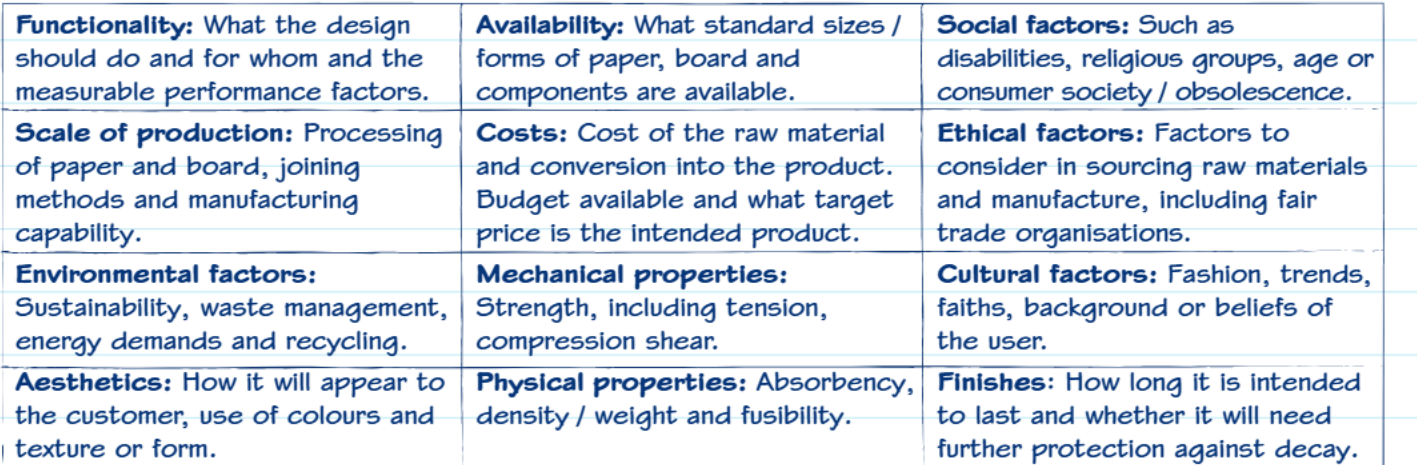 Functionality and performance requirements
Functionality focuses on what your design must accomplish and who will use it. You need to identify the specific performance standards your product must meet. For instance, if you're creating packaging for electronics, it needs to provide protection from static electricity and physical damage, while food packaging must maintain hygiene standards and preserve freshness.
Scale of production considerations
The number of items you plan to produce significantly affects which materials and processes you can use. Large-scale production allows for specialised equipment and bulk material purchasing, while smaller production runs need more flexible approaches. This factor influences everything from joining methods to manufacturing equipment requirements.
Environmental impact factors
Modern design increasingly prioritises sustainability throughout a product's lifecycle. You must consider how materials are sourced, the energy required for production, waste generated during manufacturing, and end-of-life disposal or recycling options. Choosing environmentally responsible materials helps reduce your design's overall environmental footprint.
Aesthetic and visual appeal
How your product looks directly influences customer acceptance and market success. This involves selecting appropriate colours, textures, and surface finishes that appeal to your target audience. The visual elements must also support the product's function - for example, medical packaging might use clean, clinical colours to communicate safety and sterility.
Material availability and standards
Working with readily available materials in standard sizes and specifications helps control costs and ensures reliable supply chains. You need to research what paper and board types, thicknesses, and components suppliers can easily provide. Using non-standard materials often increases costs and production complexity.
Cost analysis and budgeting
Every design project operates within financial constraints that affect material selection. You must balance the cost of raw materials with processing expenses to create your final product. The target selling price and available budget determine what materials you can realistically use while maintaining profitability.
Mechanical strength properties
The structural requirements of your design determine what mechanical properties your materials need. Tension strength affects how well materials resist pulling forces, compression strength determines resistance to crushing, and shear strength influences how materials handle sideways forces. Different applications require different combinations of these properties.
Physical characteristics
Material properties like weight, density, absorbency, and fusibility affect how your product performs in real-world conditions. Lightweight materials might be essential for shipping cost control, while absorbency could be either desirable (for paper towels) or problematic (for outdoor signage).
Social considerations and accessibility
Responsible design considers the diverse needs of all potential users. This includes ensuring accessibility for people with disabilities, accommodating different age groups, and respecting religious or cultural requirements. Social factors also encompass broader community impacts and changing consumer expectations.
Ethical sourcing and manufacturing
Ethical considerations involve how materials are produced and by whom. This includes supporting fair trade practices, ensuring safe working conditions, and avoiding materials from sources that exploit workers or communities. Many consumers now actively choose products from ethically responsible companies.
Cultural factors and user beliefs
Understanding your target market's cultural background, beliefs, and preferences helps ensure your material choices resonate with users. Fashion trends, traditional preferences, and cultural symbolism associated with colours or textures all influence how people perceive and accept your design.
Finish requirements and durability
The intended lifespan of your product determines what protective finishes or treatments might be necessary. Short-term use items like food packaging need minimal protection, while outdoor signage requires weather-resistant finishes to maintain appearance and function over extended periods.
Important
Critical Understanding: All twelve design factors interconnect and influence each other. Successful material selection requires evaluating multiple factors simultaneously rather than focusing on individual aspects in isolation.
Practical application example
Example
Worked Example: Takeaway Food Packaging Selection
Consider takeaway food packaging made from aluminium foil-lined board:
Step 1: Analyse functionality requirements
- The foil lining prevents moisture absorption and helps retain heat
- Directly supports keeping food warm and preventing container sogginess
Step 2: Evaluate production scale compatibility
- Material works well for high-volume production
- Can be manufactured continuously and formed efficiently
- Suitable for restaurants needing large quantities
Step 3: Assess additional factors
- Cost-effective for single-use applications
- Provides adequate strength for typical food weights
- Can be easily printed with branding for aesthetic and marketing purposes
This example demonstrates how multiple design factors work together to validate a material choice.
Improving material properties
Paper and board materials can be enhanced through various techniques to better meet specific design requirements. Understanding these enhancement methods allows you to modify standard materials rather than sourcing specialised alternatives.
Note
Enhancement Techniques: These methods allow designers to modify standard materials to meet specific performance requirements without switching to entirely different material types, often providing cost-effective solutions to design challenges.
Enhancing flexibility
Scoring creates controlled fold lines by partially cutting or pressing lines into the material surface. This technique allows precise bending for creating boxes, packaging, or three-dimensional forms while maintaining clean, professional-looking edges.
Increasing rigidity and strength
Folding techniques can dramatically increase the structural strength of paper and board materials. Strategic folding creates rigid forms from relatively thin materials, while multiple folds can produce surprisingly strong construction elements.
Surface improvement methods
Laminating involves bonding additional layers to paper or board surfaces, improving durability, moisture resistance, and visual appeal. Encapsulation surrounds materials with protective layers, providing comprehensive protection while enhancing structural integrity.
Summary
Key Points to Remember:
-
All twelve factors interconnect - successful material selection requires balancing multiple considerations rather than focusing on just one or two aspects
-
Match properties to purpose - ensure your chosen material's characteristics directly support your design's primary functions and user needs
-
Consider the full product lifecycle - from sourcing raw materials through manufacturing, use, and disposal, each stage affects your material choice
-
Enhancement techniques expand options - scoring, folding, and surface treatments can modify standard materials to meet specialised requirements
-
Real-world constraints matter - availability, budget limitations, and production capabilities will ultimately influence your final material selection decisions