Sources and origins (AQA GCSE Design and Technology): Revision Notes
📚Revision Notes
Sources and origins of papers and boards
What are papers and boards?
Papers and boards are versatile materials created from tiny cellulose fibres. These materials are categorised based on their weight and how they're constructed. Understanding where these materials come from and how they're made helps us appreciate their properties and uses in everyday life.
Where do the raw materials come from?
Timber sources
The majority of materials for paper and board production come from trees. Approximately 85% of the timber used comes from coniferous trees (those with cones, like pine and fir trees). These evergreen trees are particularly suitable because they have long, strong fibres that create durable paper products.
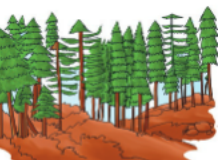 The remaining timber comes from deciduous trees (those that lose their leaves seasonally). These broadleaf trees contribute different fibre characteristics that can be blended with coniferous fibres to achieve specific paper properties.
Note
Coniferous trees are preferred for paper production because their long, strong fibres create more durable products. The 85/15 split between coniferous and deciduous timber reflects this quality difference.
Alternative raw materials
Beyond traditional timber, manufacturers use various other plant-based materials including grasses, cotton, straw, bamboo, flax, and hemp. These alternatives provide different textures, strengths, and environmental benefits. Each material brings unique characteristics to the final product.
Recycled materials
Recycled paper represents another crucial source of raw materials. Using recycled paper helps conserve natural resources, reduces energy consumption, saves water, and decreases the amount of waste sent to landfills. This sustainable approach supports environmental responsibility while maintaining product quality.
Important
Environmental Impact of Recycling: Using recycled paper is essential for sustainability as it:
- Conserves natural forest resources
- Reduces energy consumption by up to 60%
- Saves water in the manufacturing process
- Diverts waste from landfills
The papermaking process
Understanding how raw materials transform into paper involves following a systematic five-step process:
Example
The Complete Papermaking Process:
Step 1: Growing and harvesting Trees are specifically cultivated for paper production in managed forests, ensuring sustainable supply while maintaining environmental balance.
Step 2: Preparation and chipping Logs undergo de-barking to remove lower quality outer bark, then are cut into uniform wood chips for efficient processing.
Step 3: Creating pulp Wood chips are converted to pulp using chemical processes. Sodium hydroxide breaks down lignin (the natural glue holding cellulose fibres together), allowing valuable cellulose fibres to be extracted.
Step 4: Forming the paper sheet The pulp creates a slurry that is 99% water and only 1% actual fibres. This mixture is spread on wire screens, water drains away, and the remaining fibres pass through calendaring rollers to achieve uniform thickness.
Step 5: Finishing and distribution Completed paper is dried and wound into large rolls for transportation and distribution to cutting facilities.
Step 1: Growing and harvesting
Trees are specifically cultivated for paper production in managed forests. This ensures a sustainable supply of raw materials while maintaining environmental balance. When trees reach maturity, they're harvested using methods that minimise environmental impact.
Step 2: Preparation and chipping
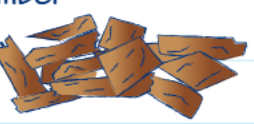
Once harvested, logs undergo de-barking to remove the outer bark, which is considered lower quality material. The cleaned timber is then cut into small pieces called chips, creating uniform pieces that process more efficiently in subsequent steps.
 Step 3: Creating pulp
The wood chips are converted into pulp through either mechanical or chemical processes. Chemical pulping often uses substances like sodium hydroxide to break down the lignin - the natural glue that holds cellulose fibres together in wood. This separation allows the valuable cellulose fibres to be extracted and reformed into paper products.
Step 4: Forming the paper sheet
The resulting pulp creates a slurry that contains approximately 99% water and only 1% actual fibres. This mixture is pumped onto a flat wire screen where water drains away, leaving behind a mat of damp, interwoven fibres. The fibres then pass through rollers in a process called calendaring, which removes remaining water and compresses the material into a uniform thickness. More calendaring produces a higher gloss finish.
Step 5: Finishing and distribution
The completed paper is dried thoroughly and wound into large rolls for easy transportation and storage. These rolls are then distributed to various facilities where they're cut into manageable sizes for different applications.
Board manufacturing
Board production follows similar principles to papermaking but with important variations. Single-layer boards use essentially the same process as paper production. However, many boards feature multiple layers to achieve specific properties.
 Multi-layer construction
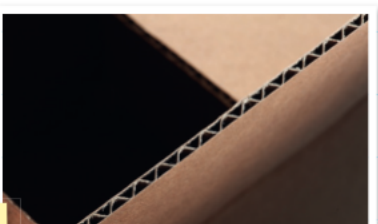
Different types of boards include duplex board (two layers), foil-lined board for moisture protection, and foam core board for lightweight strength. Some boards incorporate complex internal structures designed to provide impact resistance or increased strength for demanding applications.
Note
Types of Board Construction:
- Single-layer boards: Use the same process as paper production
- Duplex board: Two-layer construction for added strength
- Corrugated cardboard: Fluted inner layer between flat outer layers
- Foam core board: Lightweight with excellent strength-to-weight ratio
Corrugated cardboard represents a particularly clever design, featuring a fluted inner layer sandwiched between flat outer layers. This structure provides excellent strength-to-weight ratio while remaining cost-effective to produce.
Special treatments
Manufacturers often add sizing agents - special chemicals that provide water resistance and improve printability. These treatments ensure that papers and boards perform well when exposed to moisture or various printing methods including offset printing and inkjet printing.
Practical applications
The choice of paper or board type depends on the intended use. For example, corrugated cardboard excels in packaging applications because it's lightweight, easy to transport, offers good protection, and costs relatively little to produce using lower-grade materials. Additionally, corrugated packaging can be printed with product information and recycled after use.
Different manufacturing processes and material choices allow producers to create papers and boards with specific characteristics - from thin, smooth writing paper to thick, strong cardboard suitable for shipping containers.
Note
Why Corrugated Cardboard is Ideal for Packaging:
- Lightweight and easy to transport
- Excellent protection for contents
- Cost-effective production using lower-grade materials
- Can be printed with product information
- Fully recyclable after use
Remember!
Summary
Key Points to Remember:
- Raw materials: About 85% of paper materials come from coniferous trees, with the rest from deciduous trees and alternative plant sources
- Recycling matters: Recycled paper saves energy, water, and landfill space while providing quality raw materials
- Five-step process: Paper production involves harvesting, chipping, pulping, sheet formation, and finishing
- Pulp composition: The pulp slurry contains 99% water and only 1% actual fibres
- Board versatility: Boards can be single-layer or multi-layer with special structures for different strength and protection requirements