Sources and origins (AQA GCSE Design and Technology): Revision Notes
📚Revision Notes
Sources and origins of textile-based materials
Introduction to textile fibres
Textile fibres form the foundation of all fabric production and can be categorised into two main groups: natural fibres and synthetic fibres. Natural fibres come from living sources like animals and plants, while synthetic fibres are manufactured from chemical compounds designed to have specific properties.
Understanding where these fibres come from helps us appreciate why different textiles have varying characteristics, costs, and applications in clothing and other products.
Important
The fundamental distinction between natural and synthetic fibres determines their properties, cost, processing methods, and environmental impact. This classification is essential for understanding textile production and selection.
Animal-based fibres
Animal fibres have been used by humans for thousands of years and remain popular due to their excellent natural properties.
Wool production
Wool comes primarily from sheep but can also be obtained from other animals. The natural coating on animal hair contains a waxy substance called lanolin, which provides water resistance and helps keep the animal warm. This makes wool particularly valuable for creating warm clothing.
Note
Lanolin is a natural wax that not only provides water resistance but also has antibacterial properties, making wool naturally odor-resistant and requiring less frequent washing than many other fibres.
Different types of wool include:
Example
Types of Specialty Wool and Their Sources:
- Cashmere - obtained from cashmere goats, known for being exceptionally soft
- Angora - sourced from rabbits, creating very soft wool
- Camel hair - can be mixed with other types of wool to create softer yarns
Wool is highly valued because of its natural warmth properties and wide availability from farming.
Silk production
Silk represents one of the most luxurious natural fibres available. It originates from the cocoon created by silkworms, specifically produced by silk moth caterpillars. The process of silk production has remained largely unchanged for centuries, making it both traditional and valuable.
Plant-based fibres
Vegetable sources provide some of the most commonly used fibres in textile production, each with distinct characteristics that make them suitable for different applications.
Cotton
Cotton appears as white, fluffy fibres that grow around the seeds inside cotton plant pods. This fibre has become incredibly popular due to several beneficial properties:
- Versatile and adaptable for many uses
- Strong and durable
- Excellent colour retention when dyed
- Comfortable to wear
Note
Cotton's ability to absorb moisture while remaining breathable makes it ideal for clothing worn close to the skin, explaining its widespread use in underwear, t-shirts, and bedding.
Linen
Linen fibres come from the long stems of flax plants, which typically grow in cooler regions of the world. Linen offers several advantages:
- Highly durable and long-lasting
- Strong construction
- Naturally absorbs moisture well
- Does not stretch easily, maintaining its shape
Chemical and synthetic sources
Modern textile production relies heavily on synthetic fibres created from oil-based chemicals. These materials are specifically engineered to possess particular characteristics that natural fibres might not provide.

Important
Unlike natural fibres, synthetic fibres can be designed with specific properties such as water resistance, elasticity, or enhanced durability. This engineering capability allows manufacturers to create textiles for specialised applications that natural fibres cannot fulfil.
Unlike natural fibres, synthetic options include polyester, polyamide (commonly known as nylon), and elastane (also called lycra). Each synthetic fibre type serves specific purposes in textile manufacturing.
Processing methods
Before any fibre can be used in textile production, it must undergo processing to prepare it for spinning and weaving.
Animal fibre processing
Wool requires careful preparation after being removed from animals. The raw wool gets sorted according to quality, then thoroughly cleaned to remove dirt and natural oils. Following cleaning, the wool undergoes carding - a process that aligns the fibres in the same direction - before being spun into yarn.
Silk processing involves collecting fibres from cocoons, followed by steaming and unwinding the continuous silk strands before spinning begins.
Plant fibre processing
Example
Cotton Processing Steps:
Step 1: Ginning - Seeds and plant debris get separated from the usable cotton fibres
Step 2: Cleaning - Remove remaining impurities
Step 3: Carding - Organise the fibres properly before spinning
Cotton processing includes a step called ginning, where seeds and plant debris get separated from the usable cotton fibres. After cleaning, the cotton gets carded to organise the fibres properly before spinning.
Linen production requires threshing the dried flax stalks to extract the usable fibres from the plant material.
Synthetic fibre processing
Synthetic fibres start as polymer solutions that get extruded (pushed through small holes), then cooled and solidified into continuous strands ready for further processing.
Spinning process
Spinning transforms processed fibres into continuous threads or yarns strong enough for fabric production. This process creates uniform thickness throughout the thread, which is essential for consistent textile quality.
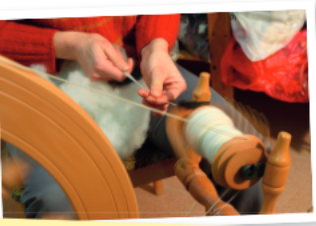
Traditional spinning methods use spinning wheels to twist fibres together, creating strong, continuous strands. The twisting action bonds the individual fibres into a cohesive thread.
Modern industrial spinning employs similar principles but uses advanced machinery. The process involves carding, which separates fibres and arranges them in one direction, creating thin strands called 'slivers'. These slivers then pass through rollers and get twisted together to form the final yarn.
Note
Carding serves as a mechanical process that disentangles fibres and straightens them, ensuring the finished yarn has consistent quality and strength. This step is crucial for both natural and synthetic fibre processing.
Summary
Key Points to Remember:
- Natural fibres come from animals (wool, silk) and plants (cotton, linen), while synthetic fibres are chemically manufactured
- Wool provides excellent warmth and comes from various animals, with lanolin giving it natural water resistance
- Cotton and linen are the most common plant-based fibres, each offering durability and comfort
- All fibres require processing before use, including cleaning, sorting, and carding to prepare them for spinning
- Spinning converts fibres into yarn by twisting them together, creating the continuous threads needed for fabric production