Wastage (AQA GCSE Design and Technology): Revision Notes
📚Revision Notes
Wastage in textile-based materials
Understanding wastage is crucial when working with textiles, as it involves the selection and use of appropriate tools and processes to cut high-quality prototypes efficiently. The right cutting method can minimise material waste and ensure precise results.
Hand tools for cutting and shearing textiles
Hand tools are essential for detailed work and small-scale projects. Each tool serves a specific purpose in textile work, and choosing the right one helps reduce wastage while achieving clean, accurate cuts.
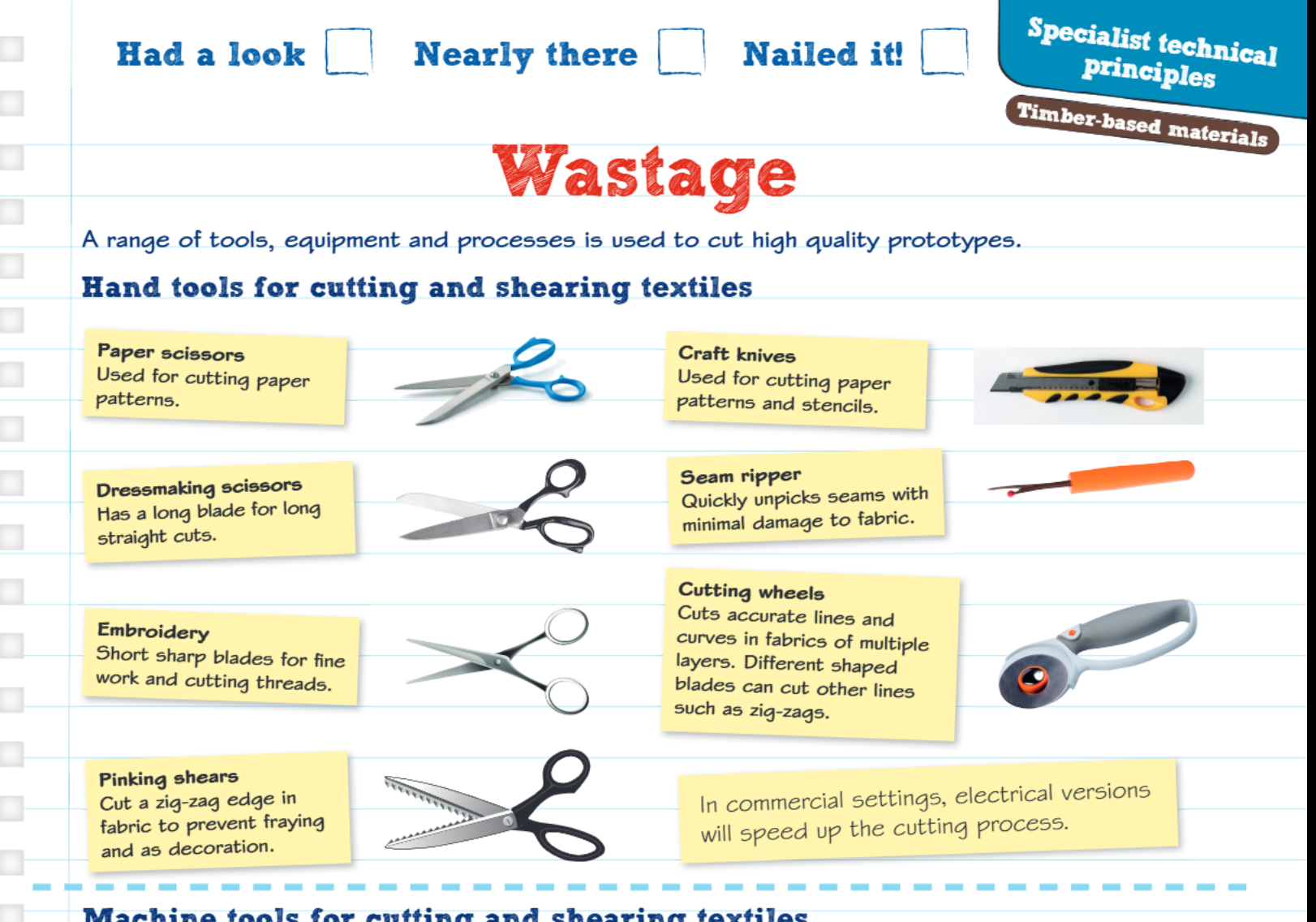
Paper scissors are designed specifically for cutting paper patterns. Using dedicated paper scissors prevents dulling of your fabric scissors and ensures clean pattern edges that will transfer accurately to your fabric pieces.
Craft knives excel at cutting paper patterns and stencils with precision. Their sharp, replaceable blades allow for intricate cuts and detailed work that would be difficult with scissors. They're particularly useful for creating templates and cutting around curved patterns.
Dressmaking scissors feature long blades designed for making straight cuts through fabric. Their extended length allows you to cut long, smooth lines without having to reposition the scissors multiple times, which could create uneven edges and increase wastage.
Note
Seam rippers are specialised tools that quickly unpick seams with minimal damage to the fabric. This precision tool helps salvage fabric pieces when mistakes occur, reducing overall material wastage by allowing you to reuse fabric rather than discarding it.
Embroidery scissors have short, sharp blades perfect for fine work and cutting threads. Their precise cutting action prevents accidental snips in the wrong places and allows for detailed work without damaging surrounding fabric areas.
Cutting wheels can cut accurate lines and curves in fabrics, even through multiple layers. Different shaped blades allow for various line types, including decorative zig-zag cuts. This versatility means one tool can handle multiple cutting tasks, improving efficiency.
Pinking shears create a distinctive zig-zag edge that serves both functional and decorative purposes. The serrated edge they produce helps prevent fabric fraying, which extends the life of cut edges and reduces the need for additional finishing techniques.
Important
In commercial settings, electrical versions of these hand tools significantly speed up the cutting process. This increased efficiency is essential when working with large quantities of fabric and tight production schedules.
Machine tools for cutting and shearing textiles
Machine cutting methods offer greater speed and consistency, particularly important in commercial textile production where precision and efficiency directly impact material costs.
Band knife cutting uses a continuous knife blade that moves through fabric layers. This method efficiently cuts multiple layers of fabric simultaneously and works particularly well with soft fabrics like felt. The continuous motion provides smooth cuts without the stop-start action that can cause fabric distortion. Commercial operations often use computer-controlled band knives for even greater precision.
Laser cutting represents a high-tech approach to fabric cutting. This method excels at cutting intricate shapes and patterns in materials like paper, card, cotton, silk, polyester, and felt. The laser beam creates extremely precise cuts with clean edges, virtually eliminating fraying. This precision reduces wastage significantly as cuts are exact and consistent every time.
Example
Die Cutting Process Example
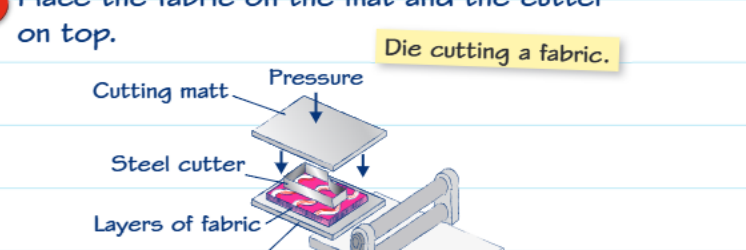
Die cutting employs specially shaped steel strips formed into the exact pattern needed. The process involves three key steps:
Step 1: Place the fabric on a cutting mat Step 2: Position the steel cutter die on top of the fabric Step 3: Apply downward pressure to cut through the material
This method ensures consistent results and minimises material waste through precise, repeatable cuts.
While die cutting can handle multiple fabric layers, the blade thickness limits how many layers can be cut at once. Die cutting is particularly valuable in the fashion industry where consistent shapes are needed in large quantities.
Considerations for reducing wastage
When using laser cutting equipment, several precautions help ensure safe operation and minimise material waste.
Important
Safety and Efficiency Guidelines for Laser Cutting:
- Use suitable extraction systems to remove any fumes produced during cutting
- Only use appropriate materials that won't burn or produce toxic fumes
- Keep materials flat during cutting to ensure accurate shape cutting and prevent distorted pieces that would need to be discarded
Note
Understanding when to use pinking shears can significantly reduce fabric wastage. These specialised scissors help reduce fraying in cut fabric edges, which means less material is lost to frayed edges over time. This is particularly important when working with fabrics that fray easily.
Summary
Key Points to Remember:
- Different cutting tools serve specific purposes - using the right tool for each job minimises wastage and improves results
- Commercial electrical versions of hand tools increase cutting speed and efficiency for large-scale production
- Machine cutting methods like laser cutting and die cutting offer greater precision and consistency than hand tools
- Proper technique and tool selection directly impact material efficiency and final product quality
- Pinking shears serve a dual purpose by creating decorative edges while preventing fraying and extending fabric life