Texts that Advise (AQA GCSE English Language): Revision Notes
📚Revision Notes
Texts that advise
What are texts that advise?
Texts that advise are written to help readers make decisions or solve problems. Unlike persuasive writing that tries to convince you of a particular viewpoint, advice texts aim to guide readers towards making informed choices. Writers of advice texts want their audience to trust their suggestions and follow their recommendations.
Good advice writing can be found everywhere - from financial guidance and health recommendations to lifestyle tips and career counselling. The key is that these texts are designed to be helpful rather than argumentative.
Note
The main difference between advice writing and persuasive writing is intent: advice texts aim to help readers make their own informed decisions, while persuasive texts try to convince readers to adopt a specific viewpoint or take particular action.
Key characteristics of advice writing
Clear and calm tone
Writers who give advice adopt a tone that sounds clear and calm rather than emotional or aggressive. This approach helps readers feel comfortable and confident about following the suggestions. The writing style is typically less emotional than texts that argue or try to persuade, making it easier for readers to process the information objectively.
Direct communication
Advice writing tends to be clear and direct in its approach. Writers don't want to confuse their readers with complex language or ambiguous statements. Instead, they aim to provide straightforward guidance that can be easily understood and acted upon.
Important
A calm, clear tone is essential for advice writing because it builds trust and makes readers more likely to follow the guidance. Emotional or aggressive language can make readers defensive and less receptive to the advice.
Language techniques in advice writing
Vocabulary choices
Writers carefully select vocabulary that matches their audience's level of subject knowledge. For example, a financial advisor writing for beginners would use simpler terms than one writing for experienced investors. This ensures the advice is accessible and useful for the intended readership.
Second person pronouns
Advice texts frequently use second person pronouns like 'you' to make the guidance feel personal and direct. This technique helps create a connection between the writer and reader, making the advice feel more relevant and engaging.
Example
Example: Personal Connection Through Pronouns
Compare these two approaches:
- Without second person: "One should consider their financial goals before investing."
- With second person: "You should consider your financial goals before investing."
The second version feels more direct and personal, creating a stronger connection with the reader.
Logical structure
Effective advice writing follows a logical structure that makes the information easy to follow. Writers often organise their content in a step-by-step format or use clear headings and subheadings to guide readers through the process.
Register in advice writing
The register (level of formality) in advice writing depends on the context and audience. It can be:
- Formal: Such as legal advice from a solicitor or official government guidance
- Informal: Like advice columns in magazines or casual blog posts
Writers choose their register based on their relationship with the audience and the seriousness of the subject matter.
Note
Choosing the Right Register
Consider your audience and purpose:
- Formal register builds authority and professionalism
- Informal register creates relatability and accessibility
- The subject matter's seriousness should also influence your choice
Analysing advice texts
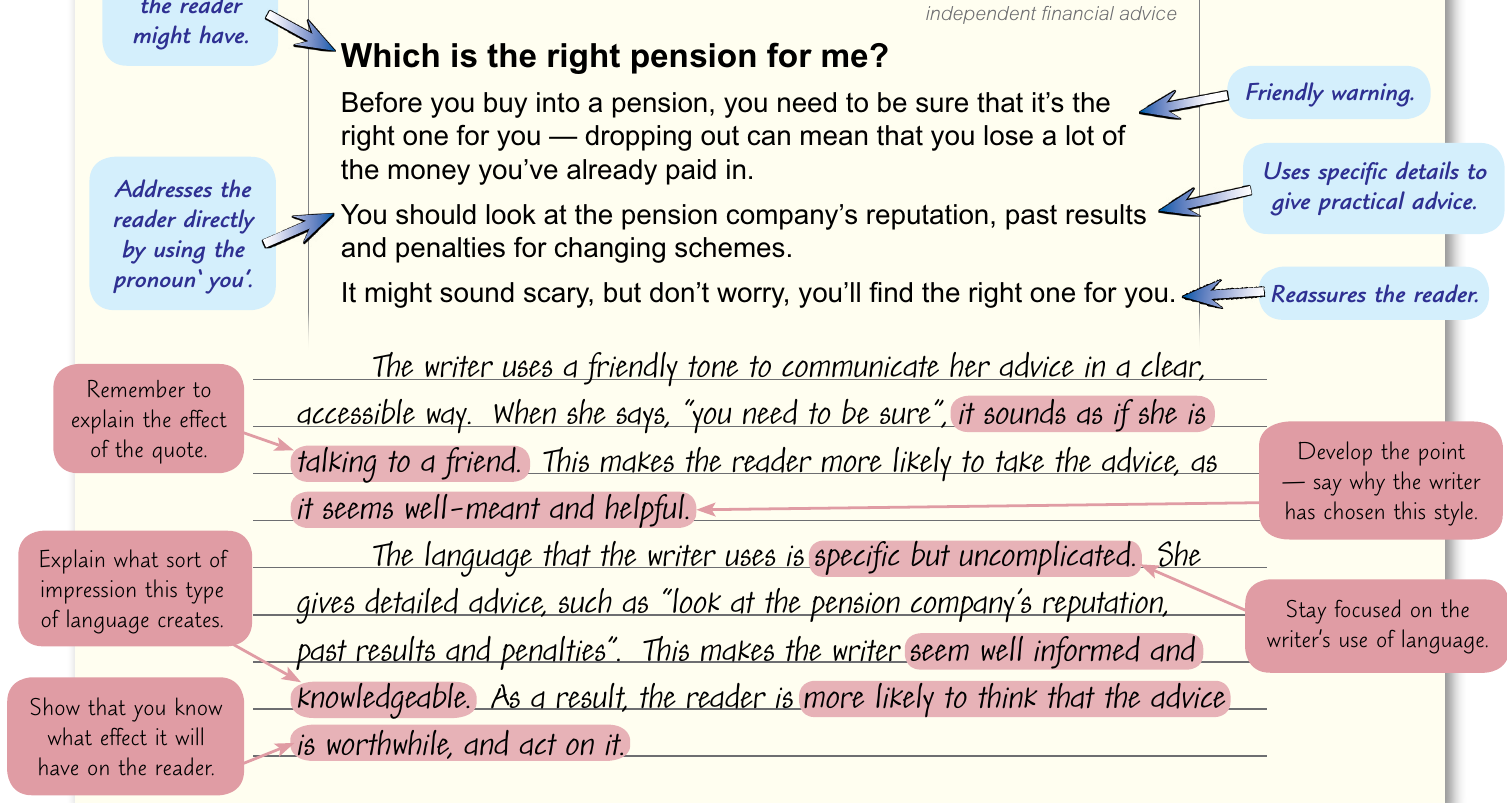
When examining advice texts, look for specific language techniques and their effects on readers. Consider how writers:
- Use questions to engage readers and address their concerns
- Include specific details to make advice practical and actionable
- Provide reassurance to help readers feel confident about their decisions
- Choose friendly language to build trust and rapport
Example
Analysis Example: Building Trust Through Language
When a financial advisor writes "you need to be sure", this creates a sense of personal conversation whilst emphasising the importance of careful consideration. The friendly tone makes readers more likely to trust and follow the advice.
Notice how the phrase:
- Uses second person ("you") for personal connection
- Includes gentle emphasis ("need to be sure") without being pushy
- Balances authority with approachability
Understanding the writer's purpose
Writers of advice texts use specific language choices to achieve their goals. They want to:
- Build trust with their readers
- Make complex information accessible
- Encourage readers to take action
- Provide practical, useful guidance
The most effective advice writing combines expertise with clear communication, helping readers understand not just what to do, but why they should do it.
Important
The Trust Factor
Building trust is crucial in advice writing because readers need to believe in the writer's expertise and good intentions before they'll follow recommendations. This is achieved through consistent tone, clear explanations, and demonstrating understanding of the reader's needs.
Summary
Key Points to Remember:
- Advice writing has a clear, calm, and direct tone that differs from persuasive or argumentative texts
- Writers use second person pronouns ('you') to create a personal connection with readers
- Vocabulary is carefully chosen to match the audience's level of knowledge
- The register can be formal or informal depending on the context and audience
- Effective advice writing combines practical guidance with reassuring language to build reader confidence