Changing River Shape - River Profiles and Erosion (AQA GCSE Geography): Revision Notes
📚Revision Notes
3.3.1 Changing River Shape - River Profiles and Erosion
Long Profile
Note
Definitions
- Course: The path of a river as it flows downhill.
- Sections: Rivers have an upper course, a middle course, and a lower course.
- Functions:
- Erode the landscape.
- Transport material.
- Deposit material.
- Shape Changes: The shape of the river changes along its course depending on whether erosion or deposition is taking place.
- Gradient: A river's long profile shows how the gradient (steepness) changes over time.
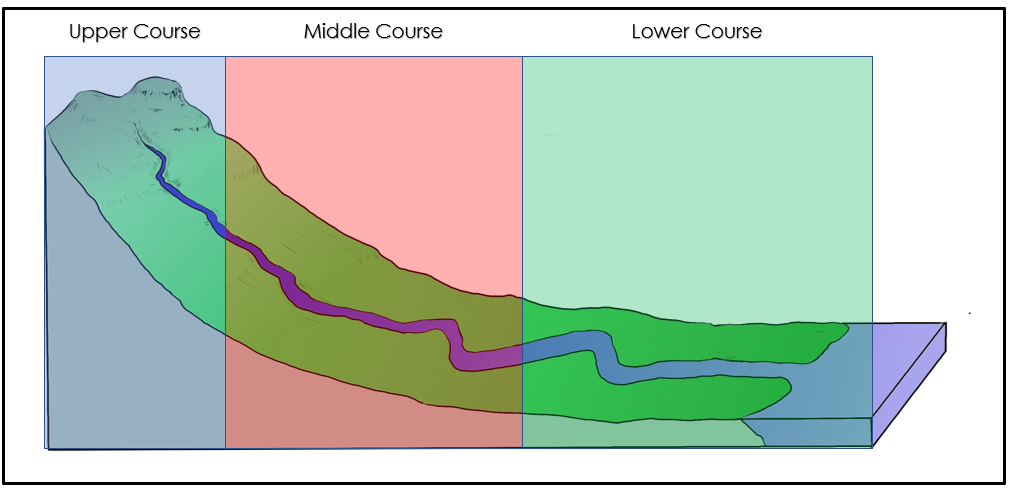
Long Profile
Note
Upper Course
- Steep
- V-shaped valley with steep sides
- Narrow and shallow
Note
Middle Course
- Gently sloping
- Sloping valley sides
- Wider and deeper channel
Note
Lower Course
- Steep
- V-shaped valley with steep sides
- Narrow and shallow
Cross Profile
Note
Cross Profile: An imaginary slice across a river channel and its valley at a particular point.
Changes: Becomes flatter and wider as the river erodes more laterally the further downstream you go.
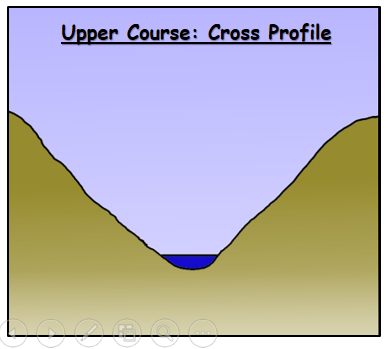
Upper Course
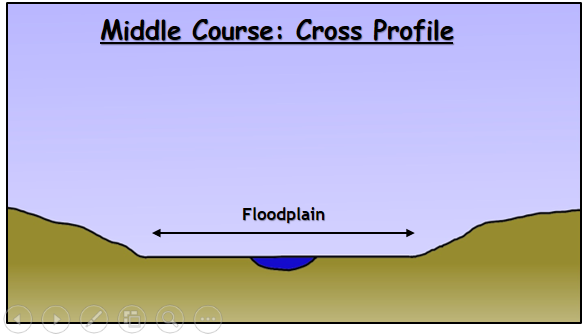
Middle Course
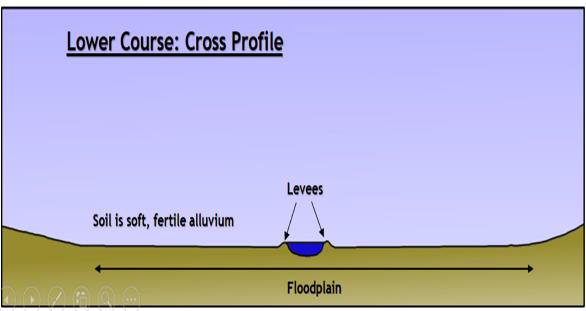
Lower Course
Note
Erosion can be both vertical or lateral – both types happen at the same time, but one is usually dominant over the other at different points along the river.
Erosion Types
Lateral Erosion
- Widens the river valley (and channel) during the formation of meanders.
- Dominant in the middle and lower courses.
Vertical Erosion
- Deepens the river valley (and channel), making it V-shaped.
- Dominant in the upper course.
- High turbulence causes rough, angular particles to be scraped along the bed, causing downwards (vertical) erosion.
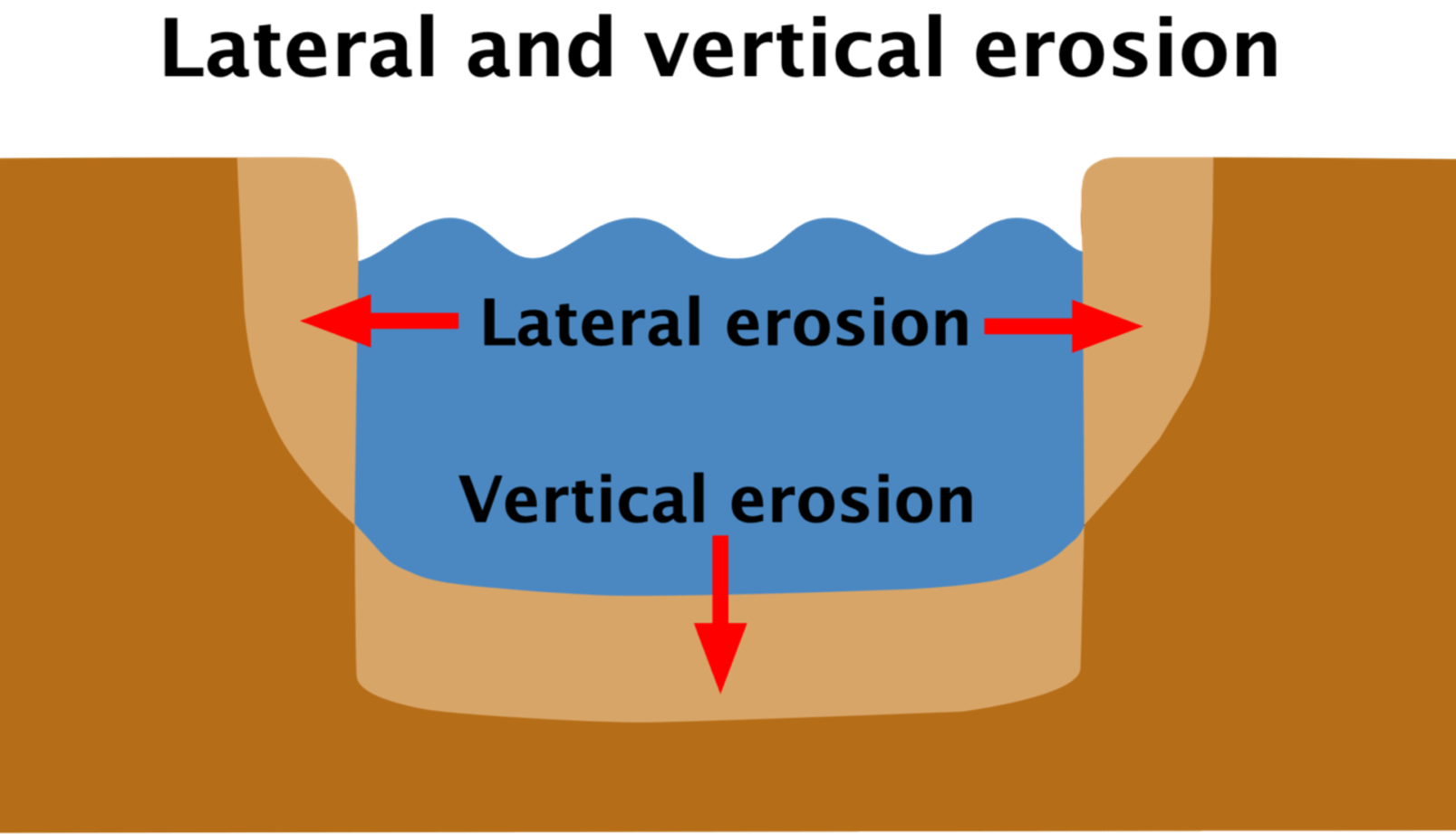
Lateral and Vertical Erosion