Ultrasound in Medical & Industrial Imaging (AQA GCSE Physics): Revision Notes
📚Revision Notes
6.1.13 Ultrasound in Medical & Industrial Imaging
Ultrasound
Note
Ultrasound waves are sound waves with frequencies above 20000 Hz. This means that they can't be heard by the human ear.
Note
Sound and ultrasound waves can be reflected and refracted. Echoes are reflections of sound. Some uses of reflexion and refraction of ultrasound are:
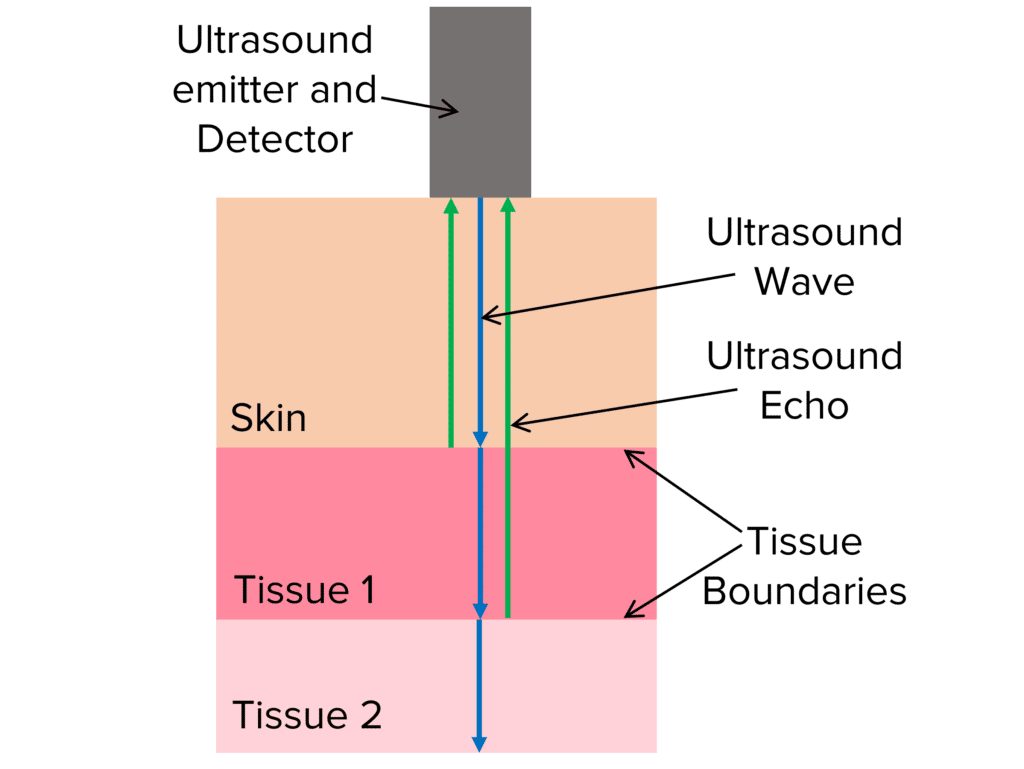
Medical Imaging
Ultrasound waves can pass through the body. However, when they reach a tissue boundary, some of the wave is reflected back. When ultrasound waves are projected into the body, the time taken for the same waves to be reflected back out of the body allows us to work out how far into the body the tissue boundary is. This can be processed by a computer to create an image of the inside of the body.
Note
A common application of ultrasound imaging is pre-natal imaging of a foetus. This is much safer than imaging the foetus with X-rays because sound waves are non-ionising.
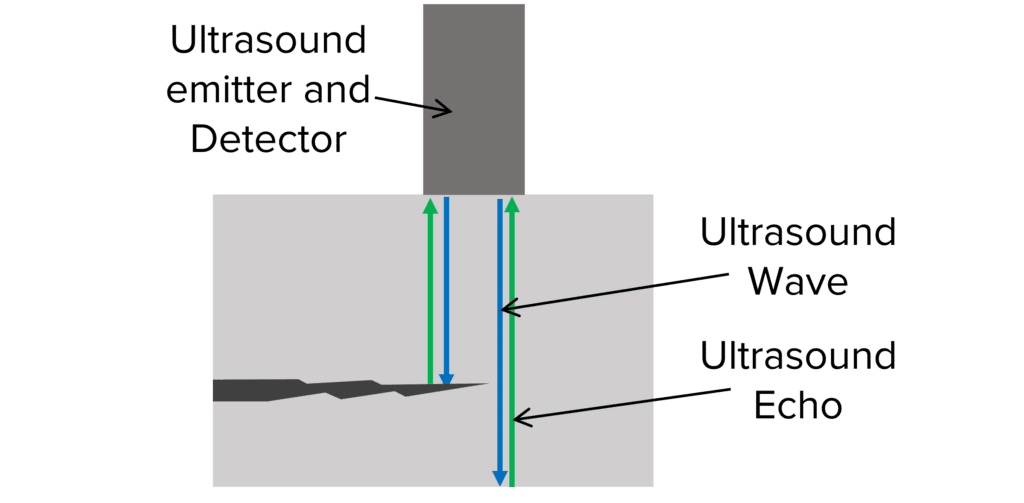
Industrial Imaging
Similarly to medical imaging, ultrasound can be emitted into pipes or materials to find out about the inner structure of the material. Usually, the ultrasound wave will be reflected from the far side of the material. However, if there is a fault in the material it will be reflected sooner. The time taken for the echo to return to the detector is used to determine the position of the fault.