Describing Wave Motion (AQA GCSE Physics): Revision Notes
📚Revision Notes
6.1.2 Describing Wave Motion
Reflection and Refraction
Note
When waves encounter the boundary between two materials, they can either refract (bend), reflect, or be absorbed. The outcome depends on the properties of the materials and the wavelength of the waves.
Reflection
Reflection
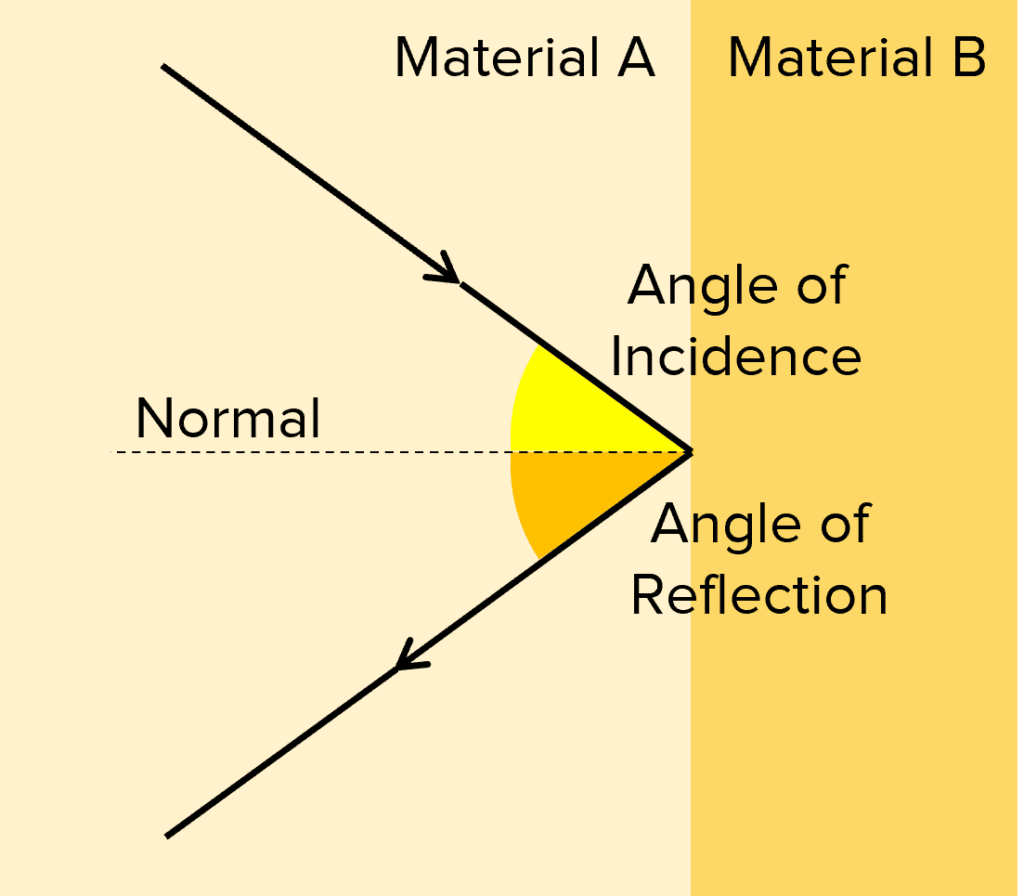
Reflexion occurs when a wave bounces off a material boundary. The key rule for reflexion is:
- The angle of Incidence: The angle between the incoming wave and the normal line to the boundary.
- The angle of Reflexion: The angle between the reflected wave and the normal line to the boundary.
- Normal Line: A line drawn perpendicular (at right angles) to the boundary. The diagram shows reflexion on a wave diagram. Wave diagrams are used to show the path of waves. Straight lines are used to represent the path of the wave and arrows represent the direction of travel of the wave. The normal is drawn as a dotted line.
Specular and Diffuse Reflection
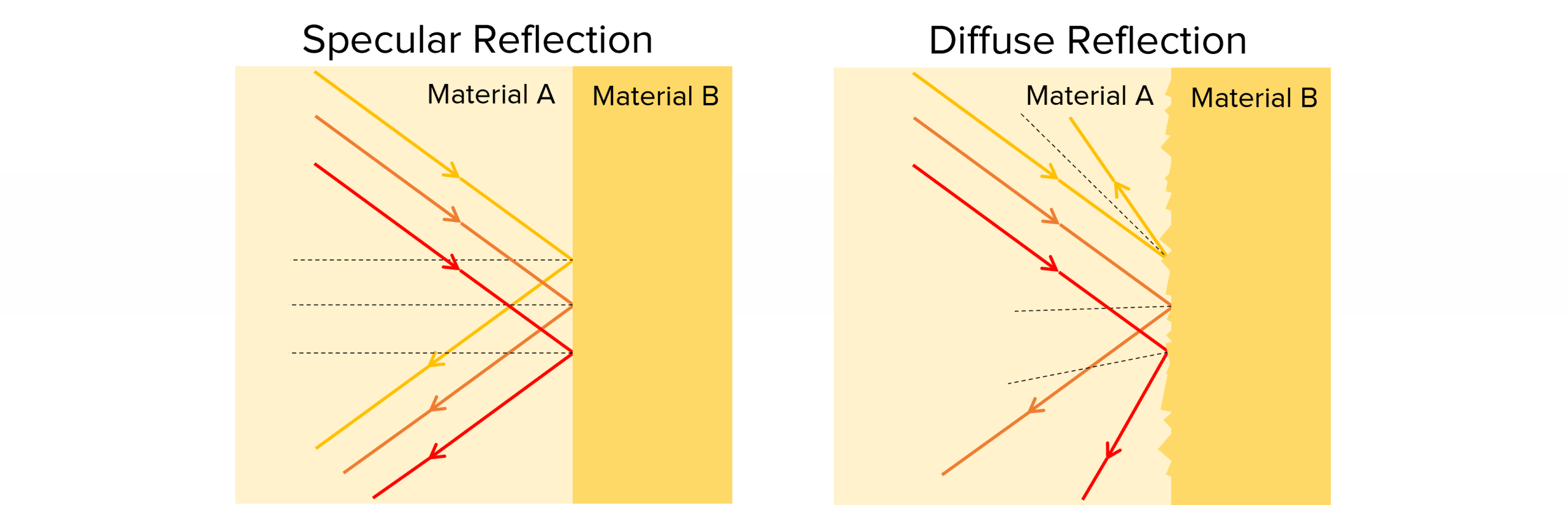
Reflexion can be either specular or diffuse.
- Specular Reflexion: Occurs when waves bounce off a smooth surface, reflecting at the same angle. This produces a clear, shiny reflexion, like light reflecting off a mirror.
- Diffuse Reflexion: This happens when waves hit a rough surface, causing them to reflect at different angles due to the surface's irregularities. Even though the angle of incidence still equals the angle of reflexion for each wave, the roughness scatters the reflections, making the surface appear matte without a clear reflexion.
Refraction
Note
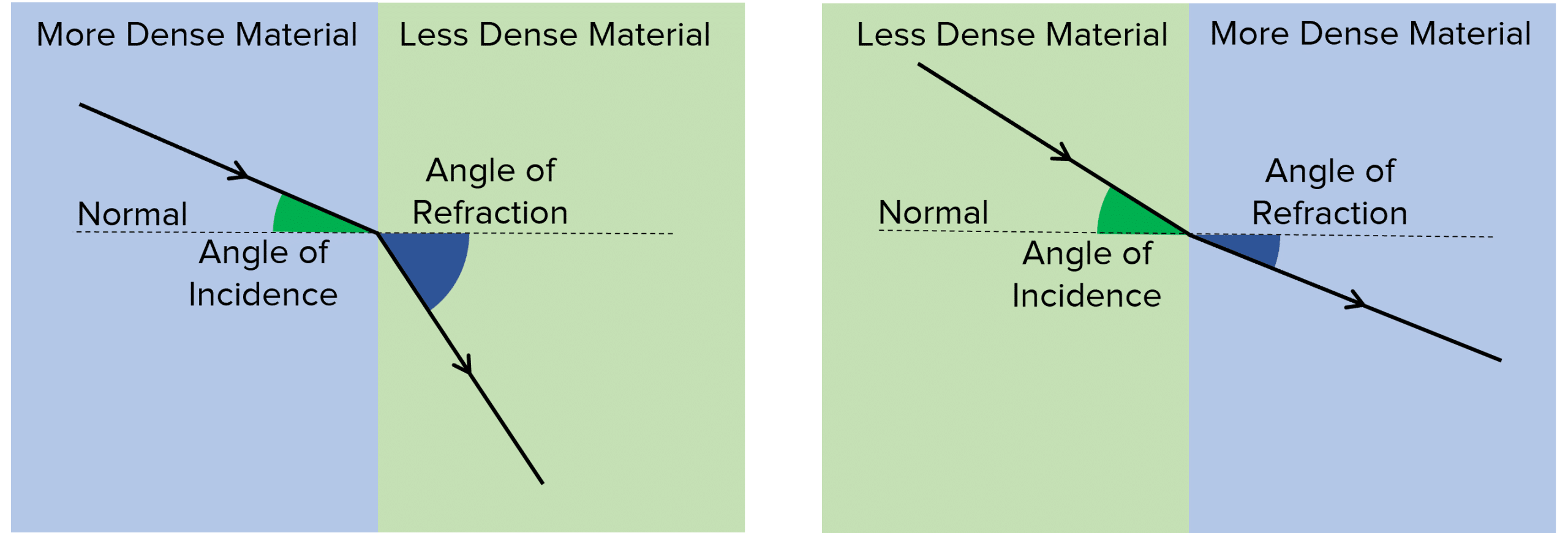
Refraction occurs when waves change direction as they cross from one material to another. This happens when the wave enters the boundary at an angle and is due to the change in wave speed in different materials:
Waves are only refracted if the wave meets the boundary at an angle. The amount the wave changes direction depends on the difference in the materials it is travelling between. This is because waves travel at different speeds in different materials.
- If the wave speeds up in the new material, it bends away from the normal.
- If the wave slows down in the new material, it bends towards the normal.
Note
Typically, waves travel slower in denser materials. However, sound waves are an exception, travelling faster in denser materials.