Convex & Concave Ray Diagrams (AQA GCSE Physics): Revision Notes
📚Revision Notes
6.3.2 Convex & Concave Ray Diagrams
Lenses
Note
Lenses change images by refracting light. Ray diagrams are used to represent the path of light through lenses and can be used to show how images are formed through a lens. Lenses can be either concave or convex.
Convex Lenses
Note
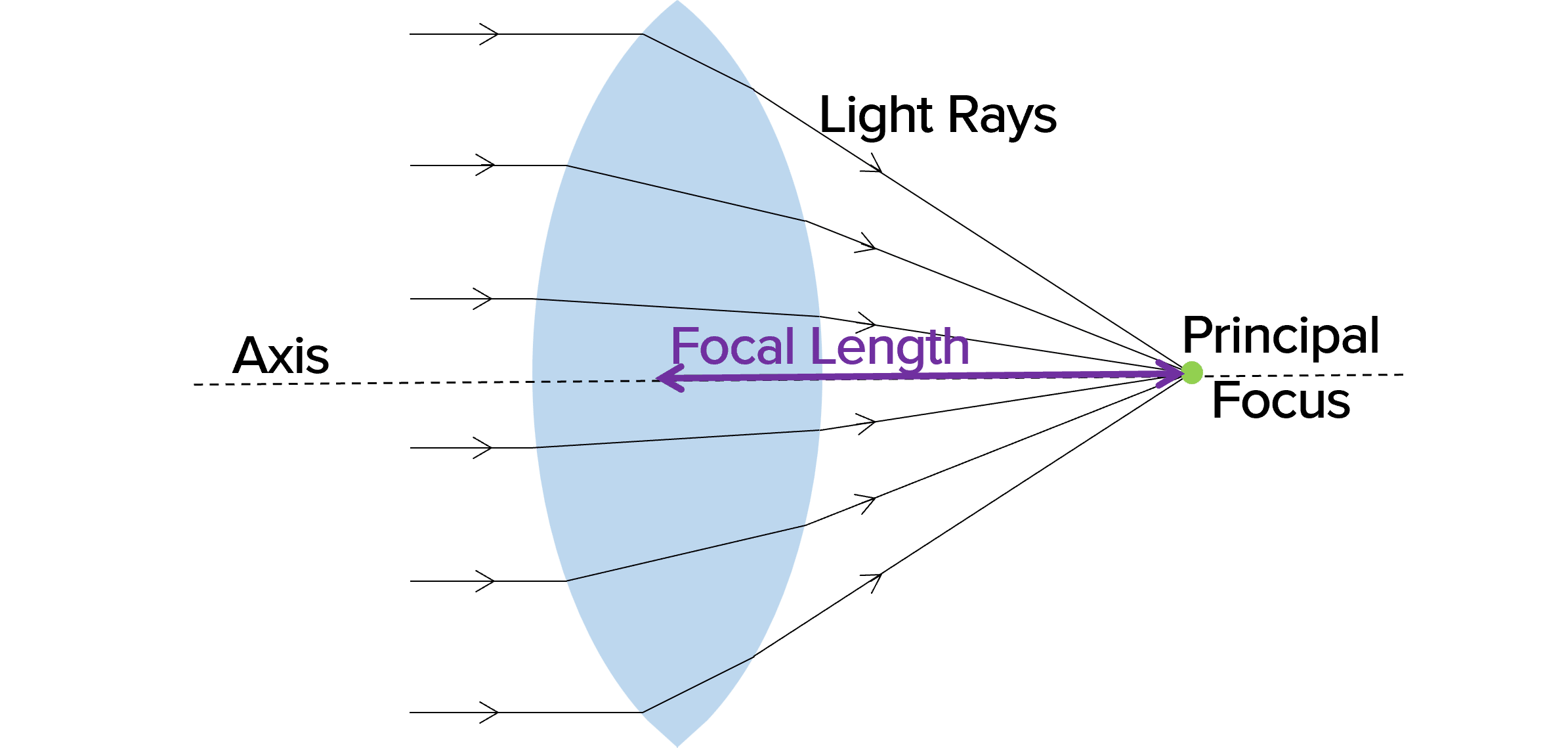
Convex lenses are thicker in the middle than at the edges. Light entering the convex lens is refracted inwards towards a point called the principal focus. There is a principal focus on either side of the lens, for rays entering the lens from each direction. The distance between the centre of the lens to the principal focus is called the focal length. The ray diagram below shows the effect of a convex lens on the path of light rays.
Note
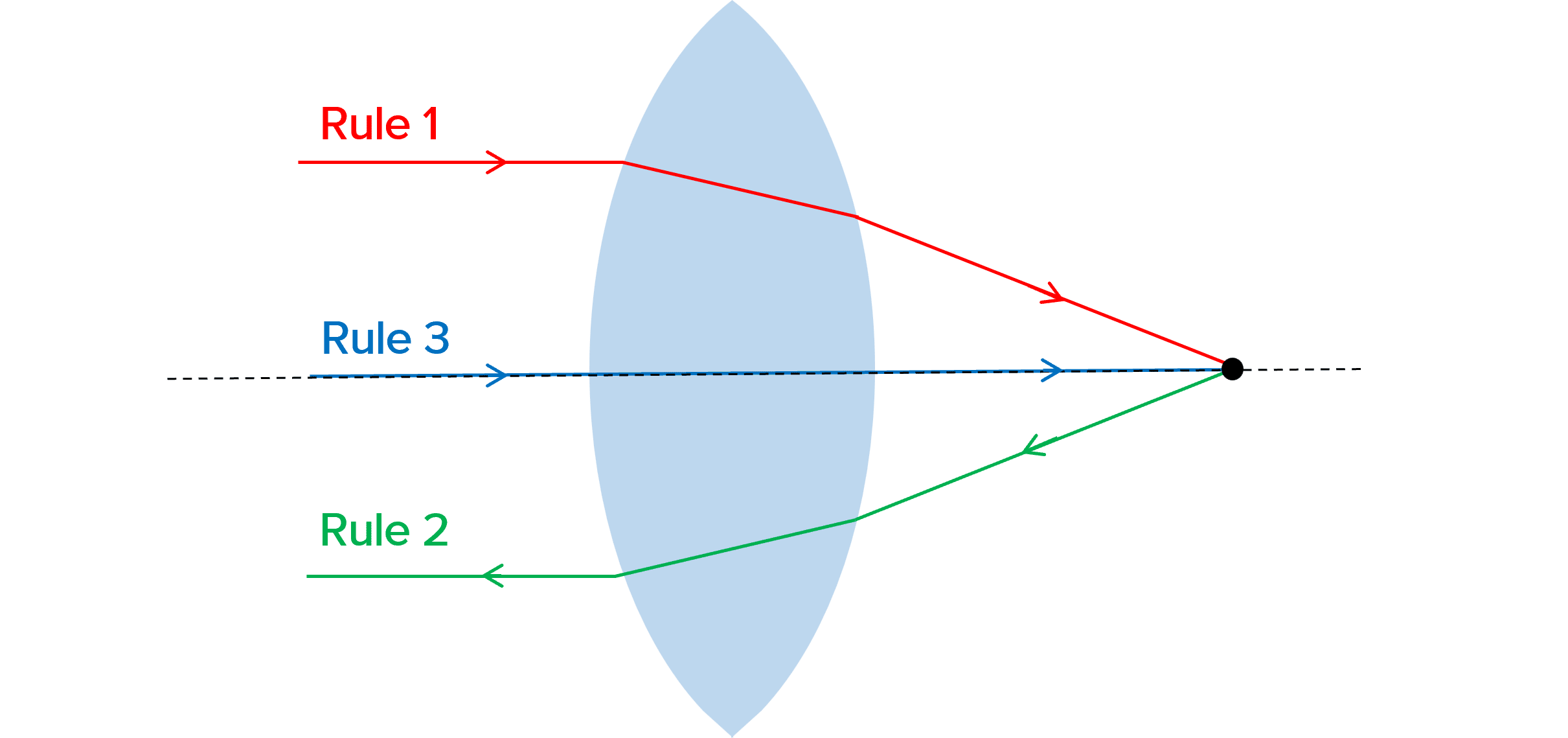
You need to remember the following rules about convex lenses:
- Rule 1: Any ray that enters the lens parallel to the axis will refract through the lens and pass through the principal focus.
- Rule 2: Any ray that enters the lens from the principal focus will refract through the lens and leave the lens parallel to the axis.
- Rule 3: Any ray that enters the lens along the axis will continue in the same direction.
Concave Lenses
Note
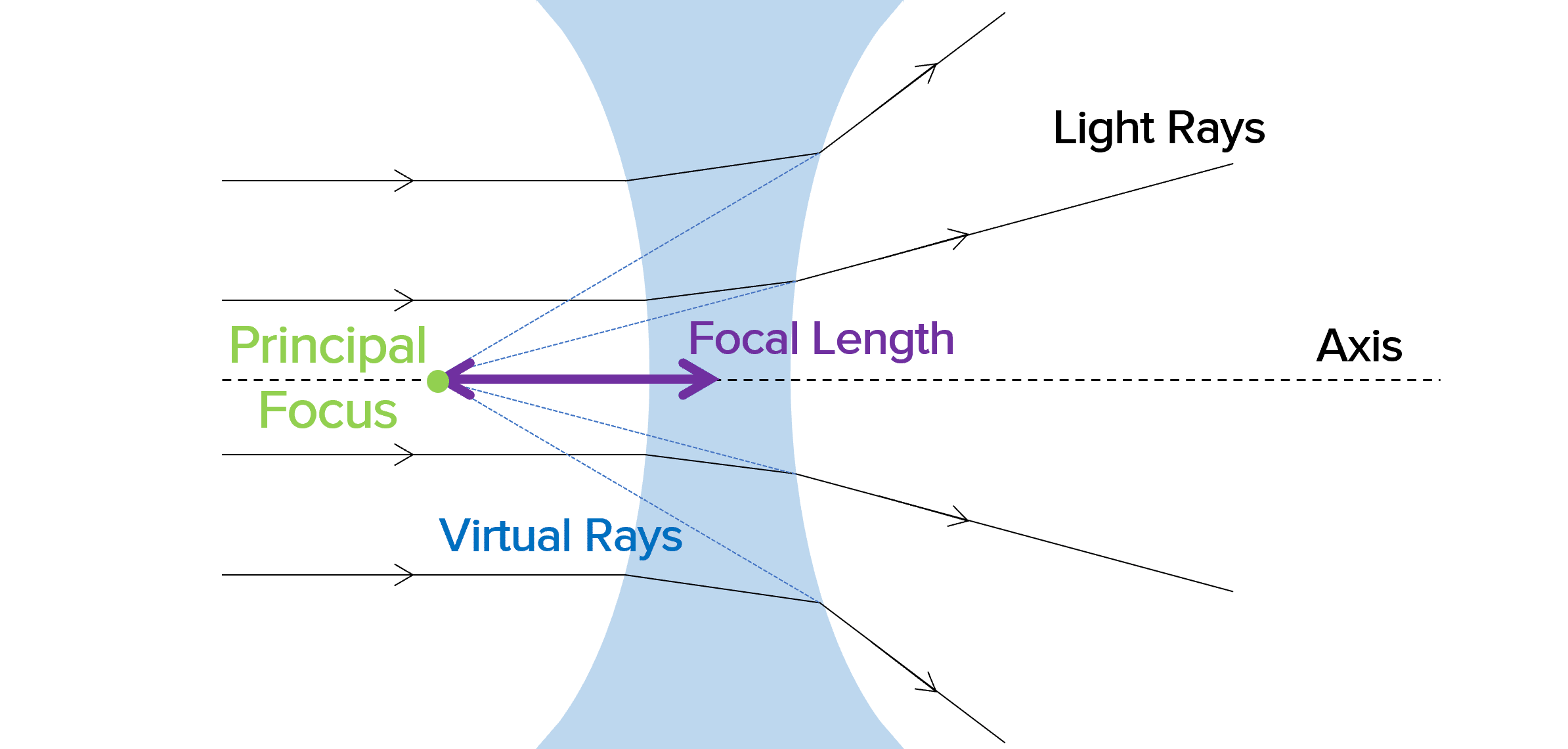
Concave lenses are thicker at the edges and thinner in the centre. They cause light to diverge, meaning it spreads out. The principal focus of a concave lens is the point where rays hitting the lens parallel to the axis appear to have come from. We represent this on a ray diagram by tracing virtual rays backwards from the ray leaving the lens. Like a convex lens, there is a principal focus on both sides of the lens.
Note
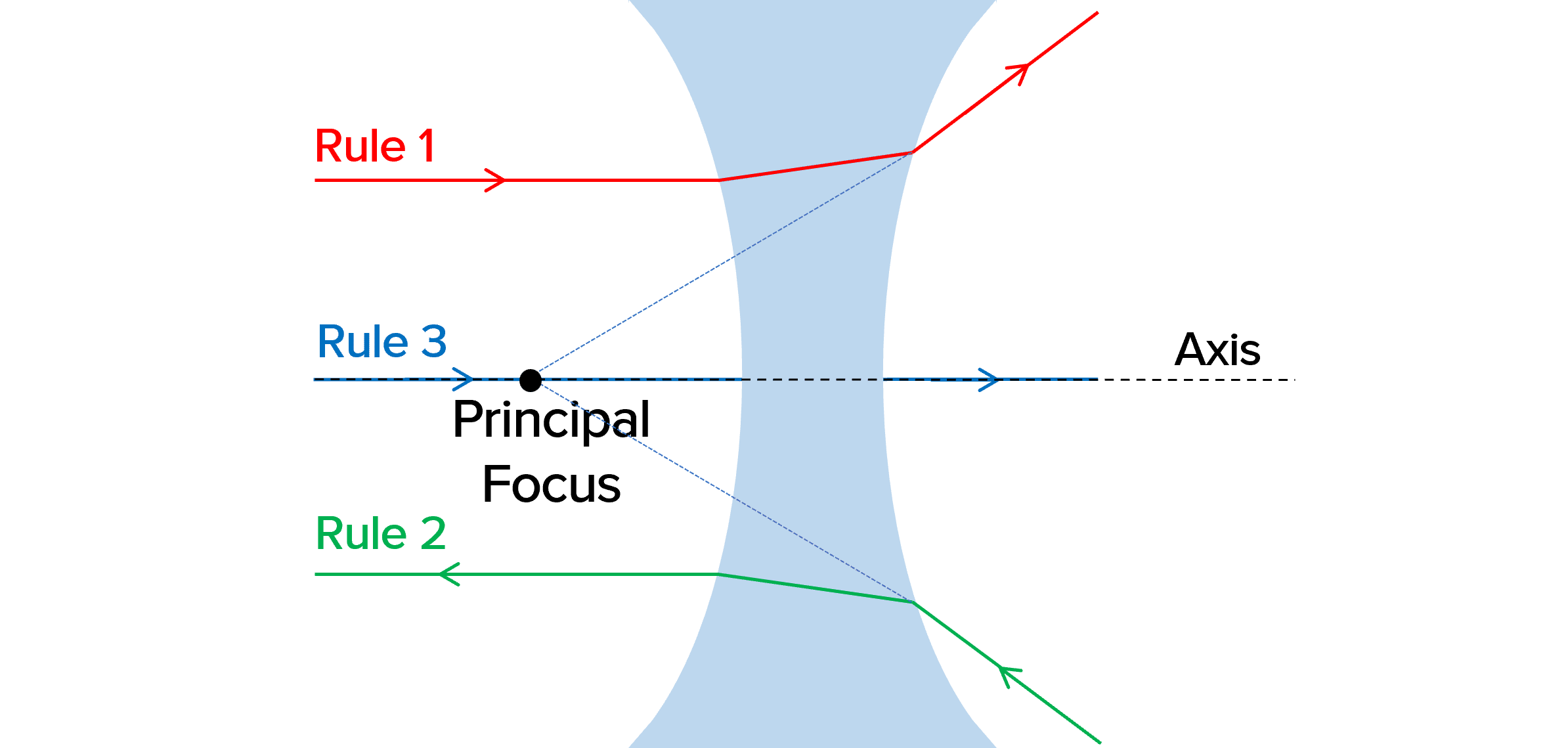
There are also rules to remember for concave lenses:
- Rule 1: Any ray that enters the lens parallel to the axis will refract through the lens and travel in line with the principal focus so that it appears to have come from the principal focus.
- Rule 2: Any ray that enters the lens, travelling towards the principal focus refracts through the lens and leaves it parallel to the axis.
- Rule 3: Any ray that enters the lens along the axis continues in the same direction.
Real and Virtual Images
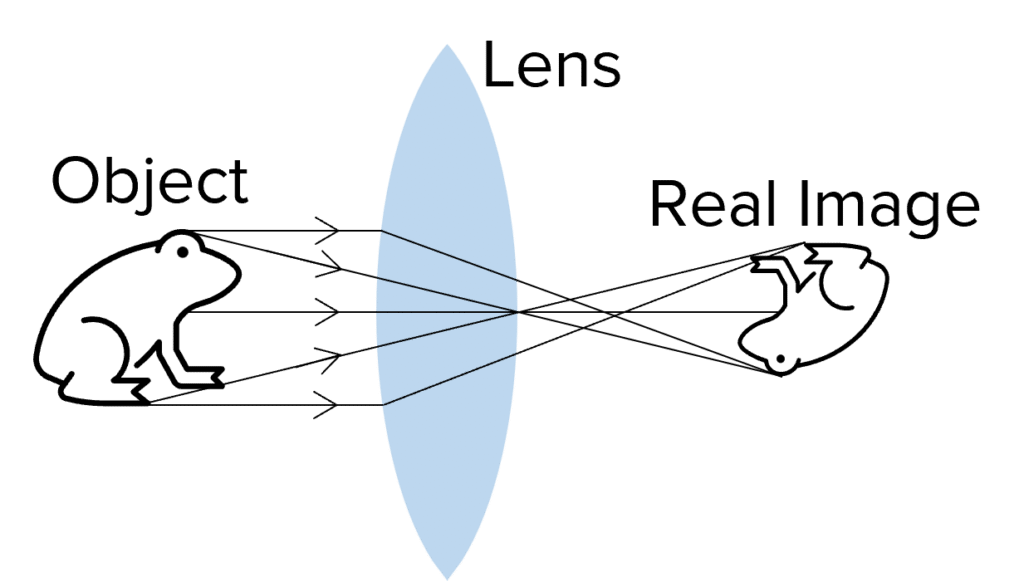
Note
When light comes together to form an image, such as on a screen or on the retina (the back of the eye), a real image is formed.
Note
Only convex lenses produce real images.
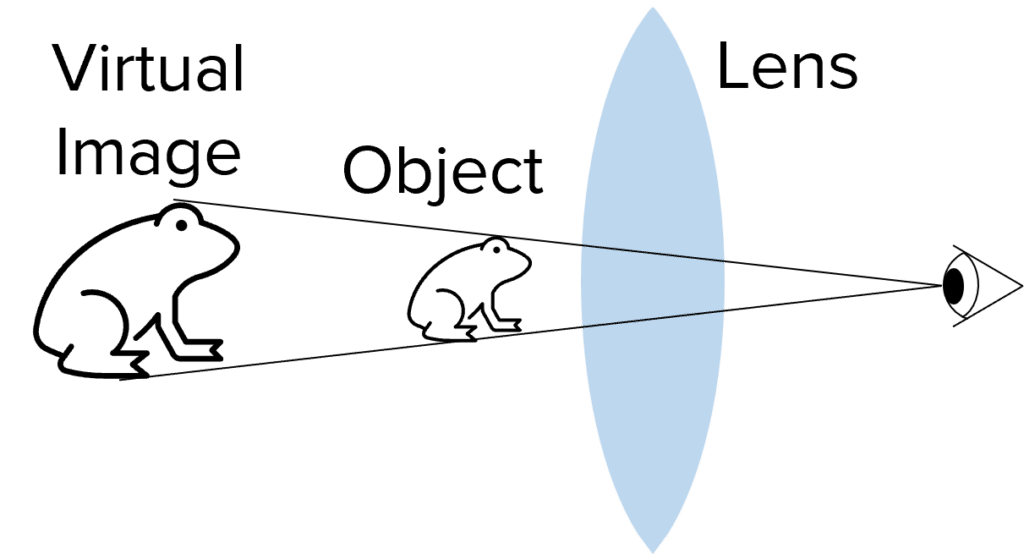
Note
A virtual image is formed when light rays diverge, and so the object appears to be in a different place. For example, when you look into a mirror, you see a virtual image. This is because the reflexion appears to be behind the mirror.
Note
Concave lenses always produce virtual images. Convex lenses may also produce virtual images.