Unsaturated Hydrocarbons (Edexcel GCSE Chemistry Combined Science): Revision Notes
📚Revision Notes
Unsaturated Hydrocarbons
Note
Unsaturated hydrocarbons contain at least one double or triple bond between carbon atoms. This means they don't have the maximum number of hydrogen atoms attached to their carbon chain, unlike saturated hydrocarbons.
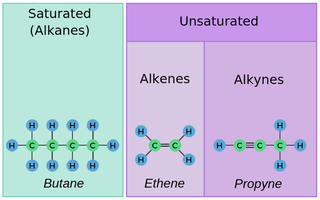
Alkenes (Unsaturated Hydrocarbons with Double Bonds)
- Alkenes are hydrocarbons that contain at least one carbon-carbon double bond (C=C).
- They follow the general formula CnH₂n.
- The presence of a double bond makes alkenes more reactive than alkanes.
Examples of Alkenes
| Alkene | Molecular Formula |
|---|---|
| Ethene | C₂H₄ |
| Propene | C₃H₆ |
| But-1-ene | C₄H₈ |
| But-2-ene | C₄H₈ |
- But-1-ene: The double bond is at the end (side) of the carbon chain.
- But-2-ene: The double bond is in the middle of the carbon chain.
Obtaining Alkenes from Alkanes
Alkenes are produced from alkanes through a process called cracking. Cracking breaks down larger alkane molecules into smaller, more useful alkanes and alkenes.
Note
Key Differences Between Alkanes and Alkenes:
- Alkanes are saturated hydrocarbons (only single bonds).
- Alkenes are unsaturated hydrocarbons (contain at least one double bond). The double bond in alkenes makes them more reactive and gives them different chemical properties compared to alkanes.