Physical processes 1 (Edexcel GCSE Geography A): Revision Notes
📚Revision Notes
Physical processes 1
River landscapes are continuously shaped by various physical processes that work together to modify the land over time. Understanding these processes is essential for comprehending how river valleys develop their distinctive characteristics.
What shapes river landscapes?
Two fundamental physical processes are responsible for shaping river landscapes: weathering and mass movement. These processes work together to break down rock materials and transport them, gradually changing the appearance and structure of river valleys over time.
Note
These two processes are interconnected - weathering prepares the materials by weakening them, while mass movement transports the weathered materials to new locations where rivers can carry them away.
Weathering processes
Weathering refers to the breakdown and wearing away of rock materials at the river valley sides whilst they remain in their original position. This process weakens the rock structure, making it more susceptible to further erosion and transport. River valleys experience three main types of weathering, each operating through different mechanisms.
Note
The three main types of weathering - mechanical, chemical, and biological - often work simultaneously in river valleys, with their relative importance varying depending on climate, rock type, and vegetation cover.
Mechanical weathering (freeze-thaw)
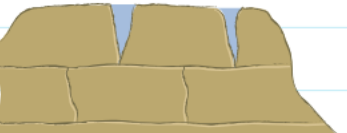
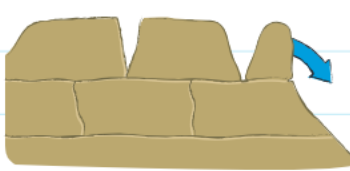
Mechanical weathering, particularly freeze-thaw action, is a powerful process that physically breaks apart rocks without changing their chemical composition. This process begins when water seeps into existing cracks and joints within the rock structure.

During colder periods, this trapped water freezes and expands by approximately 9% of its original volume. This expansion creates tremendous pressure within the crack, forcing it to widen. When temperatures rise, the ice melts and the pressure is released. However, the crack remains enlarged from the previous freezing episode.
Example
Worked Example: The Freeze-Thaw Cycle
Step 1: Water enters rock cracks and joints Step 2: Temperature drops below 0°C - water freezes and expands by 9% Step 3: Ice expansion creates pressure, widening the crack Step 4: Temperature rises - ice melts and pressure releases Step 5: Crack remains enlarged from the expansion Step 6: Process repeats, making cracks progressively larger Result: Rock fragments eventually break away completely
This freeze-thaw cycle repeats continuously, with each cycle making the crack progressively larger. Eventually, the repeated expansion and contraction causes sections of rock to break away completely. These loose fragments that accumulate at the base of slopes are called scree.
Chemical weathering (acid rain)
Chemical weathering occurs when rainwater, which is naturally slightly acidic, reacts with minerals present in rocks and dissolves them. This process actually changes the chemical composition of the rock, unlike mechanical weathering.

A common example involves granite, which contains a mineral called feldspar. When acidic rainwater comes into contact with feldspar, it triggers a chemical reaction that converts the hard feldspar into soft clay minerals. This transformation significantly weakens the rock structure, making it much more vulnerable to other weathering processes and erosion.
Example
Worked Example: Granite Weathering Process
Step 1: Acidic rainwater contacts granite containing feldspar Step 2: Chemical reaction begins between acid and feldspar mineral Step 3: Hard feldspar transforms into soft clay minerals Step 4: Rock structure becomes significantly weakened Result: Rock becomes more vulnerable to further weathering and erosion
The effectiveness of chemical weathering depends on several factors, including the acidity level of the rainwater, the temperature, and the specific minerals present in the rock. Warmer, more humid conditions generally accelerate chemical weathering processes.
Note
Chemical weathering is most effective in warm, humid climates where there is abundant moisture and higher temperatures to speed up chemical reactions. In cold, dry climates, mechanical weathering tends to dominate.
Biological weathering
Biological weathering involves living organisms in the breakdown of rock materials. This process operates through both physical and chemical mechanisms involving plants and their root systems.
Plant roots can grow into existing cracks in rocks, and as they expand and develop, they exert physical pressure that widens these cracks, similar to freeze-thaw action. Additionally, vegetation produces organic acids that speed up chemical weathering processes. These acids, released by plant roots and decaying organic matter, react with rock minerals and accelerate their breakdown.
Important
Biological weathering is unique because it combines both physical and chemical processes simultaneously. The physical pressure from growing roots works alongside chemical acids produced by plants to create a particularly effective weathering mechanism.
The combination of physical root pressure and chemical acid production makes biological weathering particularly effective in areas with abundant vegetation.
Mass movement
Mass movement describes the downward movement of weathered material, rock fragments, and soil from higher to lower elevations under the influence of gravity. Over time, this process causes river valley sides to become less steep as material is continuously transported from the top to the bottom of slopes.
Note
Mass movement is the crucial link between weathering processes and river transport. It moves weathered material from valley slopes down to the river channel where it can then be transported away by flowing water.
Sliding
Sliding occurs when rock, weathered material, or earth moves down a slope as gravity overcomes the forces holding the material in place. This process typically affects material that has been weakened by weathering processes, making it less stable and more prone to movement.
Gravity acts as the driving force, pulling the weakened material quickly downwards along the slope. Sliding can happen gradually over time or suddenly during periods of heavy rainfall when the ground becomes saturated and less stable.
Important
Sliding is most likely to occur after periods of heavy rainfall when the ground becomes saturated with water. The added weight of water and reduced friction between particles makes slopes much more unstable and prone to sudden movement.
Slumping
Slumping is a specific type of mass movement that occurs when a river erodes the bottom of a valley slope, making it steeper and more unstable. This undercutting process removes support from the material above, creating an unstable overhang.
When the slope becomes too steep to remain stable, the material above begins to slide downwards. This process is particularly likely to occur when the material becomes saturated with rainwater, as the added weight and reduced friction make the slope even more unstable. Slumping often creates distinctive curved failure surfaces where the material has moved.
Example
Worked Example: The Slumping Process
Step 1: River flows at the base of a valley slope Step 2: River erodes and undercuts the bottom of the slope Step 3: Slope becomes steeper and loses support from below Step 4: Material above becomes unstable and forms an overhang Step 5: Heavy rainfall saturates the material, adding weight Step 6: Slope becomes too steep - material slides downward in a curved motion Result: Distinctive curved failure surface is created
How these processes work together
These weathering and mass movement processes work in combination to continuously modify river valley landscapes. Weathering weakens the rock materials, making them more susceptible to mass movement. Once material has been moved by sliding or slumping, it becomes available for transport by the river itself, contributing to the ongoing evolution of the landscape.
Important
This is a continuous cycle: weathering prepares materials → mass movement transports them → rivers carry them away → the process begins again on newly exposed rock surfaces. This cycle operates over thousands of years to shape entire valley systems.
Summary
Key Points to Remember:
- Weathering breaks down rocks in place through mechanical (freeze-thaw), chemical (acid rain), and biological (plant roots and acids) processes
- Mass movement transports weathered material downhill through sliding and slumping under the influence of gravity
- Freeze-thaw weathering creates scree slopes through repeated expansion and contraction of water in rock cracks
- Chemical weathering changes rock composition, such as converting granite's feldspar into soft clay minerals
- Slumping occurs when rivers undercut valley slopes, making them unstable and causing material to slide downwards