Tropical cyclone hazards (Edexcel GCSE Geography A): Revision Notes
📚Revision Notes
Tropical cyclone hazards
What are tropical cyclone hazards?
Tropical cyclones represent some of the most dangerous weather events on Earth. These powerful storms don't just pose risks because of their existence - they create multiple types of hazards that can cause widespread destruction and endanger human lives. Understanding these various hazards helps us prepare for and respond to cyclone events more effectively.
Note
The key to effective cyclone preparedness is understanding that these storms create multiple simultaneous threats, not just strong winds. Each hazard type requires specific preparation and response strategies.
Main hazards caused by tropical cyclones
Tropical cyclones generate several different types of dangerous conditions that work together to create devastating impacts:
High winds form the most recognisable threat from these storms. When wind speeds reach 240 km/h or higher, they become powerful enough to uproot large trees and demolish buildings. These extreme winds can cause serious injuries to people and lead to loss of life through flying debris and structural collapses.
Storm surge occurs when cyclones push massive volumes of seawater towards the coast. This creates a wall of water that crashes onto beaches and destroys coastal habitats. The surge can travel significant distances inland, causing extensive flooding in low-lying areas.
Note
Storm surge is often the most deadly aspect of tropical cyclones. The surge can arrive suddenly and move much faster than people can evacuate on foot, making early evacuation critical.
Intense rainfall accompanies cyclones as they move across regions. This heavy, persistent precipitation often leads to widespread flooding that damages property and infrastructure. The flooding can leave people stranded in affected areas, making rescue operations extremely challenging.
Coastal flooding happens when storm surge combines with heavy rainfall and high tides. This flooding poses serious risks to both property and human life, particularly in densely populated coastal communities.
Landslides become a major concern when intense rainfall saturates soil on slopes and hillsides. The waterlogged ground becomes unstable and can suddenly give way, creating fast-moving debris flows that slide downhill and destroy everything in their path.
Important
Remember that these hazards often occur simultaneously and can compound each other's effects. For example, heavy rainfall can weaken structures that are then more vulnerable to high winds, while storm surge can make evacuation routes impassable.
The Saffir-Simpson scale
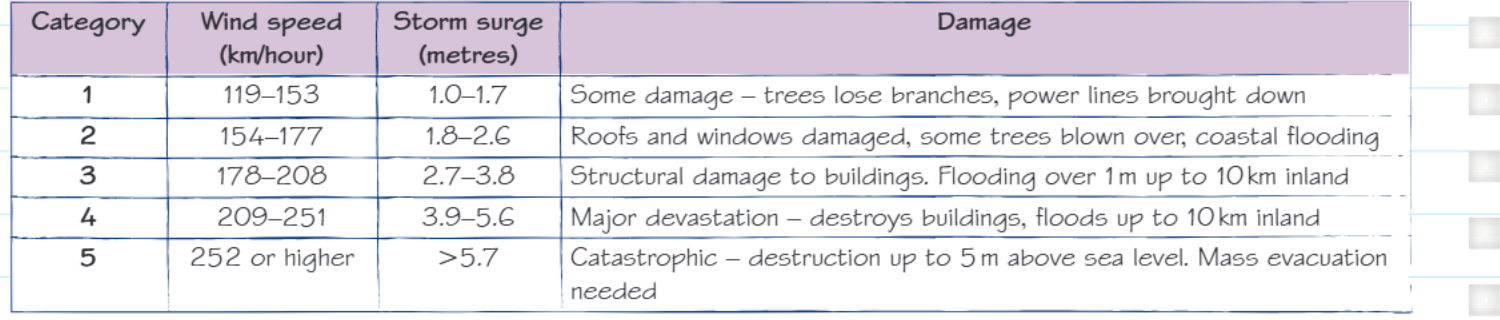
Meteorologists use the Saffir-Simpson scale to classify tropical cyclones based on their intensity and potential for destruction. This system helps emergency services and communities understand the severity of approaching storms and plan appropriate responses.
Important
The Saffir-Simpson scale is essential for disaster preparedness because it provides a standardised way to communicate storm intensity and expected impacts to emergency services and the public.
The scale divides cyclones into five distinct categories, each representing increasing levels of danger:
Category 1 cyclones produce wind speeds between 119-153 km/hour and generate storm surges of 1.0-1.7 metres. These storms cause some damage, typically breaking tree branches and bringing down power lines, but structures generally remain intact.
Category 2 systems intensify to wind speeds of 154-177 km/hour with storm surges reaching 1.8-2.6 metres. At this level, cyclones begin damaging roofs and windows whilst also causing coastal flooding in vulnerable areas.
Category 3 cyclones represent a significant escalation in destructive power. Wind speeds increase to 178-208 km/hour and storm surges rise to 2.7-3.8 metres. These storms cause structural damage to buildings and push floodwaters up to 10 kilometres inland from the coast.
Note
Category 3 storms mark the threshold where cyclones begin causing major structural damage and pushing storm surge significant distances inland. Emergency planning typically becomes much more intensive at this level.
Category 4 events bring major devastation with wind speeds of 209-251 km/hour and storm surges of 3.9-5.6 metres. At this intensity, cyclones destroy buildings completely and create widespread destruction across affected regions.
Category 5 cyclones represent the most severe classification, with wind speeds exceeding 252 km/hour and storm surges greater than 5.7 metres. These catastrophic storms can cause destruction up to 5 metres above normal sea level and typically require mass evacuation of threatened areas.
Real-world example: Typhoon Yolanda
Example
Real-World Case Study: Typhoon Yolanda (2013)
Typhoon Yolanda, which struck in November 2013, demonstrates the extreme power of major tropical cyclones. This devastating storm recorded:
- Maximum wind speeds: 315 km/h
- Average wind speeds: 280 km/h
- Saffir-Simpson classification: Category 5 (most dangerous possible)
The typhoon's impact illustrates why understanding cyclone categories matters for disaster preparedness. Communities in the storm's path faced catastrophic conditions that required extensive evacuation efforts and emergency response measures.
Summary
Key Points to Remember:
-
Tropical cyclones create multiple hazards including high winds, storm surge, intense rainfall, coastal flooding, and landslides that work together to cause destruction
-
The Saffir-Simpson scale classifies cyclones into five categories based on wind speed and storm surge height, helping predict potential damage levels
-
Wind speed serves as the primary measurement for determining a cyclone's category and destructive potential
-
Category 5 cyclones like Typhoon Yolanda represent the most dangerous storms, requiring mass evacuation and extensive emergency preparations
-
Understanding these classification systems helps communities prepare appropriate responses to approaching tropical cyclones