Water supply problems: emerging or developing countries (Edexcel GCSE Geography A): Revision Notes
📚Revision Notes
Water supply problems: emerging or developing countries
Water supply challenges represent some of the most pressing issues facing emerging and developing countries today. These nations struggle with multiple interconnected problems that prevent millions of people from accessing clean, safe water for drinking, cooking, and basic sanitation needs.
Overview of water supply challenges
Emerging and developing countries face unique water supply difficulties that stem from limited infrastructure, economic constraints, and environmental factors. These challenges significantly impact public health, economic development, and quality of life for billions of people worldwide.
The three primary water supply problems affecting these countries include access to untreated water, pollution of existing water sources, and insufficient annual rainfall. Each of these issues creates a complex web of health, social, and economic consequences that can trap communities in cycles of poverty and illness.
Note
Understanding these interconnected challenges is essential for developing effective solutions. Unlike developed countries that have established water treatment systems, emerging nations must address multiple problems simultaneously with limited resources.
Global access to safe water
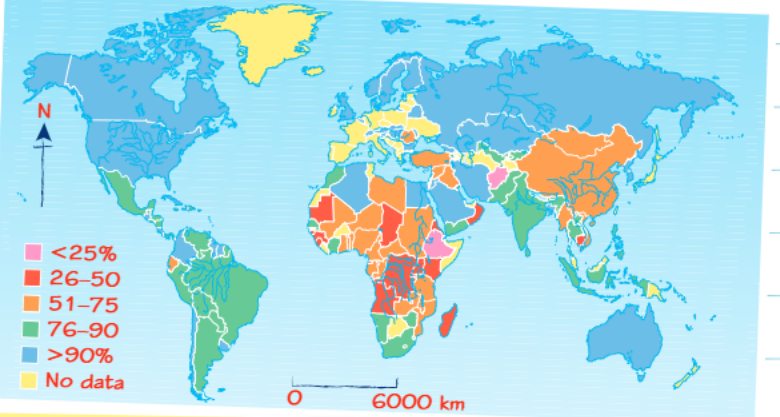
The distribution of safe water access varies dramatically across the globe, with clear patterns emerging between developed and developing regions.
Note
Global Water Access Disparities
This global map reveals stark disparities in water access, with most developed countries achieving over 90% access to safe water, whilst many African and some Asian countries struggle with access rates below 75%. The data shows that the water crisis predominantly affects sub-Saharan Africa, where numerous countries have less than 50% of their population with access to safe water.
Main water supply problems
1. Untreated water
Untreated water represents the most widespread water supply challenge, affecting approximately 2.2 billion people globally - that's roughly 1 in every 3 people on Earth. This staggering figure highlights the magnitude of the global water crisis.
The consequences of consuming untreated water are severe and far-reaching. Without access to safe water, people cannot maintain healthy, productive lives. Contaminated water serves as a breeding ground for harmful bacteria, viruses, and parasites that cause water-borne diseases such as cholera, typhoid, and dysentery.
Important
Critical Impact on Children
The impact on children is particularly devastating. An estimated 440,000 children under the age of 5 die every year from diarrhoea caused by consuming contaminated water. This tragic statistic occurs because many governments in developing countries cannot afford to implement comprehensive water treatment programmes or maintain existing infrastructure.
Developing countries in Africa face the greatest challenges with untreated water access. The combination of limited financial resources, inadequate infrastructure, and growing populations creates a situation where safe water remains out of reach for millions of people.
2. Pollution of watercourses
Water pollution in developing countries occurs through several interconnected pathways that contaminate rivers, lakes, and groundwater sources. Understanding these pollution sources helps explain why clean water remains scarce in many regions.
Agricultural practices contribute significantly to water pollution through the unregulated use of fertilisers and pesticides. Poor farming techniques allow these chemicals to run off into nearby water sources, creating toxic conditions that make water unsafe for human consumption. Additionally, the lack of proper storage and disposal methods for agricultural chemicals compounds this problem.
Mining activities present another major source of water contamination. Industrial activities often proceed without adequate environmental safeguards, leaving lasting damage to water systems.
Example
Case Study: Zambia Copper Mining Contamination
In 2006, copper mining operations in Zambia caused serious health problems for local communities when mining waste contaminated local water supplies. This example demonstrates how industrial activities without proper environmental safeguards can have devastating effects on water quality and community health.
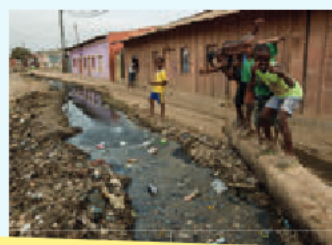
Perhaps most critically, the lack of proper sanitation systems and education about waste management leads to widespread contamination. When human and animal waste enters water sources due to inadequate sewerage systems, it creates ideal conditions for disease transmission and makes water completely unsafe for consumption.
Note
This image illustrates the reality of water infrastructure challenges in many developing areas, where open drainage systems and inadequate sanitation create ongoing health risks for local communities.
3. Low annual rainfall
Insufficient rainfall represents a growing challenge for water security in many developing regions. This problem results from multiple factors including climate change, natural seasonal variations, and increasing population pressure on existing water resources.
Climate change has intensified rainfall patterns, creating more extreme weather conditions. Some regions experience prolonged drought periods followed by intense flooding, making it difficult to collect and store water effectively. These irregular patterns disrupt traditional water collection methods and make planning for water security more challenging.
Example
Regional Example: The Sahel Crisis
The Sahel region of Africa exemplifies how low rainfall creates water security crises. Countries such as Chad and Mali regularly experience extreme water shortages that affect millions of people. These shortages force communities to rely on contaminated water sources or travel great distances to find clean water, creating additional hardships for already vulnerable populations.
Seasonal variations in climate patterns can leave entire regions without adequate rainfall for months at a time. During these dry periods, existing water sources may completely disappear, forcing people to use whatever water they can find, regardless of its safety or quality.
Understanding the interconnected nature of water problems
These three water supply problems rarely occur in isolation. Communities often face multiple challenges simultaneously, creating compounding effects that make solutions more complex and urgent.
Note
Complex Interconnections
Areas with low rainfall may be more likely to use polluted water sources out of desperation, whilst regions with untreated water supplies may also struggle with contaminated watercourses. The lack of economic resources in developing countries means that addressing one problem often requires tackling others simultaneously.
Comprehensive approaches that consider infrastructure development, education, and environmental management are essential for creating lasting improvements in water access and quality.
Summary
Key Points to Remember:
-
2.2 billion people globally lack access to safe water - that's 1 in every 3 people, with developing countries in Africa being most affected
-
Three main problems create water supply challenges: untreated water, pollution of watercourses, and low annual rainfall often work together to worsen conditions
-
Water pollution comes from multiple sources including poor farming practices, mining activities, and inadequate sanitation systems that contaminate available water supplies
-
Climate change intensifies water problems by creating irregular rainfall patterns and more extreme weather conditions in vulnerable regions
-
Children suffer the most severe consequences with 440,000 children under 5 dying annually from diarrhoea caused by contaminated water