The Church in England (Edexcel GCSE History): Revision Notes
📚Revision Notes
The Church in England under Norman rule
The religious transformation after 1066
The Norman Conquest of 1066 marked a crucial turning point not just for English politics and society, but also for the English Church. William the Conqueror brought significant changes to religious life and church organisation that would reshape Christianity in England for centuries to come.

Note
The transformation of the English Church was not an isolated event but formed part of William's comprehensive strategy to establish Norman control over all aspects of English society, from politics and law to religion and culture.
Norman reforms of the English Church
The most significant changes to the English Church came through comprehensive reforms that centralised religious authority under Norman control. These reforms were not isolated changes but formed part of a broader transformation of English society from Anglo-Saxon to Norman systems.
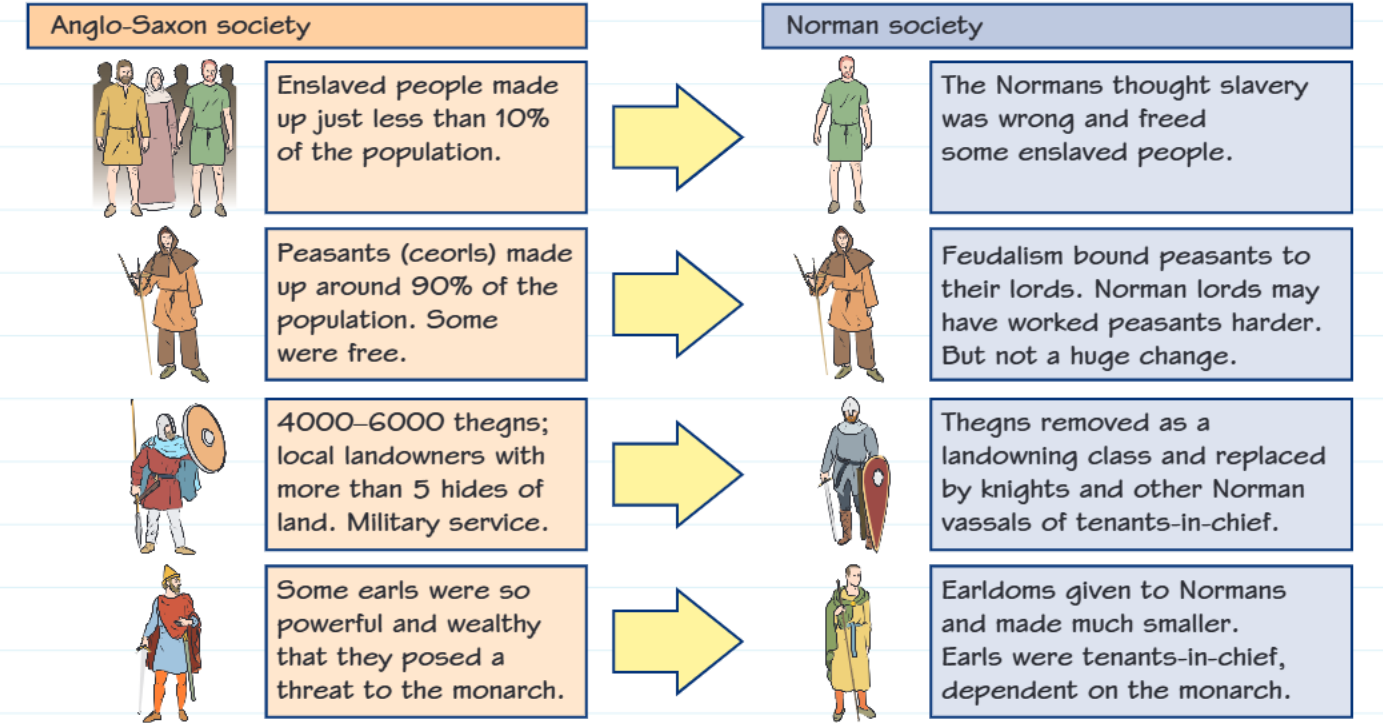
The systematic nature of these religious changes demonstrates how the Normans understood the importance of controlling spiritual as well as temporal power. By reforming the Church, William could influence not just what people believed, but how they lived their daily lives.
Lanfranc's leadership and centralization
Archbishop Lanfranc played the leading role in reforming the English Church after the Conquest. His reforms fundamentally changed how the Church operated by centralising control and bringing English religious practices in line with continental European standards. This centralization meant that local churches and religious communities now answered more directly to higher church authorities, rather than operating with the relative independence they had enjoyed under Anglo-Saxon rule.
Important
Understanding Centralization
Under the Anglo-Saxon system, local churches often operated with considerable independence. Lanfranc's reforms changed this by creating a clear hierarchy where all religious decisions flowed from the top down. This gave the Norman rulers unprecedented control over religious life throughout England.
The centralization process involved reorganising church hierarchy, standardising religious practices, and ensuring that Norman appointees held key positions throughout the Church structure. This gave William greater control over religious matters and helped establish Norman authority at every level of society.
The great rebuilding programme
One of the most visible signs of Norman religious transformation was the massive rebuilding programme that saw every church and cathedral in England reconstructed or significantly renovated. This rebuilding served multiple purposes beyond just improving religious buildings.
The new Norman churches were built in the distinctive Romanesque style, with thick walls, rounded arches, and imposing towers that dominated the landscape. These buildings served as powerful symbols of Norman authority and represented a clear break from Anglo-Saxon architectural traditions.
Note
The scale of this rebuilding programme was enormous - virtually every religious building in England was either completely rebuilt or substantially modified. This represented one of the largest construction projects in mediaeval European history and required massive resources and coordination.
The rebuilding programme also provided practical benefits by creating larger, more impressive spaces for worship that could accommodate growing congregations and elaborate Norman religious ceremonies. The scale and grandeur of these new religious buildings demonstrated the wealth and power of the new Norman rulers.
Integration with Norman political control
The transformation of the English Church cannot be separated from the broader political changes that William implemented. Religious reforms worked hand-in-hand with political centralization to strengthen Norman control over England.
Important
Dual Role of Religious Leaders
Norman bishops and abbots often served as both spiritual guides and political administrators. This meant they could implement royal policy while also conducting religious duties, creating a powerful system of control that reached into every community.
Norman bishops and abbots were appointed to replace their Anglo-Saxon predecessors, ensuring loyalty to the new regime. These religious leaders often served dual roles, acting as both spiritual guides and political administrators who helped implement royal policy at the local level.
The Church also provided an important source of revenue and administrative expertise that helped the Normans govern their new territory effectively. Religious institutions owned significant amounts of land and wealth that could be redirected to support Norman rule.
Impact on religious life
These changes had profound effects on ordinary people's religious experiences. The centralization of church authority meant that local religious practices became more standardised and uniform across England. Traditional Anglo-Saxon religious customs gradually gave way to Norman practices and continental European influences.
Note
Effects on Ordinary People
For most English people, these changes meant attending newly built churches, following different religious practices, and being led by Norman rather than English clergy. While the core Christian message remained the same, the way it was delivered and practised changed significantly.
The rebuilding programme created impressive new spaces for worship, but it also represented a significant financial burden on local communities who were often required to contribute labour and resources to construction projects. However, these new buildings also provided focal points for community life and demonstrated the importance of Christianity in Norman society.
Summary
Key Points to Remember:
- Lanfranc led comprehensive reforms that centralised control of the English Church under Norman authority
- Every church and cathedral was rebuilt in the Norman Romanesque style, creating visible symbols of the new regime
- Religious changes supported political control by placing loyal Normans in key church positions
- Centralization replaced local independence with standardised practices across England
- The Church transformation was part of broader social change that affected all levels of English society after 1066