Key features of the conflict (Edexcel GCSE History): Revision Notes
📚Revision Notes
Key features of the conflict
Overview of the American victory 1775-83
The American War of Independence lasted from 1775 to 1783, resulting in the thirteen colonies gaining independence from British rule. Two major factors contributed to this remarkable American victory: the exceptional leadership of George Washington and the significant strategic errors made by the British forces.
Note
This conflict marked a turning point in world history, demonstrating that colonial forces could successfully defeat a major European power through innovative tactics and strong leadership.
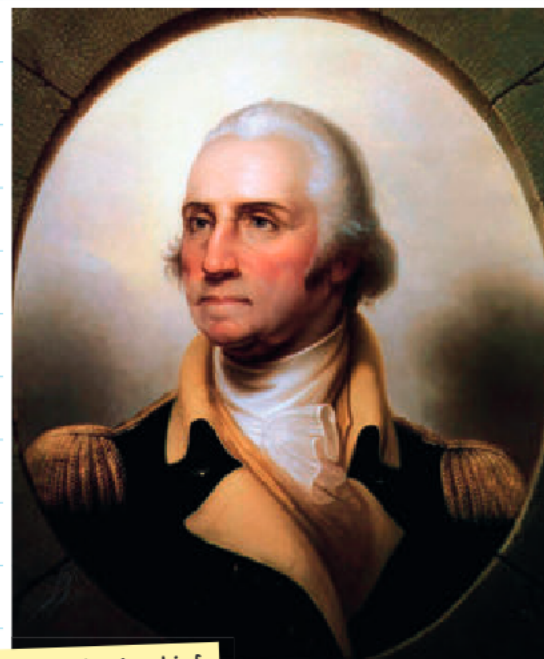
The crucial role of George Washington
George Washington served as commander-in-chief of the Continental Army from July 1775 to 1783, and his leadership proved essential to American success in several key ways.
Strategic retreats and army preservation
Rather than engaging in battles that would have resulted in devastating losses, Washington mastered the art of tactical withdrawal. His organised retreats at critical moments prevented the destruction of the Continental Army. The Battle of Long Island exemplifies this approach - by successfully withdrawing his forces, Washington kept his army intact to continue fighting rather than facing complete annihilation.
Important
Washington understood that preserving his army was more important than winning individual battles. This strategic thinking proved crucial to ultimate American victory.
Inspirational leadership and recruitment
Washington's charismatic and motivating leadership style proved crucial in maintaining troop morale and attracting new recruits. His ability to inspire confidence and loyalty helped the Continental Army grow significantly, with approximately 230,000 men joining the cause throughout the conflict. This continuous flow of new recruits compensated for losses and desertion.
Military discipline and civilian support
Under Washington's command, the Continental Army maintained strict discipline that distinguished it from other military forces of the era. Troops were required to pay for supplies rather than simply taking what they needed from civilians. This respectful treatment of non-combatants won significant civilian support for the rebel cause, creating a favourable environment for the revolution.
Unconventional warfare tactics
Washington demonstrated remarkable flexibility in military strategy, abandoning traditional European warfare rules when necessary. His willingness to take calculated risks, such as launching surprise attacks during winter months, led to crucial morale-boosting victories at Trenton and Princeton. These unexpected successes proved that the Continental Army could defeat professional British forces.
Example
Worked Example: Washington's Winter Strategy
Step 1: Assess the situation - British forces settled into winter quarters, believing fighting would cease Step 2: Plan surprise attacks - Cross the Delaware River on Christmas night 1776 Step 3: Execute rapid strikes - Attack Trenton and Princeton when enemy least expected Step 4: Achieve strategic victory - Boost American morale and prove Continental Army could win battles
International diplomacy and foreign assistance
Washington played a central role in securing vital foreign support for the American cause. He was instrumental in convincing the Marquis de Lafayette to join the Continental Army, bringing French military expertise and connections. Additionally, he welcomed assistance from experienced Prussian officers who helped train American troops in more effective weapons usage and military tactics.
British strategic failures
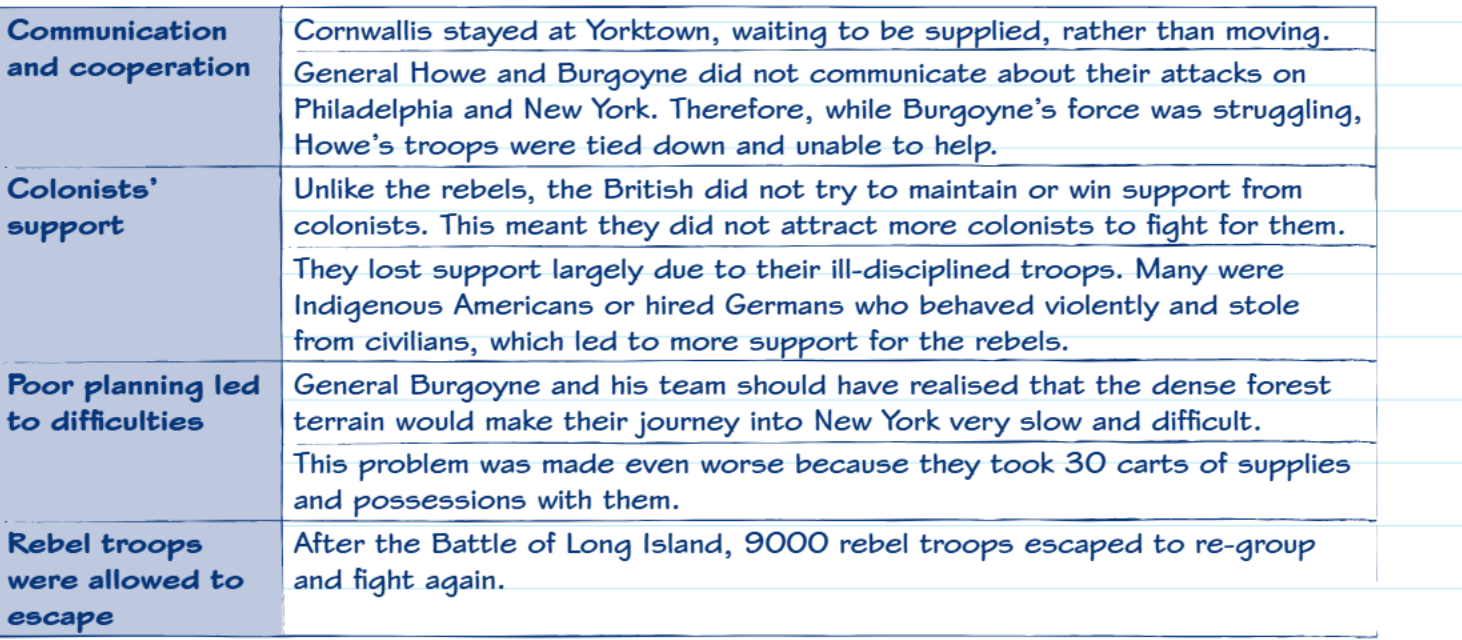
The British defeat resulted from several critical mistakes that undermined their military advantages.
Poor communication and coordination
British generals failed to coordinate their operations effectively, leading to missed opportunities and strategic disasters. General Cornwallis remained at Yorktown waiting for supplies and reinforcements rather than maintaining mobility. Meanwhile, Generals Howe and Burgoyne conducted separate campaigns against Philadelphia and New York without proper communication. This lack of coordination meant that when Burgoyne's forces faced difficulties, Howe's troops were unable to provide crucial assistance.
Important
The failure of British generals to work together as a unified command structure gave the Americans a significant strategic advantage despite being outnumbered and outgunned.
Failure to maintain colonial support
Unlike the Continental Army, British forces made little effort to win or maintain the loyalty of American colonists. This strategic oversight proved costly as more colonists joined the rebel cause instead of supporting the British. The problem worsened due to the poor behaviour of British troops, many of whom were Indigenous American allies or hired German mercenaries. These forces often behaved violently towards civilians and stole property, driving more colonists to support the rebellion.
Inadequate strategic planning
British military planners demonstrated poor understanding of American terrain and conditions. General Burgoyne's expedition provides a prime example - his forces should have recognised that dense forest terrain would make movement extremely difficult and slow. The situation became even worse when they attempted to transport 30 carts loaded with supplies and personal possessions, further hampering their progress through challenging landscape.
Allowing enemy forces to escape
British commanders repeatedly failed to capitalise on military victories by allowing rebel forces to escape and regroup. After the Battle of Long Island, approximately 9,000 Continental Army soldiers successfully escaped to fight another day. This pattern of incomplete victories allowed the American forces to maintain their strength and continue resistance.
Note
This recurring British failure to follow through on tactical victories demonstrates the importance of decisive action in warfare. Partial victories often prove worthless if the enemy can regroup and continue fighting.
Timeline of key events
- July 1775: George Washington appointed commander-in-chief of Continental Army
- 1776: Battle of Long Island - Washington's strategic retreat saves army; 9,000 rebel troops escape
- Winter 1776-77: Washington's surprise victories at Trenton and Princeton
- 1777: Burgoyne's failed campaign towards New York
- 1781: Siege of Yorktown - Cornwallis surrenders
- 1783: Treaty of Paris officially ends the war
Summary
Key Points to Remember:
-
Washington's leadership was multifaceted: He combined military strategy, diplomatic skills, and inspirational leadership to keep the revolution alive during its darkest moments.
-
Strategic retreats were victories: Washington's ability to preserve his army through tactical withdrawals proved more valuable than winning individual battles.
-
British overconfidence led to failure: Despite superior resources and training, British forces made critical errors in coordination, planning, and colonial relations.
-
Foreign support was crucial: International assistance, particularly from France and Prussia, provided essential military expertise and resources.
-
Unconventional warfare worked: American willingness to abandon traditional European military rules gave them significant advantages over rigid British tactics.