Norman and later medieval law enforcement (Edexcel GCSE History): Revision Notes
📚Revision Notes
Norman and later mediaeval law enforcement (c1000-c1500)
Introduction
Following the Norman Conquest in 1066, law enforcement in England experienced both continuity and significant change. While Norman rulers maintained many existing Anglo-Saxon systems, they also introduced new methods that reflected their military culture. During the later mediaeval period (13th-14th centuries), there was a gradual shift towards greater government involvement in law enforcement, marking the beginning of more centralised authority over crime and punishment.
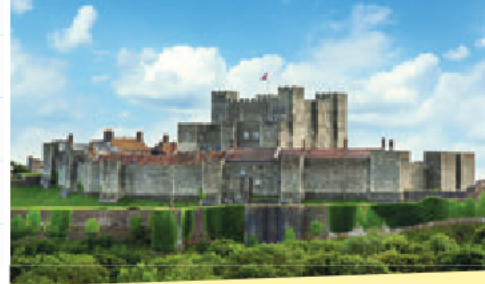
Norman law enforcement (1066-c1200)
The Norman approach to law enforcement represented a blend of preserving effective Anglo-Saxon traditions while introducing distinctly Norman innovations that suited their militaristic society.
Continuity with Anglo-Saxon systems
Norman rulers recognised the effectiveness of existing local law enforcement methods and chose to maintain them. The Anglo-Saxon system of tithings continued to operate, where groups of ten men remained collectively responsible for each other's behaviour. The traditional hue and cry system also persevered, requiring all community members to join the pursuit of criminals when the alarm was raised. Additionally, the established court system remained largely unchanged, keeping law enforcement primarily as a community responsibility.
Note
The Norman decision to preserve Anglo-Saxon law enforcement systems demonstrates their pragmatic approach to governance. Rather than completely dismantling existing structures, they recognised that local communities already had effective methods for maintaining order and preventing crime.
Norman innovations and changes
The Normans introduced several distinctive changes that reflected their military background and authoritarian approach. Most notably, they established trial by combat as an alternative method for settling disputes. This involved two parties fighting until one was killed or surrendered, with the survivor being declared victorious and therefore right in the eyes of the law.
Important
Trial by combat represented a fundamental shift from Anglo-Saxon justice methods, reflecting Norman belief that God would ensure the righteous party would win in physical combat. This method was particularly suited to Norman warrior culture but was often impractical for ordinary citizens.
Another significant Norman introduction was the use of foresters to police royal forests and enforce Forest Laws. These officials dealt harshly with suspected poachers and trespassers, often employing brutal methods that made them deeply unpopular with local communities. The extensive Forest Laws restricted hunting rights and land use, representing a major expansion of royal control over previously common lands.
Later mediaeval law enforcement (c1200-c1500)
As England's population grew and towns expanded during the 13th and 14th centuries, so did crime rates. This period witnessed increasing government involvement in law enforcement through the appointment of official positions, while traditional community-based systems continued to operate alongside these new developments.
Parish constables
A crucial development in local law enforcement was the establishment of parish constables. These were ordinary local people nominated by their own communities to serve in this role. The position was unpaid, meaning constables had to continue their regular occupations while fulfilling law enforcement duties. Each constable typically served for one year before being replaced.
From the 1250s onwards, parish constables took on expanded responsibilities, particularly in leading the chase for criminals once the hue and cry had been raised. They were also responsible for arresting suspects and ensuring they were brought to trial. Some towns additionally established night watches, where volunteers patrolled the streets after dark and handed any suspected criminals they caught over to the constable.
Example
How Parish Constables Worked in Practice:
When a crime was committed, the victim would raise the hue and cry by shouting for help. The parish constable would then:
- Organise the community response to pursue the criminal
- Lead the chase through neighbouring parishes if necessary
- Arrest any suspects caught during the pursuit
- Ensure suspects appeared before the appropriate court for trial
This system relied heavily on community cooperation and the constable's local knowledge.
Evolution of government-appointed officials
The transition from purely community-based law enforcement to government oversight occurred gradually over several centuries, reflecting the crown's desire for greater control over law and order.
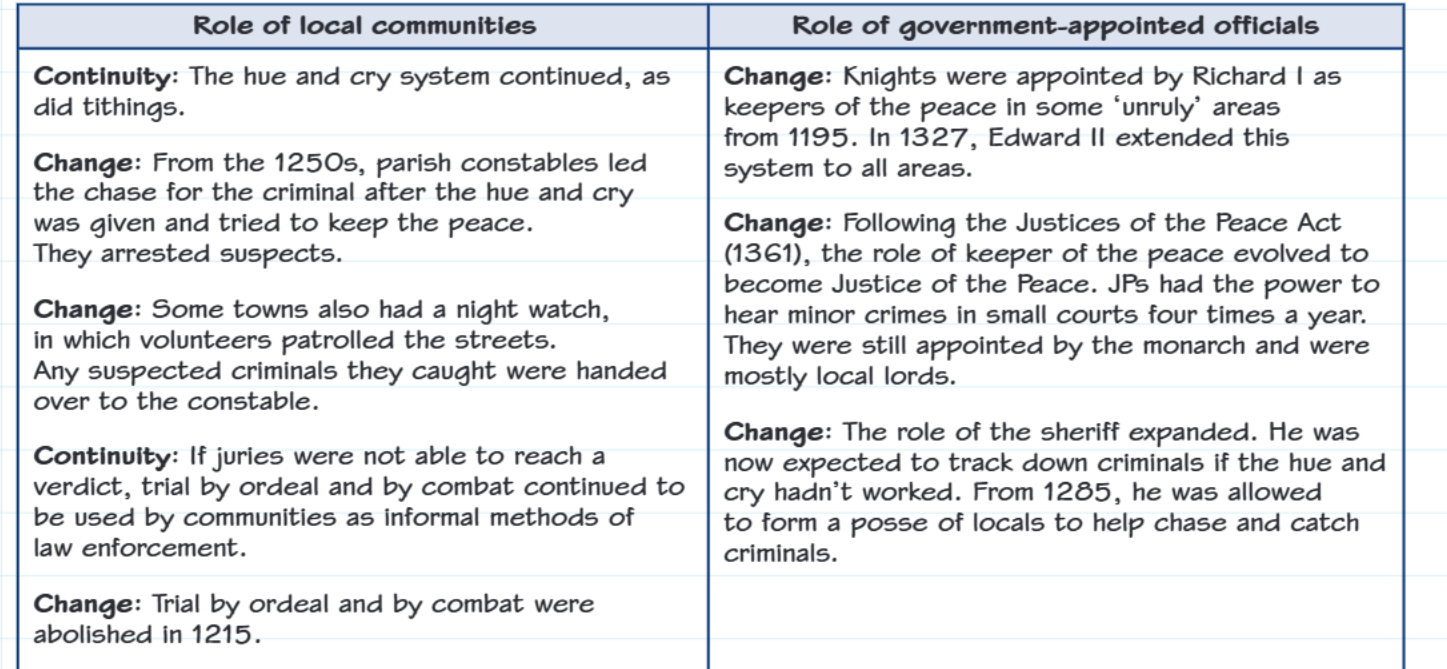
Keepers of the peace (from 1195) King Richard I first appointed knights as keepers of the peace in areas considered particularly "unruly" or troublesome. This system was later expanded by Edward II in 1327, who extended the appointment of keepers to all areas of England, marking a significant step towards centralised law enforcement.
Justices of the peace (from 1361) The Justices of the Peace Act of 1361 formalised and expanded the role of peacekeepers. These officials, known as JPs, gained the authority to hear minor crimes in small courts up to four times per year. Importantly, they were appointed by the monarch rather than elected by communities, representing mostly local nobles who served the crown's interests in maintaining order.
Expanded role of sheriffs The sheriff's responsibilities grew considerably during this period. Previously focused on administrative duties, sheriffs were now expected to actively track down criminals when the hue and cry had been raised. From 1285, they gained the power to form posses - groups of local people recruited to assist in chasing and catching criminals.
Note
The gradual introduction of government-appointed officials did not replace community-based systems but worked alongside them. Local people still had important roles in law enforcement, but now operated under greater royal oversight and authority.
Changes in trial methods
A significant legal development occurred in 1215 when trial by ordeal and trial by combat were officially abolished. However, if juries were unable to reach a verdict, informal methods of determining guilt or innocence continued to be used by communities, showing how traditional practices persisted alongside official legal changes.
Important
The abolition of trial by ordeal and trial by combat in 1215 marked a crucial turning point in English legal history, moving away from supernatural or physical tests of guilt towards more evidence-based methods of determining justice.
Timeline of key developments
- 1066: Norman Conquest - trial by combat introduced
- 1195: Richard I appoints first keepers of the peace in unruly areas
- 1215: Trial by ordeal and trial by combat officially abolished
- 1250s: Parish constables begin leading criminal chases after hue and cry
- 1285: Sheriffs gain power to form posses for criminal pursuit
- 1327: Edward II extends keeper system to all areas of England
- 1361: Justices of the Peace Act creates formal JP system
Summary
Key Points to Remember:
- Continuity and change: Normans kept effective Anglo-Saxon systems like hue and cry and tithings while adding their own innovations like trial by combat
- Community to government shift: Law enforcement gradually moved from purely local community responsibility to include government-appointed officials
- Parish constables: Unpaid local volunteers served one-year terms and became crucial in organising criminal pursuits from the 1250s
- Key date 1361: The Justices of the Peace Act marked the formal establishment of government-appointed local law enforcement officials
- Forest Laws: Norman introduction of foresters to police royal forests represented harsh enforcement that was deeply unpopular with local populations