Drake's circumnavigation of the globe (Edexcel GCSE History): Revision Notes
📚Revision Notes
Drake's circumnavigation of the globe
Overview of the voyage
Francis Drake's historic circumnavigation of the globe took place between December 1577 and September 1580, lasting nearly three years. This remarkable expedition made Drake only the second person in history to successfully sail around the entire world, and it had profound consequences for England's position as a maritime power. After completing this extraordinary voyage, Queen Elizabeth I honoured Drake by knighting him, recognising both his personal achievement and the significant benefits his journey brought to England.
Note
Drake's circumnavigation came nearly 60 years after Ferdinand Magellan's expedition (1519-1522), though Magellan himself died during the voyage and never completed the full journey.
Reasons for Drake's circumnavigation
Drake's decision to undertake this dangerous and ambitious voyage was driven by three main motivations that reflected the complex political and economic situation of the late 16th century.
Attacking Spanish interests
Drake's primary purpose was not simply to explore the world, but to target Spanish colonies in the Pacific Ocean. At this time, relations between England and Spain were deteriorating, and Drake saw an opportunity to weaken Spanish power by raiding their settlements and treasure ships. The Pacific coast of South America was particularly attractive because Spanish defences there were weaker than in the well-protected Atlantic routes.
Seeking revenge
Personal and national grievances also motivated Drake's expedition. The Spanish had previously attacked Drake's fleet at St Juan de Ulúa, where most of his crew had been killed in the confrontation. This personal loss, combined with broader English resentment over Spanish dominance in the New World, created a strong desire for revenge that drove Drake to target Spanish interests wherever he could find them.
Pursuing profit through raids and trade
The expedition promised enormous financial rewards through a combination of raiding Spanish treasure ships and establishing new trading relationships. The prospect of capturing Spanish gold and silver, along with the possibility of opening new markets for English goods, attracted significant investment from wealthy backers, including Queen Elizabeth herself. The potential profits were so appealing that people were eager to fund Drake's risky venture.
Important
Remember the three main reasons using the acronym RAP: Revenge against Spain, Attacking Spanish colonies, and Profit through raids and trade.
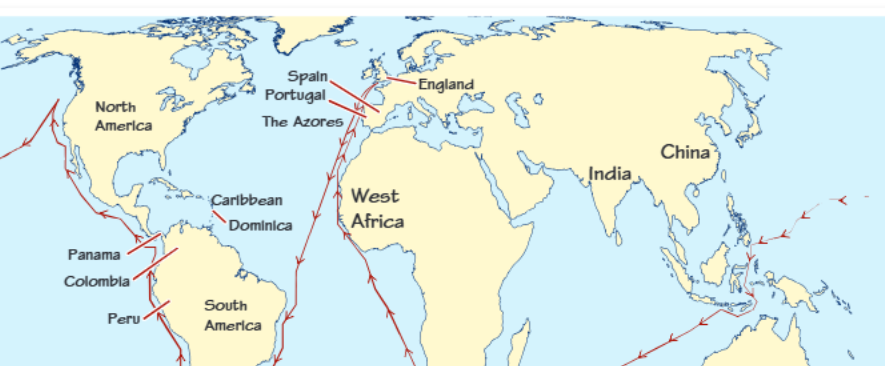
The voyage and its challenges
Drake began his journey with five ships, but the harsh conditions of global navigation took a severe toll on his fleet. By the end of the expedition, only one vessel remained - the Golden Hind - demonstrating just how dangerous and difficult circumnavigation was during this period. Despite these losses, the survival of even one ship represented a remarkable achievement that significantly boosted England's reputation as a seafaring nation.
During his voyage, Drake successfully raided numerous Spanish colonies along the Pacific coast of South America, capturing substantial amounts of treasure. He also established territorial claims for England, most notably when he claimed an area near San Francisco Bay and declared it English territory under the name "New Albion", with Elizabeth I as its monarch.
Important
Survival Rate: Only 1 out of 5 ships (20%) survived the complete circumnavigation, highlighting the extreme dangers of such expeditions in the 16th century.
The significance of Drake's circumnavigation
The impact of Drake's successful voyage extended far beyond the immediate profits from raiding Spanish treasure ships. The expedition had several major consequences that shaped England's future as a global power.
Enhanced naval reputation
England's reputation as a formidable sea power increased dramatically following Drake's achievement. The fact that an English captain could successfully navigate the globe while simultaneously conducting military operations against Spanish interests demonstrated England's growing maritime capabilities. This enhanced reputation encouraged further investment in naval exploration and helped establish England as a serious rival to Spanish dominance of the seas.
Territorial expansion and trading opportunities
Drake's voyage resulted in England claiming "New Albion" as English territory, giving Elizabeth's government a foothold in North America. Additionally, English ships began trading in previously unexplored markets, including China, West Africa, and India, opening up new sources of wealth and establishing trading networks that would become crucial to England's economic development.
Note
The name "New Albion" comes from the ancient name for Britain (Albion), showing Drake's intention to create a "New Britain" on the Pacific coast of North America.
Escalation of conflict with Spain
The success of Drake's raids significantly damaged Anglo-Spanish relations and brought England into direct conflict with both Spain and the Pope. Spain had already established extensive colonial territories in Mexico and Peru, and had trading posts along the Eastern Pacific coast. The Pope had previously "awarded" North America to Spain, making Drake's territorial claims and Elizabeth's support for them a direct challenge to both Spanish power and papal authority. This conflict would eventually contribute to the outbreak of war between the two countries.
Timeline of key events
- December 1577: Drake departs England with five ships
- 1578-1579: Drake conducts raids on Spanish colonies along the Pacific coast of South America
- 1579: Drake claims "New Albion" (near San Francisco) for England
- September 1580: Drake returns to England with only the Golden Hind surviving
- 1580: Elizabeth I knights Drake, officially recognising his achievements
Example
Timeline Duration: The expedition lasted approximately 33 months (2 years and 9 months), making it one of the longest continuous voyages of exploration in the 16th century.
Summary
Key Points to Remember:
- Drake's circumnavigation lasted from December 1577 to September 1580, making him only the second person to sail around the world
- The voyage had three main purposes: attacking Spanish colonies, seeking revenge for previous Spanish attacks, and pursuing profit through raids and trade
- Only one of Drake's original five ships, the Golden Hind, survived the complete journey
- The expedition significantly enhanced England's naval reputation and led to territorial claims in North America ("New Albion")
- Drake's success escalated tensions with Spain and contributed to the deterioration of Anglo-Spanish relations, ultimately leading towards military conflict