Mao Zedong (Edexcel GCSE History): Revision Notes
📚Revision Notes
Mao Zedong

Mao Zedong emerged as the dominant leader of the Chinese Communist Party (CCP) during the establishment of communist rule in China. His leadership was built on successful strategies, a compelling vision for China's strength, and innovative ideas that shaped the Party's ideology - the political beliefs that guided all its actions.
Reasons for Mao's authority within the CCP
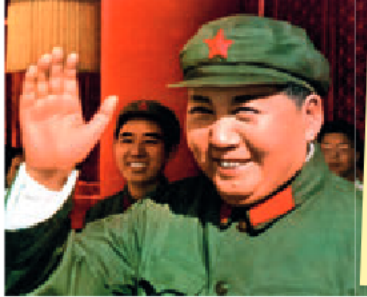
Mao achieved his dominant position within the Communist Party through several key factors that demonstrated his effectiveness as a leader:
Note
Mao's rise to power within the CCP was not immediate but built gradually through proven success in multiple areas of leadership, from military strategy to ideological innovation.
Leadership through adversity: Mao guided the CCP through extended periods of difficulty and hardship, proving his resilience and earning the trust of party members who relied on his steady leadership.
Military expertise: His innovative guerrilla warfare tactics against both Japanese forces and the Guomindang (GMD) were crucial to the People's Liberation Army's survival and success. These military victories gave him strong support from the army.
Collaborative approach: Mao worked effectively with other prominent CCP and PLA leaders, building important alliances and gaining their backing for his leadership.
Ideological innovation: He demonstrated how Marxist principles could be adapted to work with China's largely peasant population, making communist theory relevant to Chinese conditions.
Inclusive nationalism: His nationalist approach appealed beyond just Marxist supporters. Initially, his government included representatives from various political perspectives, making it more democratic and broadly appealing.
Mao's ideology
Mao developed a unique form of communist ideology that adapted traditional Marxist ideas to fit China's specific circumstances and needs.

Nationalism
Important
Mao's combination of Marxism with nationalism was a crucial departure from traditional communist theory, making it uniquely suited to China's situation as a nation that had suffered under foreign domination.
Mao combined Marxist beliefs with strong nationalist sentiment. He argued that China needed to unite in order to resist foreign domination and oppression. This nationalist approach was essential because China had been mistreated by Western powers in the past, and the country needed to resist Western influence and capitalism. China had historically been a major world power, but Western interference had weakened it significantly. Mao believed it was time for China to regain its rightful position and "stand up" against foreign control.
The power of the peasants
Traditional Marxist theory focused on urban workers leading communist revolutions. However, China's situation was very different - approximately 80% of China's population were peasants living in rural areas, with very few urban industrial workers.
Example
Mao's Adaptation of Marxism:
Traditional Marxism: Urban workers → Revolution → Communist society Mao's Chinese version: Rural peasants → Revolution → Communist society
This adaptation was necessary because China had peasants but very few industrial workers.
Mao adapted Marx's ideas to fit this reality by arguing that peasants could successfully lead a communist revolution because they would directly benefit from communist reforms.
Mao believed that mobilising China's millions of peasants would make the country incredibly powerful. This mass mobilisation of the huge peasant population would create a revolutionary army using guerrilla tactics, allowing untrained peasants to often defeat professionally trained soldiers in the countryside. The enormous scale of China's population would also help counteract the superior industrial capabilities of China's rivals.
Mao's leadership in the 1940s
During the 1930s, Mao developed his military and political theories, arguing against other CCP leaders who wanted to copy the Soviet model exactly. As a nationalist, Mao insisted that China should develop its own unique path to communism.
In 1943, Mao officially became the leader of the CCP. He immediately ordered a major purge within the Party - a systematic removal of anyone who disagreed with his ideas.
Important
The CCP Purges of 1943-1945
This brutal process resulted in the deaths of more than 10,000 people. Following these purges, the CCP officially adopted Mao's ideas as their guiding ideology. This consolidation of power was essential to Mao's control over the party.
Mao and the 'people's war'
Mao developed an influential concept called the "people's war", which became central to communist military strategy. Rather than trying to build a Western-style conventional army, his military theory emphasised several key principles:
Note
The concept of "people's war" represented Mao's belief that revolutionary fervour and popular support could overcome technological and numerical disadvantages in warfare.
Motivation over equipment: Strong motivation and commitment made soldiers more effective fighters than simply having advanced weapons and technology.
Local support: When fighters treated local peasants with respect and fairness, the peasants would actively support them, providing crucial assistance to the revolutionary forces.
Guerrilla advantages: Even when outnumbered by enemy armies, revolutionary forces could gradually wear them down through ambush tactics and guerrilla warfare.
This approach proved highly effective in China's conditions, where the communist forces often faced better-equipped opponents but could rely on widespread peasant support.
Timeline of key events
- 1930s: Mao develops his military and political theories
- 1943: Mao becomes official leader of the CCP
- 1943-1945: Major purges within the CCP, over 10,000 killed
- 1945: CCP officially adopts Mao's ideology as party doctrine
Summary
Key Points to Remember:
-
Mao's authority within the CCP came from his practical leadership through hardship, military success, collaborative relationships, ideological innovation, and inclusive nationalism.
-
Mao adapted traditional Marxism to China's conditions by focusing on peasants ( of the population) rather than urban workers, and combining it with strong nationalism.
-
His "people's war" theory emphasised motivation, local peasant support, and guerrilla tactics over advanced weapons and conventional military approaches.
-
By 1943, Mao had consolidated power through purges and established his ideology as the official doctrine of the Chinese Communist Party.
-
Mao's success lay in understanding that China needed a uniquely Chinese path to communism, rather than simply copying the Soviet model.