Attacks on traditional culture (Edexcel GCSE History): Revision Notes
📚Revision Notes
Attacks on traditional culture
Why Mao targeted traditional culture
Mao Zedong and the Chinese Communist Party (CCP) viewed traditional Chinese customs and beliefs as major obstacles preventing the creation of a socialist society. They believed these old ways needed to be completely destroyed and replaced with revolutionary socialist culture that would support their new political system.
The CCP saw traditional culture as tied to the old class system that had oppressed peasants and workers for centuries. By attacking these traditions, they aimed to break down the social structures that had kept the ruling classes in power.
Note
This cultural attack was not just about changing art and entertainment - it was a comprehensive strategy to reshape Chinese society by destroying the ideological foundations that had supported the traditional power structure for millennia.
Attacking culture in the countryside
Red Drama Groups spread revolutionary messages
Starting in 1950, the CCP organised groups called Red Drama Groups to visit rural areas and spread their revolutionary message through entertainment. These travelling performers were particularly active in regions that had previously been controlled by the Guomindang (GMD).
The Red Drama Groups performed specially written plays, operas, and ballets that explained Communist ideology in ways ordinary peasants could understand. Their performances aimed to encourage peasants to take direct action against their landlords, such as seizing land that had been owned by wealthy families for generations.
Confucianism under attack
The CCP specifically targeted Confucianism, which had formed the foundation of Chinese culture for over two thousand years. They viewed Confucian beliefs as "landlord culture" because the traditional respect for authority and social hierarchy had been used to justify wealthy landlords exploiting poor peasants.
Example
Cultural Example: "The White-haired Girl"
This famous revolutionary drama told the story of peasants rebelling against an oppressive landlord. The play was performed by Red Drama Groups across China and drew enormous crowds, helping to spread the revolutionary message to millions of people. It demonstrated how entertainment could be transformed into a powerful tool for political education.
Attacking culture in towns and cities
Targeting bourgeois culture
In urban areas, the CCP focused their attacks on what they called "bourgeois" or capitalist culture. They believed this urban culture was selfish and focused too much on acquiring material possessions and wealth, which went against socialist values of collective ownership and equality.
Theatre directors became particular targets during struggle sessions - public meetings where people were criticised and sometimes physically attacked. These cultural leaders were labelled as "rightists" and faced severe persecution for promoting non-revolutionary ideas.
Important
The persecution of cultural figures during struggle sessions often involved physical violence and public humiliation. Many intellectuals and artists were beaten, imprisoned, or driven to suicide during these campaigns.
Reforming cultural representations
The Communist Party completely transformed how different social classes were portrayed in art and entertainment. Working-class characters and peasants were now depicted as heroic figures, while previously they had often been shown as foolish or dishonest. This change aimed to build pride among the masses and show them as the true heroes of Chinese society.
Attacking Western influences
The CCP launched aggressive campaigns against Western ideas that had influenced Chinese culture, particularly those promoting individualism and personal freedom. People who wore Western-style clothing, used Western makeup, read foreign books, or listened to Western music faced harassment and sometimes physical attacks from revolutionary activists.
Note
The attack on Western culture extended beyond just books and music. Even simple things like wearing lipstick, playing Western musical instruments, or displaying Western artwork could mark someone as a target for revolutionary criticism.
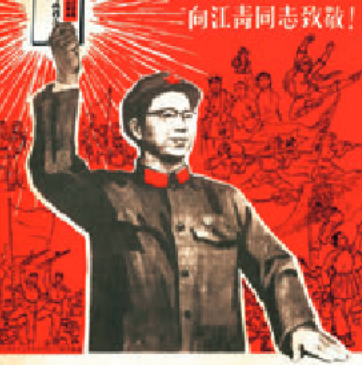
This propaganda poster shows the revolutionary spirit that the CCP wanted to promote, featuring a heroic figure in Communist clothing with dramatic revolutionary imagery.
The Cultural Revolution and revolutionary art
Jiang Qing's rise to power
Mao's wife, Jiang Qing, became the key figure in transforming Chinese culture during the Cultural Revolution (1966-1976). Mao appointed her as the "cultural purifier of the nation", giving her the responsibility to remove all traditional and Western influences from Chinese art and culture.
Jiang Qing brought unique qualifications to this role - she had been a professional actress before marrying Mao, so she understood how theatre and film could influence people's thoughts and beliefs. Her radical commitment to Maoist ideology drove her to pursue cultural transformation with extraordinary intensity.
Leading the Cultural Revolution
As head of the Central Cultural Revolution Group, Jiang Qing controlled cultural policy across China. She organised propaganda campaigns against the "four olds" - old ideas, old culture, old customs, and old habits. Her group decided what art could be created, performed, or displayed throughout the country.
Important
Jiang Qing wielded enormous power during the Cultural Revolution, effectively controlling all artistic and cultural expression in China. Her decisions affected millions of artists, performers, and cultural workers, many of whom lost their livelihoods or faced persecution under her policies.
Jiang Qing commissioned new revolutionary artworks designed to inspire people with Communist ideals and help establish a completely revolutionary culture that would support Mao's political goals.
Censorship and control of the arts
Under Jiang Qing's leadership, cultural censorship became extremely strict. Almost every opera, play, and ballet that had been written before the Cultural Revolution was banned from performance. She opposed any artistic work that showed traditional Chinese or Western cultural influences.
Instead of these banned works, Jiang Qing demanded that all art should be "red, bright and shining" - meaning it should promote revolutionary ideas, show optimistic socialist progress, and inspire people to support the Communist cause. Artists had very limited freedom to create anything that didn't directly serve these political purposes.
Important
The scale of cultural destruction was unprecedented. Thousands of years of Chinese artistic heritage were effectively erased from public life, with only a handful of approved revolutionary works allowed to be performed or displayed.
Re-education of artists
The CCP became suspicious of any artwork that didn't clearly educate people about Maoist principles. They believed that art focusing on beauty, personal emotions, or abstract ideas represented dangerous "intellectualism" and "bourgeois thinking".
To combat these problems, the government sent artists to work in rural areas alongside peasants. This "re-education" process was designed to help artists understand the struggles of ordinary working people and connect their creative work with the goal of serving the masses rather than elite audiences.
Note
Re-education programmes forced intellectuals and artists to perform manual labour, often for years at a time. The goal was to break down what the CCP saw as elitist attitudes and reconnect educated people with the experiences of ordinary workers and peasants.
Artists who underwent re-education were expected to return to their work with a completely changed perspective, creating only art that would benefit the revolutionary cause and help build socialist society.
Timeline of key events
- 1949: People's Republic of China established; attacks on traditional culture begin
- 1950: Red Drama Groups start visiting rural areas to spread revolutionary messages
- 1966: Cultural Revolution officially begins
- 1966-1976: Jiang Qing leads systematic destruction of traditional and Western cultural influences
- 1976: End of Cultural Revolution with Mao's death
Summary
Key Points to Remember:
- Mao viewed traditional Chinese culture as a barrier to building socialism and ordered its complete destruction
- Red Drama Groups used entertainment to spread revolutionary messages in rural areas, encouraging peasants to rebel against landlords
- In cities, the CCP attacked bourgeois culture and Western influences through struggle sessions and persecution of cultural figures
- Jiang Qing led the Cultural Revolution's cultural transformation, banning almost all traditional art and demanding only "revolutionary" culture that was "red, bright and shining"
- Artists were sent for re-education in rural areas to align their work with serving the masses rather than elite interests
- The "four olds" (old ideas, old culture, old customs, old habits) were systematically targeted for elimination