Preventing disease (Edexcel GCSE History): Revision Notes
📚Revision Notes
Preventing disease in modern Britain (c1900-present)

Government intervention and healthcare transformation
The 20th century marked a revolutionary change in how Britain approached disease prevention. Rather than simply treating illnesses after they occurred, the government began taking an active role in preventing diseases from spreading in the first place. This shift represented a fundamental change in public health policy, moving from reactive treatment to proactive prevention strategies.
The government recognised that preventing disease was not only more humane but also more cost-effective than treating large numbers of sick people. This realisation led to massive investment in healthcare infrastructure, vaccination programmes, and public health education campaigns that would transform British society.
Important
This transformation from treating disease to preventing it represents one of the most significant changes in British healthcare policy. The shift saved countless lives and reduced healthcare costs dramatically.
The National Health Service and improved access

Establishment of the NHS (1948)
The creation of the National Health Service in 1948 represented one of the most significant developments in disease prevention. For the first time in British history, healthcare became free at the point of use for everyone, funded entirely through taxation. This revolutionary system provided access to a comprehensive range of preventive services that had previously been available only to those who could afford them.
The NHS offered essential preventive services including:
- Regular consultations with general practitioners
- Hospital care and surgical procedures
- Health visitors for expectant parents and young children
- Ambulance and emergency treatment services
- Specialised healthcare for elderly people
These services meant that health problems could be identified and treated early, before they developed into serious diseases.
Challenges in healthcare provision
Despite the NHS's ambitious goals, achieving equal healthcare access across the country proved challenging. Different regions had varying numbers of doctors and hospitals, and standards of care differed significantly between areas. Some types of healthcare remained difficult to access - for example, many people still struggled to receive NHS dental treatment due to shortages of NHS dentists.
Note
The NHS transformation was not immediate or uniform. Rural areas and certain regions faced particular challenges in accessing the same quality of care as urban centres, a problem that took decades to address.
However, the overall impact was transformative. Far more people gained access to healthcare after 1948 than had ever been possible in 1900, fundamentally changing the health prospects for millions of British citizens.
Government vaccination programmes
The development of mass immunisation
Although effective vaccines had been developed in the late 19th and early 20th centuries, many people could not afford to receive them. This situation changed dramatically following a devastating diphtheria epidemic in 1938 that killed 3,000 people. The tragedy demonstrated the urgent need for government-funded immunisation programmes to protect the entire population, not just those who could pay.
The government responded by establishing comprehensive vaccination programmes that would eventually become compulsory for many diseases. These programmes represented a major shift in public health policy, with the state taking direct responsibility for protecting citizens from preventable diseases.
Vaccination timeline and impact
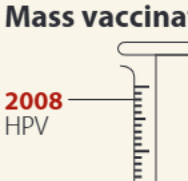
The rollout of mass vaccination programmes followed a carefully planned timeline:
Example
Vaccination Programme Timeline: Major Milestones
- 1942: Diphtheria vaccination introduced following the 1938 epidemic
- 1950: Polio and whooping cough vaccinations began
- 1962: Measles vaccination programme launched
- 1970: Rubella vaccination introduced
- 1961: Tetanus vaccination programme established
- 1988: MMR (Measles, Mumps, Rubella) combined vaccine introduced
- 2008: HPV (Human Papillomavirus) vaccination programme for young women
Despite the proven effectiveness of these programmes, vaccination remained controversial. Some people chose not to have their children vaccinated due to concerns about side effects or philosophical objections to government intervention in personal health choices.
Public health prevention measures
Since 1948, the government has implemented increasingly comprehensive measures to prevent disease at a population level. These initiatives went far beyond individual medical treatment to address the environmental and social causes of illness.
Environmental and workplace improvements
The government introduced significant reforms including:
- Increased funding for testing and vaccination programmes
- Improved disposal systems for rubbish and sewage to prevent contamination
- New laws to reduce air and water pollution that caused respiratory and other diseases
- Legislation banning the advertising of cigarettes and prohibiting smoking in public places
- Laws improving health and safety standards in workplaces
- Environmental health officers conducting regular inspections of food outlets to prevent food poisoning
Note
These measures recognised that preventing disease required addressing its root causes in the environment and workplace, not just treating symptoms after people became ill.
Lifestyle campaigns and health education
Early awareness campaigns
Since 1948, the government has funded extensive publicity campaigns to raise awareness about health risks and promote healthy behaviours. These campaigns marked a shift towards educating the public about how their lifestyle choices could prevent disease.
One of the most significant early campaigns was the 1980s 'AIDS: don't die of ignorance' campaign, which successfully reduced cases of HIV infection by educating people about transmission risks and prevention methods.
Modern health promotion
More recent initiatives have focused on broader lifestyle factors that contribute to disease. The Change4Life campaign has encouraged healthy behaviour to prevent diseases related to poor diet, lack of exercise, and other lifestyle factors. These campaigns recognise that many modern health challenges, such as diabetes, heart disease, and obesity, can be prevented through education and lifestyle changes rather than medical intervention alone.
Important
Modern lifestyle campaigns represent a shift from treating diseases after they occur to preventing them through education about diet, exercise, smoking, and other risk factors.
Timeline of key developments
- 1938: Diphtheria epidemic kills 3,000 people, prompting government action
- 1942: First government-funded vaccination programme (diphtheria) introduced
- 1948: NHS established, providing free healthcare for all
- 1950: Polio and whooping cough vaccinations begin
- 1960s: Expansion of vaccination programmes (measles, rubella, tetanus)
- 1980s: 'AIDS: don't die of ignorance' campaign launched
- 1988: MMR combined vaccine introduced
- 2008: HPV vaccination programme for young women begins
- 2009: Change4Life healthy living campaign launched
Summary
Key Points to Remember:
-
The NHS, established in 1948, revolutionised disease prevention by providing free healthcare access to everyone, funded through taxation rather than individual payment
-
Government vaccination programmes developed following the 1938 diphtheria epidemic have successfully prevented thousands of deaths through systematic immunisation campaigns
-
Public health measures expanded beyond individual treatment to address environmental causes of disease, including pollution control, workplace safety, and food hygiene regulations
-
Lifestyle campaigns shifted focus to educating people about preventing disease through healthy choices, from the 1980s AIDS awareness campaign to modern initiatives like Change4Life
-
The transformation from reactive treatment to proactive prevention has dramatically improved life expectancy and quality of life for British people since 1900