Sandwich and Canterbury (Edexcel GCSE History): Revision Notes
📚Revision Notes
Sandwich and Canterbury case study
This case study examines how two groups of Protestant migrants - Flemish and Walloon weavers - settled in different English towns during the 16th century. Both groups fled religious persecution in what is now Belgium and the Netherlands, but their experiences in England varied significantly.
Background to the migration
Flemish and Walloon migrants were Protestant refugees who escaped Catholic persecution in the 16th century. They came from regions that are now Belgium and the Netherlands, bringing valuable weaving and textile skills with them. Although these migrants possessed similar expertise, their settlement experiences differed greatly, particularly in how they contributed to and integrated with local English communities in Kent.
Note
The timing of this migration was crucial - these Protestant refugees were fleeing the intensification of Catholic persecution in the Low Countries during the Counter-Reformation period, while England under Elizabeth I was establishing itself as a Protestant nation open to skilled religious refugees.

Flemish weavers in Sandwich
Early welcome and settlement (1561)
The story of Flemish migration to Sandwich began when local officials became concerned about their town's declining economic prosperity. In 1561, these worried officials successfully petitioned Elizabeth I's Council for permission to invite Flemish weavers to settle in their community. The migrants were specifically recruited to work in the weaving and fishing industries, bringing much-needed economic expertise to the struggling town.
Successful establishment and growth
The Flemish settlers quickly proved their worth after arriving in 1561. They produced high-quality woollen broadcloth that became popular in the twice-weekly town markets. Recognising their need for religious freedom, the authorities granted them use of St Peter's church, allowing them to worship according to their Protestant beliefs. This religious accommodation was crucial for maintaining their community identity.
Rising tensions and restrictions (1569)
However, success brought unexpected problems. By 1569, English residents began complaining that the Flemish migrants were taking away job opportunities from local workers. The growing resentment led Sandwich officials to impose new restrictions: migrants could only work in trades where no qualified Englishman was available. Additionally, they faced fines for disobeying these rules. Some particularly successful migrants even established different businesses in areas like tailoring and farming, though this success sometimes led to further penalties.
Important
The irony of the Sandwich situation was that the very success the town had hoped for when inviting the Flemish weavers became the source of local resentment. Economic competition led to the restriction of the migrants who had initially been welcomed as economic saviours.
Population peak and dispersal (1582)
The Flemish community continued growing despite increasing restrictions. By 1582, over 1,500 Flemish weavers lived in Sandwich, representing almost half the town's entire population. Feeling increasingly unwelcome, they appealed directly to Elizabeth I's Council, arguing that local Sandwich officials were treating them unfairly. The Council maintained the existing restrictions, ruling that Flemish migrants should stick to weaving and fishing while living in Sandwich, but granted them permission to move and seek work elsewhere if they wished.
This decision led to a significant exodus, with hundreds of Flemish migrants relocating to other English towns and cities where they might find better opportunities and less hostility.
Walloon weavers in Canterbury
A different reception
Canterbury's experience with Walloon migrants tells a more positive story. Like Sandwich, Canterbury was experiencing economic decline when Elizabeth I granted the city permission in 1575 to invite Walloon migrants from Europe and elsewhere in England to settle there. The city authorities took a more supportive approach from the beginning.
Establishing a strong community
The city provided 100 empty houses for the Walloons and allowed them to convert a disused monastery into both a church and a market space. This monastery became the heart of their community life. The Walloons organised themselves effectively, appointing twelve 'elders' who established rules and maintained order within their community while working closely with local English authorities.
Note
The provision of the monastery space was particularly significant - it gave the Walloons both a place of worship and a commercial centre, creating a strong foundation for community life that was absent in the Sandwich experience.
Economic success and integration
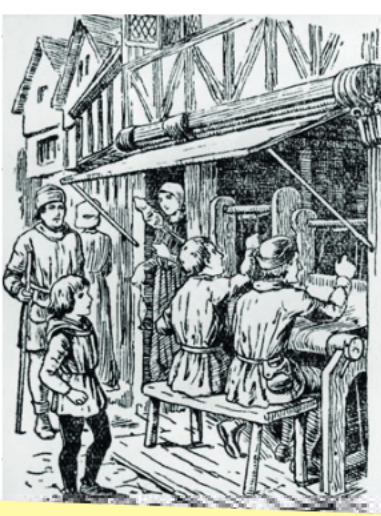
The Walloons proved remarkably successful in Canterbury. They produced extremely high-quality cloth, and by 1600, over 3,000 Walloons were living and working in Canterbury, making up almost one-third of the city's population. Many became prosperous enough to build their own houses and workshops, and importantly, they employed English people, passing on their valuable skills to local workers.
Innovation and prosperity
Beyond their original weaving expertise, the Walloons developed new trades that hadn't previously existed in the city. These included silk dyeing and diamond cutting, activities that brought additional prosperity to Canterbury. This diversification of industry helped the entire area improve economically, creating a win-win situation for both migrants and the existing English population.
Timeline of key events
- 1561: Flemish weavers invited to and arrive in Sandwich; granted use of St Peter's church
- 1569: English complaints lead to work restrictions for Flemish migrants in Sandwich
- 1575: Walloons invited to settle in Canterbury; some had previously worked in Sandwich
- 1582: Over 1,500 Flemish weavers in Sandwich appeal to Elizabeth I's Council
- 1600: Over 3,000 Walloons living in Canterbury, representing one-third of population
Comparing the two experiences
The experiences of Flemish migrants in Sandwich and Walloon migrants in Canterbury reveal important differences in how migrant communities could be received in early modern England. While both groups possessed similar skills and Protestant backgrounds, their long-term success varied dramatically based on local attitudes and policies.
Important
Key Difference in Outcomes:
In Sandwich, initial welcome turned to resentment as the Flemish community grew larger and more successful. Local English workers felt threatened by economic competition, leading to restrictions and eventual dispersal of many migrants to other locations.
Canterbury's approach proved more sustainable. The Walloons not only maintained their community but actively contributed to local prosperity by employing English workers and introducing new industries. Their system of self-governance through elected elders helped maintain good relations with local authorities.
The contrast demonstrates that successful integration required more than just economic skills - it needed supportive local policies, community self-governance, and crucially, arrangements that benefited both migrants and existing residents rather than creating competition between them.
Summary
Key Points to Remember:
- Religious persecution drove Flemish and Walloon Protestant migrants from Belgium and Netherlands to England in the 16th century
- Sandwich welcomed then restricted Flemish weavers, leading to tensions and eventual dispersal by 1582 when they made up half the town's population
- Canterbury successfully integrated Walloons who established strong community governance and employed local English workers
- Economic skills were valuable - both groups brought high-quality textile production that local markets wanted
- Different approaches by local authorities led to very different outcomes: restriction and resentment in Sandwich versus prosperity and integration in Canterbury