c1900-present: Migration in modern Britain (Edexcel GCSE History): Revision Notes
📚Revision Notes
Migrants: Experience in modern Britain (c1900-present)
Overview of migrant experiences since 1900
Migrants arriving in Britain since 1900 have faced dramatically different experiences depending on when they arrived, where they came from, and the political climate of the time. Their treatment has ranged from warm welcome to violent hostility, often influenced by economic conditions, wartime circumstances, and changing social attitudes.
Note
The experiences of migrants can be broadly divided into two distinct periods, with 1945 marking a significant turning point in attitudes and policies. Before 1945, responses were often situational and temporary, while post-1945 saw the emergence of more systematic and organised approaches to both supporting and opposing immigration.
Early 20th century experiences (1900-1945)
Examples of welcome and integration
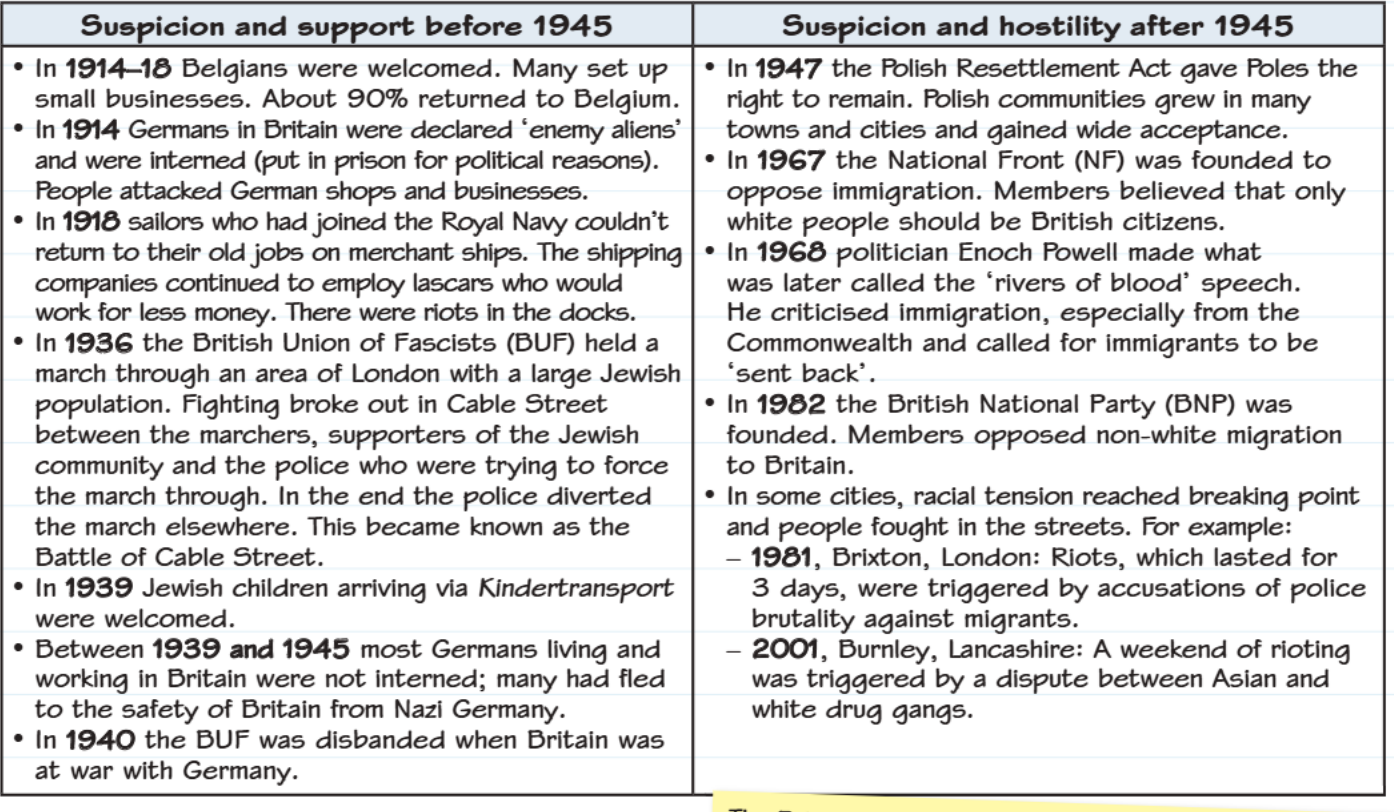
During the early 1900s, some migrant groups received positive receptions from British society. Belgian refugees during World War I (1914-16) were particularly welcomed by the British public. Many Belgians established small businesses during their stay, and importantly, about 90% chose to return to Belgium after the war ended, which may have made their temporary presence more acceptable to local communities.
The Kindertransport programme in 1939 represented another example of British compassion, as Jewish children fleeing Nazi persecution were welcomed into British homes and communities. This humanitarian response demonstrated Britain's capacity for generosity during times of international crisis.
Experiences of suspicion and hostility
However, not all migrants received such warm welcomes. German residents in Britain faced immediate suspicion when war broke out in 1914. They were officially declared 'enemy aliens' and many were interned for the duration of the conflict, regardless of how long they had lived in Britain or their personal loyalties.
Economic tensions also created hostility towards migrants. In 1919, riots broke out in dock areas when sailors who had lost their jobs to foreign workers during the war couldn't return to their previous employment. This pattern of economic resentment would continue to influence attitudes towards migrants throughout the century.
The Battle of Cable Street (1936)
Example
Historical Example: The Battle of Cable Street (1936)
The British Union of Fascists (BUF), led by Oswald Mosley, planned to march through Cable Street in London's East End, an area with a large Jewish population.
What happened:
- Local Jewish community organised resistance
- Anti-fascist groups joined the opposition
- Police tried to force the march through
- Residents successfully prevented the march
Significance: This event demonstrated both the existence of organised anti-immigrant sentiment and the equally organised resistance to it. The BUF was eventually disbanded in 1940 when Britain entered the war against Nazi Germany.
Post-1945 experiences
Continued challenges and new hostilities
After 1945, migrant experiences became increasingly complex. The 1947 Polish Resettlement Act gave Polish servicemen and their families the right to remain in Britain, and Polish communities grew in many towns and cities, generally gaining wide acceptance due to their wartime service alongside British forces.
However, the post-war period also saw the emergence of more organised anti-immigration movements. In 1962, the National Front (NF) was founded specifically to oppose immigration. Members believed that only white people should hold British citizenship, representing a more systematically racist approach than earlier, more economically motivated opposition.
Political rhetoric and its impact
Important
The political climate became more charged with Enoch Powell's infamous "rivers of blood" speech in 1968. Powell, a Conservative MP, criticised government immigration policies and warned of racial conflict if immigration from Commonwealth countries continued.
This speech had a profound impact on public discourse about immigration, legitimising more extreme viewpoints and contributing to increased racial tensions. Students should understand that inflammatory political rhetoric can have lasting effects on public attitudes and community relations.
The formation of the British National Party (BNP) in 1982 continued this trend, with members actively opposing non-white migration to Britain.
Racial violence and riots
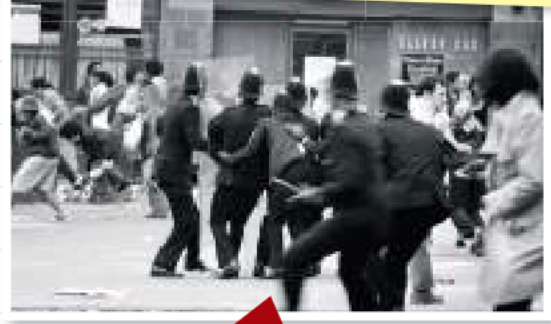
The combination of economic difficulties, political rhetoric, and social tensions periodically erupted into violence. The 1981 Brixton riots in London lasted for three days and were triggered by accusations of police brutality against migrants. The riots highlighted the deep-seated problems of discrimination and poor police-community relations.
Twenty years later, the 2001 Burnley riots in Lancashire showed that racial tensions remained a serious issue. These disturbances were triggered by disputes between Asian and white drug gangs, but reflected broader community divisions and mutual suspicion.
Government responses through legislation
Recognising the need to address racial discrimination and improve community relations, successive governments introduced increasingly comprehensive race relations legislation.
Timeline of race relations laws
Example
Legislative Response: Progressive Race Relations Laws
1965 Race Relations Act - First to make certain types of racial discrimination illegal in Britain. While limited in scope, it established the principle that racial discrimination was unacceptable.
1968 Race Relations Act - Expanded anti-discrimination law significantly, making it illegal to discriminate on racial grounds in housing and employment.
1976 Race Relations Act - Established the Commission for Racial Equality, giving it powers to use the legal system to prevent racial discrimination and raise public awareness.
1998 Crime and Disorder Act - Introduced more severe punishments when crimes were motivated by racism, recognising that racially motivated crimes cause particular harm to community relations.
Purpose and impact of legislation
Note
The aim of race relations legislation was to encourage better relationships between different communities. Government officials believed that successful integration of immigrants into British society could only be achieved if immigration was properly managed and discrimination was actively prevented through legal measures.
Role of media in shaping public opinion
Media coverage played a crucial role in shaping public attitudes towards migrants. Newspapers, television, and later the internet had a huge impact on people's opinions.
Some parts of the media portrayed migrants negatively, reinforcing stereotypes and stirring up prejudice against immigrant communities. These negative portrayals often focused on cultural differences or economic competition, making migrants seem threatening or unwelcome.
However, other media outlets portrayed migrants more positively, highlighting their contributions to British society and campaigning against racism. Many migrants themselves, along with some white English people, campaigned for more equal rights for non-white people. These campaigns helped persuade Parliament to pass the various race relations laws, showing how positive activism could influence government policy.
Timeline of major events
- 1914-16: Belgian refugees welcomed; Germans declared 'enemy aliens'
- 1919: Dock riots over employment competition
- 1936: Battle of Cable Street prevents BUF march
- 1939: Kindertransport brings Jewish children to safety
- 1940: BUF disbanded as Britain enters war
- 1947: Polish Resettlement Act allows Polish servicemen to stay
- 1962: National Front founded to oppose immigration
- 1965: First Race Relations Act passed
- 1968: Enoch Powell's "rivers of blood" speech; Second Race Relations Act
- 1976: Third Race Relations Act establishes Commission for Racial Equality
- 1981: Brixton riots last three days
- 1982: British National Party founded
- 1998: Crime and Disorder Act targets racially motivated crimes
- 2001: Burnley riots highlight continuing tensions
Remember!
Summary
Key Points to Remember:
-
Mixed experiences: Migrant experiences varied dramatically depending on timing, origin, and circumstances - from warm welcomes (Belgians, Kindertransport) to violent hostility (dock riots, Cable Street).
-
1945 turning point: Post-war Britain saw more organised and systematic opposition to immigration through groups like the National Front and BNP, alongside inflammatory political rhetoric.
-
Progressive legislation: Race relations laws became increasingly comprehensive from 1965-1998, moving from basic anti-discrimination measures to proactive equality promotion and stronger punishments for racial crimes.
-
Media influence: Both negative stereotyping and positive campaigning by media significantly shaped public opinion and political responses to immigration.
-
Ongoing tensions: Despite legal progress, periodic outbreaks of racial violence (Brixton 1981, Burnley 2001) showed that integration remained an ongoing challenge requiring continued effort and vigilance.