Stalin leads the USSR (Edexcel GCSE History): Revision Notes
📚Revision Notes
Stalin leads the USSR: The struggle for power, 1924-28
The power vacuum after Lenin's death
When Vladimir Lenin died in 1924, the Soviet Union faced a major succession crisis. There was no clear system in place for choosing the next leader, which led to an intense struggle for power among the senior communist leaders. Each of the main contenders had different political strengths and weaknesses, and their rivalry would ultimately reshape the direction of the Soviet state.
Note
Lenin had actually written a document known as his 'Testament' just before his death, which was highly critical of all the potential successors. This document particularly criticised Stalin, describing him as too powerful and suggesting he should be removed from his position. However, this testament was initially kept secret from the wider party.
The main contenders for power
Stalin - The underestimated bureaucrat
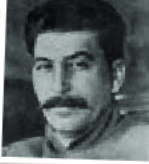
Joseph Stalin held the crucial position of General Secretary of the Communist Party, which initially seemed like a boring administrative role. However, this position gave him enormous behind-the-scenes power to appoint loyal supporters to key party positions throughout the Soviet Union.
Important
Stalin's administrative role as General Secretary appeared unimportant compared to other, more visible positions. This was a critical misjudgment by his rivals - the position actually provided him with the most powerful tool for building political support across the entire Soviet Union.
Stalin's political ideology centred on "Socialism in One Country" - the belief that the USSR could successfully build a socialist state without needing communist revolutions to spread to other countries first. He presented himself as a moderate figure who appeared respectful to his rivals and kept his more extreme views private. This made him seem less threatening than other candidates.
However, Stalin had significant weaknesses. Lenin's Testament had criticised him heavily, and many party members saw him as boring compared to the more charismatic rivals. Despite these apparent disadvantages, his control over party appointments would prove decisive.
Trotsky - The brilliant revolutionary
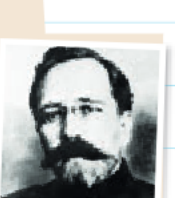
Leon Trotsky was perhaps the most obvious candidate to succeed Lenin. He was a charismatic speaker and had been Lenin's closest ally during the October Revolution and the Russian Civil War. His organisational skills and leadership had been crucial to the Bolshevik victory in the Civil War.
Trotsky believed in "Permanent Revolution" - the idea that communism needed to spread rapidly from country to country through revolution, and that the Soviet Union needed rapid industrialisation rather than the slower New Economic Policy (NEP).
Note
Despite his revolutionary credentials, Trotsky had serious weaknesses. He was seen as arrogant by many party members and had only joined the Bolsheviks in 1917, unlike others who had been long-standing party members. Crucially, he lacked strong support outside the military, which limited his political base.
Zinoviev and Kamenev - The partnership
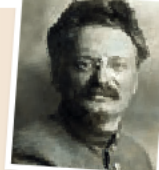
Grigory Zinoviev and Lev Kamenev worked closely together and initially strengthened each other's position. Zinoviev controlled the party organisation in Petrograd (later Leningrad), while Kamenev controlled Moscow. This gave them significant regional power bases.
Both men had been close allies of Lenin and had strong party credentials. However, they had made a crucial mistake - they were the only two senior Bolsheviks who had opposed Lenin's plan to seize power in October 1917.
Important
Zinoviev and Kamenev's opposition to the October Revolution was a fatal political weakness. This past opposition to Lenin would later be used against them by Stalin, who positioned himself as more loyal to Lenin's legacy. Additionally, their power was limited to their specific regions, while Stalin controlled the party machinery across the entire Soviet Union.
Bukharin - The popular theorist
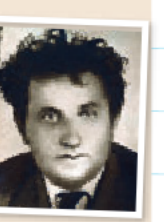
Nikolai Bukharin was very popular within the party and was respected as both an author and political theorist. He edited Pravda, the main party newspaper, which gave him significant influence over communist thinking.
However, Bukharin had a major problem with his past political positions. He had strongly argued against the Treaty of Brest-Litovsk (the peace treaty with Germany), which was later seen as having been the correct decision by Lenin. More seriously, he was the main supporter of the New Economic Policy, which many Bolsheviks viewed as too capitalist and a betrayal of communist principles.
Stalin's rise to power: Key events 1924-1927
1924: Controlling Lenin's legacy
Stalin's first major political victory came in organising Lenin's funeral in 1924. When Trotsky was allegedly told the wrong date by Stalin, he failed to attend this crucial ceremony. This made Stalin appear to be Lenin's natural successor and closest ally, while Trotsky seemed to be disrespecting Lenin's memory.
Example
Political Manoeuvring: The Funeral Incident
Step 1: Stalin organised Lenin's funeral arrangements Step 2: Trotsky was allegedly given the wrong date by Stalin's office Step 3: Trotsky failed to attend the ceremony Result: Stalin appeared as Lenin's natural heir, while Trotsky seemed disrespectful
More importantly, Stalin managed to prevent the publication of Lenin's Testament, which would have seriously damaged his reputation. By controlling access to this document, Stalin avoided early elimination from the succession race.
1925-1927: Strategic alliances
Stalin proved to be a master of political manoeuvring. Between 1925 and 1927, he formed strategic alliances with different party members to isolate and defeat his rivals one by one.
Example
Strategic Alliance Building
Phase 1 (1925): Stalin + Kamenev + Zinoviev + Bukharin vs. Trotsky
- Ensured votes went against Trotsky at Party Congress
- Effectively ended Trotsky's leadership chances
Phase 2 (1926-1927): Stalin + Bukharin vs. "United Opposition" (Trotsky + Kamenev + Zinoviev)
- Stalin accused them of factionalism (forbidden in party rules)
- Successfully isolated and defeated the opposition
First, Stalin worked with Kamenev and Zinoviev (with Bukharin's support) to undermine Trotsky's position. They ensured that votes went against Trotsky at the 1925 Party Congress, effectively ending his chances of becoming leader. When Kamenev and Zinoviev later tried to oppose Bukharin and form a "United Opposition" with Trotsky, Stalin cleverly accused them of factionalism - creating unauthorised groups within the party, which was forbidden.
1927-1928: Economic crisis and final victory
Economic difficulties created the final opportunity for Stalin to eliminate his remaining rivals. The New Economic Policy, which Bukharin supported, came under pressure due to agricultural problems. Stalin switched his position, now arguing for rapid industrialisation and the collectivization of agriculture - policies similar to what Trotsky had earlier advocated.
This strategic change allowed Stalin to win over party members who had been frustrated with the slow pace of economic development. Bukharin lost his influence as Stalin positioned himself as the leader who could modernise the Soviet Union quickly and decisively.
Why Stalin succeeded
Stalin's victory was not inevitable, but resulted from several key advantages:
Summary
Key Factors in Stalin's Success:
-
Control of the party machinery: As General Secretary, Stalin could place loyal supporters in key positions throughout the Soviet Union. This gave him a nationwide network of allies who owed their careers to him.
-
Political flexibility: Stalin was willing to change his position and form temporary alliances to defeat rivals. He understood that ideology was less important than building coalitions of support.
-
Underestimation by rivals: Other contenders saw Stalin as a boring administrator rather than a serious threat. This allowed him to work behind the scenes while his rivals engaged in public debates.
-
Strategic timing: Stalin was patient, allowing his rivals to make mistakes and attack each other before moving decisively against them.
Timeline of key events
Example
Chronology of Stalin's Rise to Power
- 1924: Lenin dies; Stalin organises funeral and suppresses Testament
- 1925: Stalin allies with Zinoviev/Kamenev against Trotsky at Party Congress
- 1926: Zinoviev/Kamenev form "United Opposition" with Trotsky
- 1927: Stalin defeats United Opposition; economic crisis begins
- 1928: Stalin adopts rapid industrialisation policy; Bukharin loses influence
Remember!
Summary
Essential Points to Remember:
- Stalin won the power struggle not through popularity or ideology, but through his control of party appointments as General Secretary
- He defeated his rivals one by one using temporary alliances, rather than fighting them all at once
- Economic problems with the NEP gave Stalin the opportunity to outmanoeuvre Bukharin, his final rival
- By 1928, Stalin had eliminated all opposition and established himself as the undisputed leader of the USSR
- This power struggle set the stage for Stalin's transformation of the Soviet Union through rapid industrialisation and collectivization