The Provisional Government (Edexcel GCSE History): Revision Notes
📚Revision Notes
The Provisional Government
Formation and early structure
After Tsar Nicholas II abdicated on 2 March 1917, Russia faced a major political crisis. The Provisional Government was quickly formed by 12 members of the Duma Committee to fill the power vacuum and maintain order during this revolutionary period.
Note
The rapid formation of the Provisional Government was essential to prevent complete governmental collapse, but this hastily assembled government would face unprecedented challenges in governing a country in the midst of revolution and war.
The Provisional Government consisted mainly of liberal politicians and radical Socialist Revolutionaries (SRs), representing a significant shift from the autocratic tsarist system. However, this new government immediately faced a challenging situation known as "Dual Control" or "Dual Power".
The concept of dual control
Rather than having clear, unified leadership, Russia found itself with two competing centres of power operating simultaneously:
The Provisional Government - This was the official government made up of politicians from various parties, primarily liberals and SRs. They aimed to govern Russia during the transition period and had the formal authority to make laws and policies.
The Petrograd Soviet - At the same time, revolutionary groups were establishing the Petrograd Soviet. This was a committee of elected representatives including workers, soldiers, and peasants from across Russia. Other soviets were also being formed in different regions.
Note
Understanding Dual Power
This dual power structure was unprecedented in Russian history. Both organisations met in the same building and had to negotiate constantly, making effective governance extremely difficult. The Provisional Government had legal authority, but the Petrograd Soviet had popular support and control over key resources.
Early reforms of the Provisional Government
Despite the challenges, the Provisional Government moved quickly to implement several important reforms that marked a dramatic break from tsarist rule:
- Released all political and religious prisoners - This freed thousands of people who had been imprisoned under the harsh tsarist system
- Promised complete democratic freedom - This included freedoms of speech, assembly, and the press
- Ended the death penalty - A significant humanitarian reform
- Took control of land previously belonging to the tsar - Redistributing royal estates
- Transferred power to local councils (zemstvos) - Giving more control to regional governments
Important
The Fatal Decision
However, the Provisional Government made one crucial decision that would prove extremely unpopular: they chose to continue fighting in World War One. This decision would ultimately contribute to their downfall, as war-weary soldiers and civilians demanded an end to the conflict.
The Petrograd Soviet's eight principles
The Petrograd Soviet wielded considerable influence and demanded that the Provisional Government follow eight key principles before they would offer their full support:
- Amnesty for all political prisoners
- Freedom of speech, freedom of assembly, and right to strike
- No privileges based on class, religion or nationality
- Elections for a Constituent Assembly
- Elected people's militia to replace all police units
- Local government to be elected
- Military units that participated in the revolution to stay together and not be sent to the front
- Off-duty soldiers to have the same rights as citizens
The Petrograd Soviet had significant control over communications, ordinary soldiers, sailors, and local food supply efforts. This created ongoing problems for the Provisional Government, as Soviet Order Number 1 meant the government lacked proper control over the military.
Alexander Kerensky's leadership and mistakes
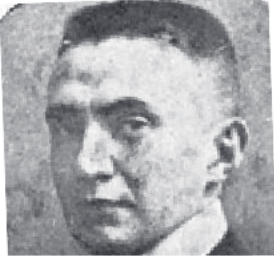
Alexander Kerensky emerged as a key figure who was a member of both the Provisional Government and the Petrograd Soviet, serving as a bridge between the two power centres. When he became leader of the Provisional Government in July 1917, he was in a unique position to potentially resolve the dual power crisis.
Important
Kerensky's Three Critical Mistakes
However, Kerensky made three crucial mistakes that ultimately weakened his government:
Continued support for the war - This decision angered ordinary soldiers who were exhausted from years of fighting and massive casualties. The war was deeply unpopular, and continuing it alienated a key support base.
Acted against the old ruling classes - While this might seem like a progressive move, it lost him crucial support from conservatives and moderate elements who might have supported stability.
Failed to control the Bolsheviks - As the Bolsheviks gained strength and influence, Kerensky was unable to contain their growing power and revolutionary activities.
Key terms
Note
Essential Vocabulary
Soviet - A committee of elected members representing workers, soldiers and peasants. These became powerful alternative governments during 1917.
Zemstvos - Local councils that had existed since the 1860s reforms. The Provisional Government transferred more power to these regional bodies.
Constituent Assembly - A planned elected parliament that would create a new constitution for Russia. This was one of the key demands of democratic groups.
Timeline of major events
- 2 March 1917 - Tsar Nicholas II abdicates
- 2 March 1917 - Provisional Government formed by 12 Duma Committee members
- March 1917 - Petrograd Soviet established and begins issuing orders
- July 1917 - Alexander Kerensky becomes leader of the Provisional Government
- Throughout 1917 - Dual power continues, creating ongoing governmental instability
Summary
Key Points to Remember:
- The Provisional Government was formed immediately after the Tsar's abdication but had to share power with the Petrograd Soviet in a system called "Dual Control"
- The government implemented important democratic reforms but made the unpopular decision to continue World War One
- The Petrograd Soviet demanded eight key principles and had significant control over the military and communications
- Alexander Kerensky tried to bridge both power centres but made crucial mistakes regarding the war, old ruling classes, and the Bolsheviks
- This dual power system created instability that would eventually contribute to the Bolshevik Revolution later in 1917