Columbus and sponsorship (Edexcel GCSE History): Revision Notes
📚Revision Notes
Columbus and sponsorship
Christopher Columbus seeks financial backing
From the 1480s onwards, Christopher Columbus, an Italian explorer, actively searched for financial sponsorship to support his ambitious plan to establish a new sea route to the East Indies. This endeavour would prove to be one of the most significant exploration ventures in world history.
The economic drive to find new sea routes
The motivation behind Columbus's proposed voyage stemmed from several compelling economic factors. Establishing a direct sea route to the East Indies promised to create numerous fresh commercial opportunities and potentially generate enormous profits for investors. Any individual or nation capable of controlling such a route, particularly over territories not yet claimed by European powers, stood to gain tremendous wealth and influence.
Note
The recent exploration successes in places like the Canary Islands and Madeira had heightened European interest in discovering additional unknown territories. These earlier discoveries convinced explorers like Columbus that vast unexplored regions existed, offering immense possibilities for establishing profitable trade relationships and territorial control.
The challenge of securing financial support
Exploration voyages during this period required substantial financial investment. Expeditions needed well-equipped ships, adequate provisions, and experienced crews willing to undertake dangerous journeys into uncharted waters.
Important
The financial risks were considerable, as investors had no guarantee of success or return on their investment. This uncertainty made securing sponsorship extremely challenging for explorers like Columbus.
Columbus initially approached several European monarchs seeking support, including the rulers of France, Portugal, and England's Henry VII, but these attempts proved unsuccessful. Each rejection forced Columbus to continue his search for backing elsewhere.
Why Ferdinand and Isabella agreed to sponsor Columbus in 1491
The Spanish monarchs Ferdinand and Isabella ultimately decided to support Columbus's expedition for several interconnected reasons:
Personal connections played a crucial role. Isabella's personal priest, Juan Pérez, had developed a friendship with Columbus and actively advocated for his proposal to the Spanish court. This influential endorsement helped Columbus gain access to the royal decision-makers.
National prestige considerations influenced their decision. Ferdinand and Isabella recognised that a successful expedition would significantly enhance Spain's international reputation. They were particularly motivated to establish trade routes and control territories before their rival, Portugal, could claim these advantages.
The potential financial benefits were enormous. The proposed venture offered the possibility of generating substantial income for the Spanish treasury, helping to strengthen the kingdom's economic position in Europe.
Religious motivations also influenced Isabella's support. She viewed the expedition as an opportunity to spread Christianity to distant lands, aligning with her strong religious convictions and desire to expand the faith beyond European borders.
Terms of the official agreement for the 1492 expedition
When Ferdinand and Isabella formally agreed to sponsor Columbus's voyage, they established specific terms outlining the benefits he would receive upon success:
Columbus would be entitled to ten percent of all produce obtained from any territories he discovered during his expedition. This arrangement promised substantial personal wealth if the voyage proved successful.
The agreement also included significant honours and titles for Columbus. He would receive the prestigious title of Grand Admiral of the Ocean Sea, recognising his authority over maritime exploration efforts.
Additionally, Columbus would be appointed as governor of any newly established colonies, giving him administrative control over Spanish settlements in discovered territories.
Note
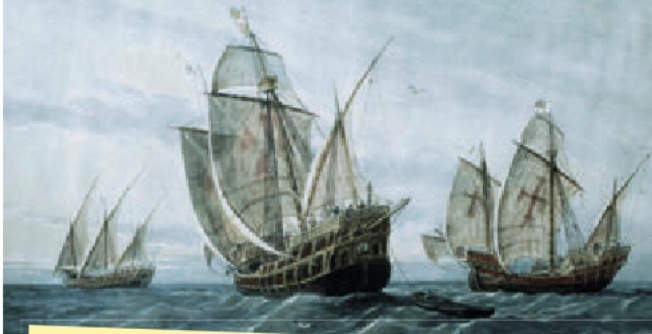
Columbus successfully secured three vessels for his historic journey: the Niña, the Pinta, and the Santa María. He also recruited the necessary crews to man these ships for the dangerous voyage across the Atlantic Ocean.
Timeline of key events
- 1480s: Columbus begins seeking sponsorship from various European monarchs
- 1491: Ferdinand and Isabella grant support to Columbus after previous rejections from other rulers
- 1492: Official expedition launches with three ships and crews
Summary
Key Points to Remember:
- Columbus spent years seeking financial backing from multiple European rulers before Spain agreed to sponsor his voyage
- Economic opportunities, national prestige, religious goals, and personal connections all influenced Ferdinand and Isabella's decision to support the expedition
- The 1491 agreement promised Columbus significant financial rewards, prestigious titles, and governmental authority over discovered territories
- Spain's investment in Columbus's voyage represented a calculated risk that would ultimately reshape world history
- The expedition required substantial resources including three ships (Niña, Pinta, Santa María) and experienced crews willing to face unknown dangers