Pizarro’s conquest of Peru (Edexcel GCSE History): Revision Notes
📚Revision Notes
Pizarro's conquest of Peru
Background to the conquest
In 1533, Francisco Pizarro had successfully captured and executed Atahualpa, the Inca Emperor, despite receiving the promised ransom of gold and silver. Following this execution, Pizarro needed to establish Spanish control over the vast Inca Empire, leading to a period of resistance and conflict that would reshape Peru forever.
Note
The Spanish conquest of Peru was part of a broader pattern of European colonisation in the Americas during the 16th century. The Inca Empire, known as Tawantinsuyu, was the largest empire in pre-Columbian America, stretching along the western coast of South America.
The execution of Atahualpa, 1533
The Spanish had initially agreed to release Atahualpa in return for enormous quantities of gold and silver - enough to fill a room. However, they broke this agreement and instead accused the Inca Emperor of plotting against Spanish rule. Atahualpa was executed by Spanish forces in the town square of Cajamarca, while his Inca supporters desperately pleaded for his life. This betrayal would have lasting consequences for Spanish-Inca relations.
Important
The Broken Promise of Cajamarca
The execution of Atahualpa despite receiving the ransom represented a fundamental betrayal that would define Spanish-Inca relations. This act of deception destroyed any possibility of peaceful cooperation and directly led to the violent resistance that followed.
Installing a puppet ruler
After Atahualpa's death, Pizarro recognised the need for legitimate Inca leadership to maintain control. He selected Manco, who was Atahualpa's half-brother and a son of the previous emperor Huayna Capac, to serve as the new Inca ruler. Pizarro's strategy was to use Manco as a puppet emperor who would rule on behalf of the Spanish.
Pizarro led his forces from Cajamarca to Cuzco, the heart of the Inca Empire, where he was welcomed by many inhabitants. These people had grown to hate Atahualpa's rule due to the civil war that had torn the empire apart, and they hoped Manco would bring stability. Manco was formally crowned as the new Inca Emperor, though real power remained with the Spanish conquistadors.
The Inca revolt of 1536
The Spanish treatment of Manco as merely a puppet ruler led to growing tensions. When Manco realised he had no real authority and was being used by the Spanish, he escaped from their control and organised a major rebellion against Spanish rule. This revolt marked the beginning of serious Inca resistance to Spanish occupation.
The uprising was driven by the Inca people's frustration with Spanish control and their desire to restore their traditional way of life. Manco's escape provided the leadership needed to unite various Inca groups against their Spanish conquerors.
Note
The Inca revolt of 1536 represented a turning point in the conquest. Rather than accepting Spanish domination, the indigenous population chose armed resistance, transforming what had been a relatively quick conquest into a prolonged conflict that would last decades.
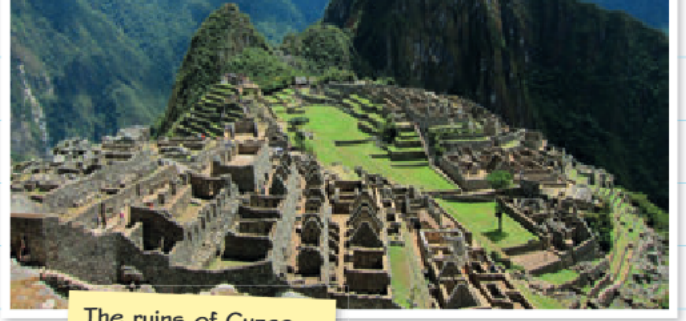
The siege of Cuzco, 1536-37
The most significant military confrontation of the revolt was the siege of Cuzco, which lasted from 1536 to 1537. This dramatic conflict involved approximately 10,000 Inca warriors facing just 150 Spanish soldiers supported by 1,000 indigenous allies who had sided with the conquistadors.
Example
Military Engagement: The Siege of Cuzco
The sequence of events during this crucial siege unfolded as follows:
Phase 1: Initial Attack The Inca forces initially broke into Cuzco, setting buildings ablaze in an attempt to drive out the Spanish defenders. However, the Spanish managed to contain and extinguish these fires, preventing the complete destruction of the city.
Phase 2: Spanish Counterattack The Spanish effectively used their cavalry units to launch attacks against the Inca warriors. The horses gave the Spanish a significant tactical advantage, as the Incas had never encountered mounted warfare before.
Phase 3: Strategic Victory During the fighting, Spanish forces managed to capture the important fortress of Sacsahuamán from the Incas. Once the Spanish controlled this strategic position, the Inca army found itself in an increasingly difficult situation and was forced to retreat.
Phase 4: Reinforcement and Retreat The siege ultimately ended when Spanish military units that had been exploring Chile returned to reinforce the defenders of Cuzco. Faced with these additional Spanish forces, Manco was compelled to withdraw his army.
Following his retreat, Manco established what became known as the Neo Inca State, a separate realm that continued to resist Spanish rule until 1572, demonstrating the persistence of Inca resistance even after military defeat.
Spanish control and governance
After successfully defending Cuzco, Pizarro maintained control over Peru until his death in 1541, when he was killed by rival Spanish conquistadors competing for power and wealth. The Spanish established their administrative centre in Lima, the coastal city they had founded. From this base, the conquistadors systematically extracted gold, silver, and other valuable resources from the region, shipping much of this wealth back to Spain.
The devastating impact of conquest
The Spanish conquest of Peru had catastrophic consequences for the indigenous population and Inca civilisation. The conquest led to the complete destruction of traditional Inca society and culture. Many surviving Incas were forced into slavery or joined the existing enslaved African population that the Spanish had brought to the Americas.
Perhaps most devastating of all was the impact of European diseases. Smallpox, measles, and other illnesses brought by the Spanish proved deadly to indigenous populations who had no natural immunity to these diseases. By 1591, these epidemics had reduced the Inca population by an staggering 95 percent, representing one of the most severe demographic disasters in human history.
Important
The Demographic Catastrophe
The disease impact was far more devastating than military conquest. The 95% population reduction by 1591 represents one of history's most severe demographic disasters. European diseases like smallpox and measles decimated indigenous populations who had no natural immunity, fundamentally altering the demographic composition of Peru.
The Inca Empire was not only conquered militarily but was systematically dismantled by Spanish merchants and administrators who saw Peru primarily as a source of wealth to be extracted rather than a civilisation to be preserved.
Timeline of key events
- 1533: Execution of Atahualpa in Cajamarca; Pizarro installs Manco as puppet Inca Emperor
- 1536: Manco escapes Spanish control and begins the great Inca revolt
- 1536-37: Siege of Cuzco - 10,000 Inca warriors besiege 150 Spanish and 1,000 allied troops
- 1537: Manco retreats and establishes the Neo Inca State in the mountains
- 1541: Pizarro killed by rival Spanish conquistadors
- 1572: End of the Neo Inca State - final defeat of organised Inca resistance
- 1591: Disease has reduced the indigenous population by 95%
Summary
Key Points to Remember:
- The execution of Atahualpa in 1533 broke Spanish promises and led directly to the Inca revolt of 1536
- The siege of Cuzco (1536-37) saw vastly outnumbered Spanish forces (150) defeat 10,000 Inca warriors through superior weapons and cavalry
- Manco established the Neo Inca State that continued resistance until 1572, showing conquest was not immediate
- Disease proved more devastating than warfare - by 1591, 95% of the indigenous population had died from European diseases
- The conquest completely destroyed Inca civilisation and established Spanish colonial control that would last for centuries