The foundation of La Paz, 1548 (Edexcel GCSE History): Revision Notes
📚Revision Notes
The foundation of La Paz, 1548
Introduction
The establishment of La Paz in 1548 represented a crucial moment in Spanish colonial expansion in South America. This new city became much more than just another settlement - it served as a powerful symbol of Spanish authority and control over the conquered territories.
Background: The conquistador revolt in Peru (1544)
Understanding why La Paz was founded requires looking at the serious challenges Spain faced in controlling its American territories during the 1540s.
Problems with Spanish colonial policy
The Spanish Crown introduced the New Laws, which significantly reduced the power of the encomenderos (Spanish colonists who controlled indigenous labour and tribute). These laws took away their traditional rights to pass their encomienda grants to their children, causing widespread anger among the Spanish settlers who had expected to build permanent wealth in the Americas.
Note
The New Laws were part of Spain's attempt to reform colonial administration and reduce the exploitation of indigenous peoples. However, they created significant tension with established colonists who had built their wealth and power on the encomienda system.
Gonzalo Pizarro's rebellion
The unpopular New Laws triggered a major uprising in Peru in 1544, led by Gonzalo Pizarro, who was the brother of the famous conquistador Francisco Pizarro. This rebellion was initially quite successful, with Gonzalo managing to gain control over significant portions of the former Inca territory for approximately two years.
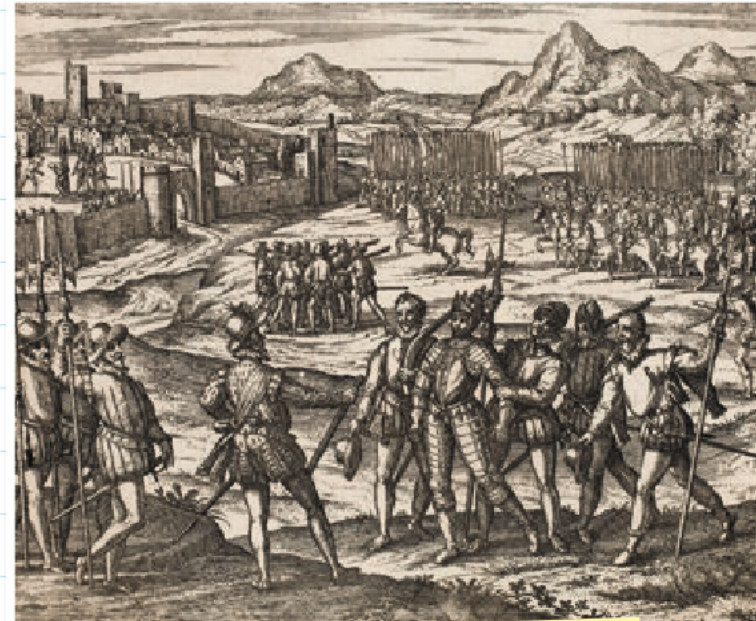
The revolt demonstrated how difficult it was for Spain to maintain effective control over its distant American colonies. However, Spanish forces eventually regained control, leading to Gonzalo Pizarro's capture in 1546 and his execution for treason in 1548.
The founding of La Paz
Purpose and symbolism
La Paz, meaning "The Peace" in English, was strategically founded in 1548 on the site of the former Inca city of Laja in what is now modern-day Bolivia. The timing was no coincidence - the city was established immediately after Gonzalo Pizarro's execution to commemorate the end of the dangerous rebellion and to demonstrate clearly that Spain, not individual conquistadors, held ultimate authority in the Americas.
Important
The strategic timing of La Paz's foundation cannot be overstated. By establishing the city immediately after Pizarro's execution in 1548, Spain sent a clear message that royal authority had been restored and that future rebellions would not be tolerated.
Administrative importance
The new city quickly became a vital administrative centre for the Spanish Empire in South America. Key governmental institutions were established there, including the audiencias (colonial courts) and offices for the Spanish viceroyalty. This centralised Spanish bureaucratic control over the region and helped prevent future rebellions by ensuring direct royal oversight.
Economic significance
La Paz's location was carefully chosen for maximum economic benefit to the Spanish Crown. The city was positioned close to crucial trade routes that connected the enormously wealthy Potosí and Oruro silver mines. This strategic placement allowed Spanish authorities to maintain tight control over the extraction and transportation of silver, ensuring that these precious metals continued flowing back to Spain rather than being controlled by independent conquistadors.
Strategic advantages
The city's location high up in the Andes mountains provided natural defensive advantages, making it much less vulnerable to potential attacks. This elevated position also gave Spanish administrators better control over the surrounding territories and trade routes.
Historical significance
The establishment of La Paz marked what many historians consider the peak of conquistador conquest in the Americas. After this point, the Spanish Crown had successfully established more direct control over its American territories, reducing the independent power of individual conquistadors and their descendants.
Note
The foundation of La Paz coincided with important debates about Spanish colonial policy, including the famous Valladolid debate of 1550, where Spanish authorities discussed the proper treatment of indigenous peoples in the Americas. This reflects the broader changes in Spanish colonial administration during this period.
The foundation also coincided with important debates about Spanish colonial policy, including the famous Valladolid debate of 1550, where Spanish authorities discussed the proper treatment of indigenous peoples in the Americas.
Timeline of key events
- 1544: Gonzalo Pizarro's revolt begins in Peru against the New Laws
- 1544-1546: Rebellion continues with Pizarro controlling parts of Peru
- 1546: Spanish forces capture Gonzalo Pizarro
- 1548: Gonzalo Pizarro executed for treason; La Paz founded to commemorate the restoration of Spanish authority
- 1550: Valladolid debate discusses Spanish colonial policy
Summary
Key Points to Remember:
- La Paz was founded in 1548 to celebrate the end of Gonzalo Pizarro's dangerous rebellion and demonstrate Spanish royal authority over individual conquistadors
- The city became a crucial administrative center for the Spanish Empire, housing important governmental institutions like the audiencias
- Economic control was key - La Paz's strategic location near the Potosí and Oruro silver mines ensured continued Spanish control over precious metal extraction
- The foundation marked the peak of conquistador conquest - after this, the Spanish Crown maintained much tighter direct control over its American territories
- Strategic location mattered - the city's position high in the Andes provided natural defences and control over surrounding trade routes