The construction of the Berlin Wall (Edexcel GCSE History): Revision Notes
📚Revision Notes
The construction of the Berlin Wall
Background to the crisis
The Berlin Wall crisis emerged when negotiations between the Soviet Union and the United States completely broke down over the ongoing Berlin problem. The situation had been building tension since the late 1950s, with both superpowers struggling to find a peaceful solution to the divided city's status.
The crisis reached a critical point when the four summit meetings held between 1959 and 1961 failed to resolve the complex issues surrounding Berlin. President Kennedy, recognising the gravity of the situation, began preparing the United States for the possibility of nuclear war. This escalation demonstrated how close the Cold War came to turning into a hot conflict.
Note
The escalation to nuclear war preparations shows just how serious the Berlin crisis had become by 1961, representing one of the most dangerous moments of the early Cold War period.
Khrushchev's dilemma and solution
Nikita Khrushchev faced a particularly challenging situation. While he could not risk entering a nuclear war with the United States, he desperately needed to address the refugee crisis that was severely damaging East Germany. Thousands of East Germans were fleeing to West Berlin, creating both a population drain and a propaganda disaster for the communist state.
Khrushchev's solution was dramatic and decisive: the construction of the Berlin Wall in August 1961. This barrier was specifically designed to prevent East Berliners from travelling to West Berlin, effectively sealing off the escape route that so many had been using to flee communist rule.
The construction process
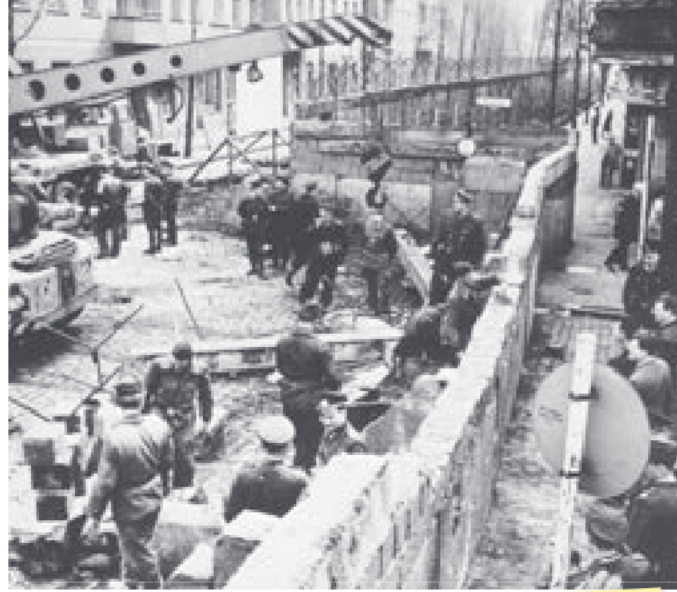
The physical construction of the Berlin Wall began on 12 August 1961. Initially, East German troops erected a simple barbed wire fence around West Berlin. However, this temporary barrier quickly evolved into something far more formidable and permanent.
By the end of October 1961, the barbed wire fence had been transformed into a heavily guarded wall. The construction involved deploying Soviet tanks to stop Western access to the East, creating a complete physical separation between East and West Berlin. The wall became a stark symbol of the divided city and the broader Cold War conflict.
Why the wall was built - Khrushchev's strategy
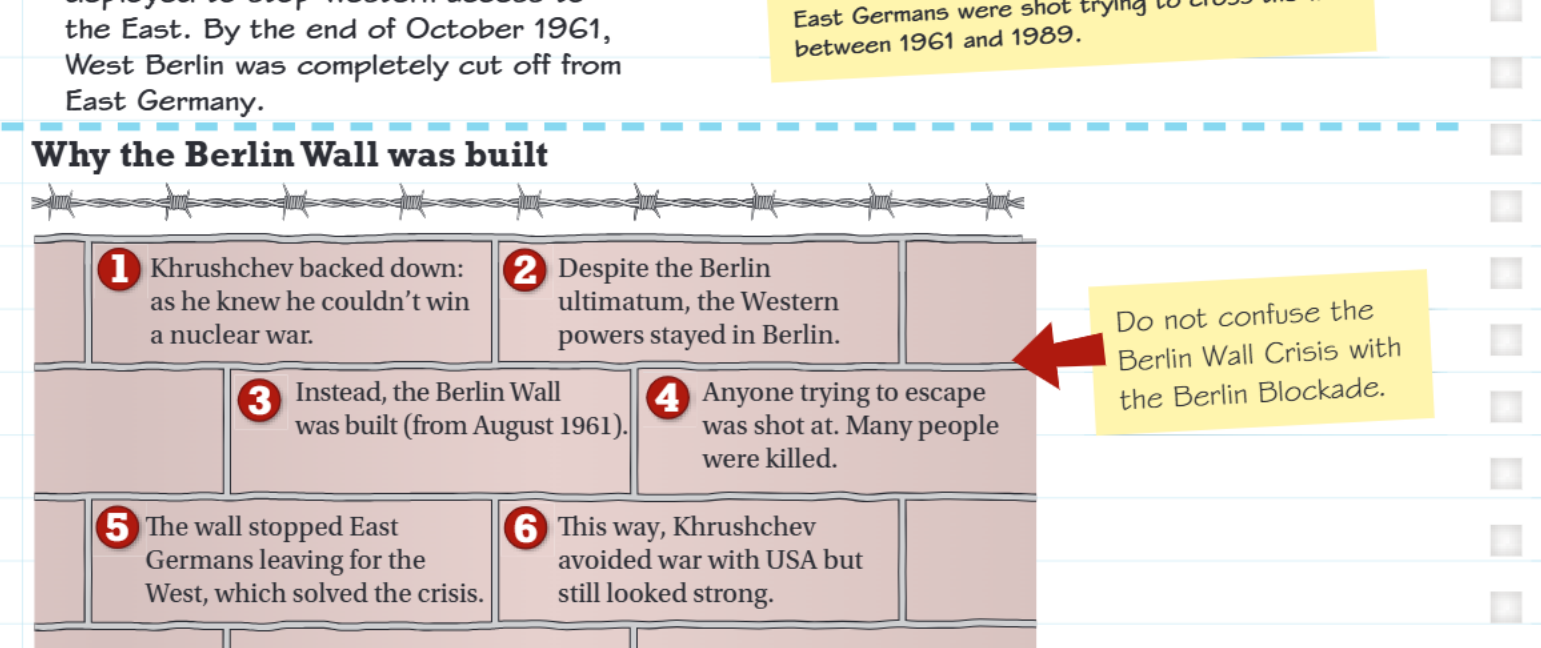
Khrushchev's decision to build the Berlin Wall followed a calculated six-point strategy that addressed multiple Cold War pressures:
Note
Khrushchev's Six-Point Strategy
This comprehensive approach allowed the Soviet leader to address the Berlin crisis while managing the delicate balance of Cold War politics.
Avoiding nuclear confrontation: Khrushchev recognised that he could not win a nuclear war against the United States, so he needed an alternative solution that wouldn't trigger direct military conflict.
Responding to Western persistence: Despite the Berlin ultimatum crisis, the Western powers remained firmly established in Berlin, refusing to withdraw their presence from the divided city.
Creating a non-military solution: The Berlin Wall represented a way to solve the crisis without resorting to armed conflict, allowing Khrushchev to address domestic pressures while avoiding war.
Stopping escape attempts: The wall served as a deadly barrier, with anyone attempting to escape being shot. This harsh enforcement demonstrated the communist regime's determination to keep its population contained.
Solving the refugee crisis: By preventing East Germans from leaving for the West, the wall addressed the population drain that was weakening East Germany economically and politically.
Maintaining strength: This approach allowed Khrushchev to avoid war with the USA while still appearing strong and decisive to both domestic and international audiences.
The human cost
The Berlin Wall's construction came with a terrible human price. Between 1961 and 1989, over 200 East Germans were shot while attempting to cross from East to West Berlin. This statistic highlights the brutal enforcement of the division and the desperate lengths to which people would go to escape communist rule.
Important
The Deadly Reality of Division
The human cost of the Berlin Wall cannot be understated. For 28 years, families were separated, and over 200 people paid the ultimate price for attempting to seek freedom. The wall represented not just a physical barrier, but a deadly enforcement of ideological division.
The wall became more than just a physical barrier; it represented the iron curtain that divided Europe and symbolised the human cost of Cold War politics.
Timeline of major events
- 1959-1961: Four summit meetings between superpowers fail to resolve Berlin crisis
- August 1961: Construction of Berlin Wall begins with barbed wire fence
- 12 August 1961: East German troops erect the initial barrier
- October 1961: Barbed wire fence completed and transformed into heavily guarded wall
- 1961-1989: Over 200 East Germans killed attempting to cross the wall
Historical significance
It's important not to confuse the Berlin Wall Crisis with the earlier Berlin Blockade. While both events centred on Berlin's divided status, the Berlin Wall crisis represented a different phase of Cold War tensions, focusing on preventing population movement rather than controlling supply routes.
Note
Distinguishing Cold War Berlin Crises
The Berlin Wall Crisis (1961) and the Berlin Blockade (1948-1949) were separate events with different objectives. The blockade aimed to force Western powers out of Berlin through economic pressure, while the wall aimed to stop population flight from East to West.
The wall's construction marked a turning point in the Cold War, demonstrating that both superpowers were willing to accept a divided Germany rather than risk nuclear war. It became the most visible symbol of the Cold War division of Europe and remained standing until 1989.
Summary
Key Points to Remember:
- August 1961 marked the beginning of Berlin Wall construction, starting with barbed wire before becoming a heavily guarded concrete barrier
- Khrushchev's strategy was to solve the refugee crisis without triggering nuclear war with the United States
- Over 200 East Germans were killed between 1961-1989 attempting to cross from East to West Berlin
- The wall solved the crisis by stopping the population drain from East Germany while allowing both superpowers to avoid direct military conflict
- This crisis was separate from the Berlin Blockade and represented a different approach to Cold War tensions in divided Berlin