Homesteaders: finding solutions (Edexcel GCSE History): Revision Notes
📚Revision Notes
Homesteaders: finding solutions - Understanding the challenges
The context homesteaders faced
When homesteaders began settling on the Great Plains from the 1860s onwards, they encountered Indigenous peoples who had very different beliefs about land, nature, and conflict. Understanding these differences helps explain the challenges homesteaders faced and why they needed to develop specific solutions to succeed on the Plains.
Note
The period from the 1860s onwards was crucial for westward expansion, coinciding with the Homestead Act of 1862 which offered 160-acre land grants to settlers willing to farm the land for five years.
Indigenous beliefs about nature
The Plains Indians held spiritual beliefs that shaped how they interacted with the land. They believed that everything in nature contained spirits that could either help or harm humans. This spiritual connection meant they could contact the spirit world through special ceremonies, visions, and ritual dances.
For Indigenous peoples, humans were simply part of nature and should work alongside natural spirits rather than trying to control or tame the environment. This created a fundamental challenge for homesteaders, who typically viewed nature as something to be conquered and transformed for agricultural use.
Note
This philosophical difference between working with nature versus controlling nature became one of the core conflicts that homesteaders had to navigate when establishing their farms on the Plains.
Indigenous beliefs about land and property
Perhaps the most significant challenge for homesteaders came from completely different concepts of land ownership. Indigenous tribes had sacred areas that held deep spiritual meaning - for example, the Lakota Sioux considered the Black Hills (called Paha Sapa) sacred because they believed their tribe originally came from this place.
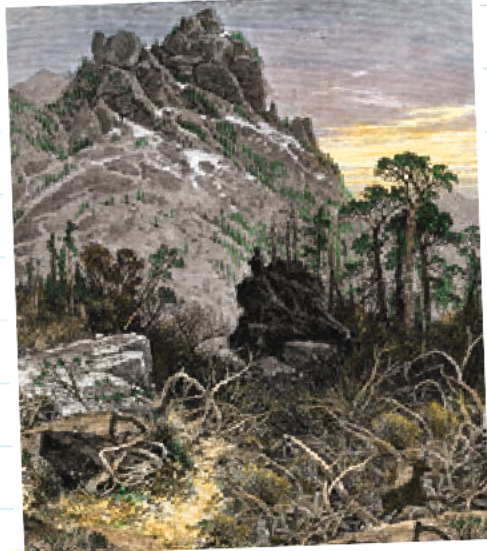
While Indigenous families might have their own garden plots, the broader concept was that land belonged to everyone and no individual could claim permanent ownership. Land was not seen as property that could be bought, sold, or exclusively controlled by one person.
Important
The Fundamental Conflict
The two worldviews were completely incompatible - homesteaders needed to establish clear property boundaries and individual ownership under the Homestead Act of 1862 to make their farming ventures successful, while Indigenous peoples believed land was not anyone's property and could not be bought or owned by individuals.
This created enormous tensions when homesteaders arrived with government backing to claim individual 160-acre plots. The success of homesteading required resolving this fundamental contradiction between collective and individual land concepts.
Indigenous attitudes towards warfare
Indigenous tribes had developed warfare practices that aimed to minimise casualties, which initially gave homesteaders some advantages but also created unpredictable challenges. Young men were essential for tribal survival, so tribes developed strategies to avoid heavy losses.
The highest honour in battle was "counting coup" - striking an enemy and escaping without injury rather than killing. Warriors would often retreat if a battle turned against them, preferring to live and fight another day rather than fight to the death.
Example
Understanding "Counting Coup"
Definition: "Landing a blow on an enemy and getting away without being injured"
Purpose: This practice demonstrated bravery and skill while preserving warrior lives, as young men were too valuable to lose in unnecessary deaths. The goal was to prove courage through contact with the enemy, not to kill.
However, this meant that the US Army and homesteader militias found themselves facing unfamiliar tactics. Indigenous warriors used hit-and-run strategies and were willing to withdraw when facing superior firepower, making it difficult for settlers to achieve decisive victories or feel secure in their new homes.
The consequences for homesteaders
These fundamental differences in beliefs created serious challenges that homesteaders had to solve:
Land disputes: Homesteaders needed legal and practical ways to establish and defend their property claims when Indigenous peoples didn't recognise individual land ownership.
Security concerns: The unfamiliar warfare tactics meant homesteaders had to develop new defensive strategies and community protection systems.
Cultural conflicts: Different attitudes towards nature and land use led to ongoing tensions that homesteaders had to navigate while trying to establish successful farms and communities.
Note
Solutions Homesteaders Developed
Understanding these challenges helps explain why homesteaders developed specific solutions like:
- Forming protective communities
- Establishing clear legal frameworks for land ownership
- Creating mutual defence agreements
The success of homesteading on the Plains required finding ways to overcome these fundamental cultural and practical conflicts.
Summary
Key Points to Remember:
- Indigenous peoples believed land couldn't be owned by individuals, creating direct conflict with the Homestead Act's individual property grants
- Sacred areas like the Black Hills were especially important to tribes and couldn't be settled without major conflicts
- Indigenous warfare focused on avoiding casualties rather than total victory, making conflicts unpredictable for homesteaders
- These different worldviews created security, legal, and practical challenges that homesteaders had to solve to succeed on the Plains
- Understanding Indigenous beliefs helps explain why homesteaders needed community-based solutions and government support to establish successful settlements