Sheriffs and marshals (Edexcel GCSE History): Revision Notes
📚Revision Notes
Sheriffs and marshals
Background: the need for law enforcement in the West
The rapid development of the American West created serious challenges for maintaining law and order. The California Gold Rush of 1849 serves as a key example of how sudden population growth and the pursuit of wealth led to lawlessness that would eventually require organised law enforcement through sheriffs and marshals.
Note
The connection between the Gold Rush and law enforcement development is crucial to understanding how the American West evolved from lawless frontier settlements to organised communities with formal legal systems.
The California Gold Rush and migration west
When gold was discovered in California in 1848, it triggered a massive movement of people westward. This sudden influx of fortune-seekers created conditions that highlighted the urgent need for proper law enforcement in frontier communities.
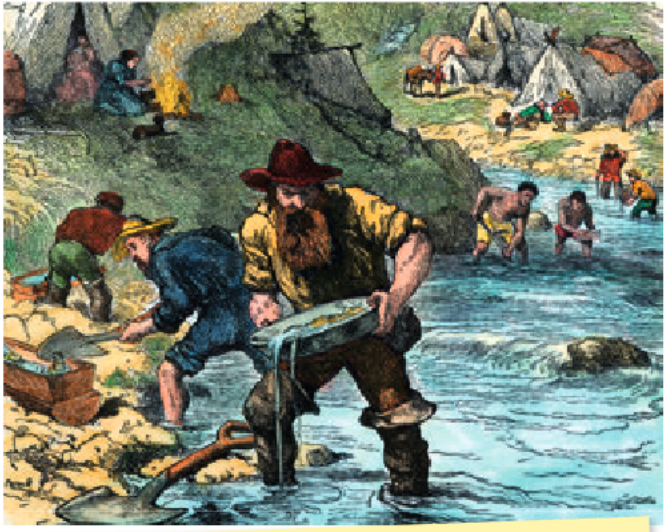
The scale of this migration was unprecedented. While only around 5,000 people had travelled west via the Oregon Trail between 1836 and 1846, the discovery of gold changed everything. From 1849 onwards, tens of thousands of people made the journey each year, hoping to find their fortune.
Note
Prospectors were people who searched for gold on the surface, particularly in streams and river beds. These gold-seekers transformed California from a sparsely populated territory into a bustling state with 300,000 residents by 1855.
Lawlessness in mining camps
One of the most significant consequences of the Gold Rush was the breakdown of law and order in mining communities. The rapid establishment of mining camps across California created numerous settlements with little to no formal authority or legal structure.
Important
Without established government systems or official law enforcement, these mining camps often became centres of disorder and conflict. People took the law into their own hands, leading to vigilante justice and violence.
The absence of proper courts, gaols, or legal procedures meant that disputes were frequently settled through force rather than fair legal processes. This created a dangerous environment where might often made right.
Tensions and violence
The diverse mix of people drawn to California by gold created additional challenges for maintaining peace. The mining camps brought together people from different backgrounds, ethnicities, and nationalities, often leading to discrimination and conflict.
Racist attacks became common, particularly targeting Indigenous Californians and Chinese migrants. The violence against Indigenous peoples was so severe that some historians describe it as genocide - the deliberate killing of large numbers of people based on their ethnicity.
Important
Chinese miners, who had come to California seeking opportunities during a famine in their homeland, also faced significant hostility and discrimination from white settlers. This ethnic tension further destabilised mining communities and highlighted the need for impartial law enforcement.
The development of organised law enforcement
The chaos and lawlessness experienced during the Gold Rush period demonstrated clearly that informal community policing was inadequate for frontier settlements. As California rapidly grew from territory to statehood, it became obvious that proper law enforcement systems were essential.
This experience of widespread disorder helped shape the development of official law enforcement roles in the American West during the 1860s and 1870s. The lessons learned from the Gold Rush period showed that frontier communities needed designated officials with clear authority to maintain order, investigate crimes, and enforce the law.
Example
The Gold Rush Legacy in Law Enforcement
The lawless mining camps of the Gold Rush served as a "laboratory" for understanding what worked and what didn't in frontier justice:
What Failed:
- Vigilante committees acting without legal authority
- Mob justice and lynchings
- Discrimination-based enforcement
What Was Needed:
- Official appointed or elected law enforcement officers
- Clear legal procedures and courts
- Impartial enforcement regardless of ethnicity or background
Sheriffs and marshals became crucial figures in bringing stability to western communities, drawing on the hard-learned lessons of what happened when law enforcement was absent or inadequate.
Summary
Key Points to Remember:
- The California Gold Rush of 1849 led to massive migration and the rapid growth of settlements with little law enforcement
- Mining camps became centres of lawlessness due to the absence of formal legal structures and authority
- Violence and discrimination between different groups highlighted the need for organised law enforcement
- The chaos of the Gold Rush period demonstrated that informal community policing was insufficient for frontier settlements
- These experiences shaped the later development of official law enforcement roles like sheriffs and marshals in the American West