Buffalo: hunting and extermination (Edexcel GCSE History): Revision Notes
📚Revision Notes
Buffalo: hunting and extermination
The importance of buffalo to Indigenous peoples
Buffalo were absolutely crucial to the survival of Indigenous peoples on the Great Plains. These massive herds provided everything needed for life - meat for food, hides for clothing and shelter, bones for tools, and even dried dung for fuel. The relationship between Plains Indians and buffalo had developed over centuries, creating a sustainable way of life that depended entirely on these animals.
Note
This relationship between Plains Indians and buffalo represented one of history's most successful examples of sustainable resource management, with hunting practices specifically designed to maintain healthy herd populations across generations.
In 1840, an estimated 13 million buffalo roamed across the Great Plains. This enormous population had sustained Indigenous communities for generations, with hunting practices that ensured the herds remained healthy and numerous. However, this ancient balance was about to be catastrophically disrupted.
The dramatic decline in buffalo numbers
Important
By 1895, only around 200 buffalo survived from the original 13 million - a staggering decline of over 99%. This near-extinction happened in just 55 years, representing one of the fastest wildlife destructions in recorded history.
The mathematical scale of this destruction is staggering:
The speed of this collapse shows just how intensive and systematic the killing became, transforming from sustainable Indigenous hunting to industrial-scale extermination.
Methods of buffalo extermination
Railroad construction and habitat destruction
The expansion of railroads across the Great Plains played a major role in buffalo destruction. Railroad companies needed to clear buffalo from their tracks and supply their construction workers with fresh meat.
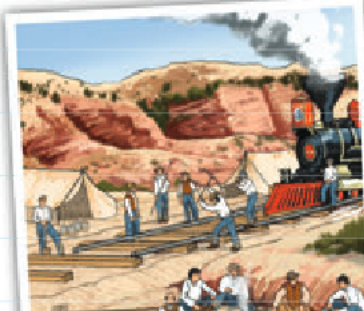
Railroad construction crews required constant food supplies, and buffalo provided an abundant source of fresh meat in the otherwise harsh frontier environment.
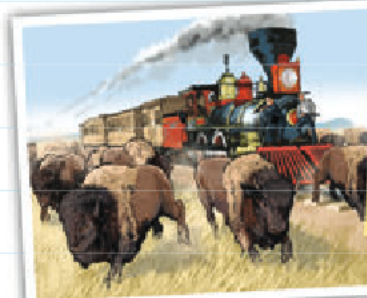
The railroads also divided the great buffalo herds, disrupting their traditional migration patterns. Buffalo habitat was further destroyed when settlers built towns, houses, and farms along railroad lines. Additionally, diseases spread by settlers' cattle and horses infected buffalo herds, causing further population decline.
Note
The railroad network created an almost impenetrable barrier across traditional buffalo migration routes, preventing herds from accessing seasonal grazing areas they had used for thousands of years.
Commercial hide hunting
The discovery in 1871 of a cheap and quick process for turning buffalo hide into high-quality leather transformed buffalo hunting into a highly profitable commercial enterprise. Before this breakthrough, white Americans had hunted buffalo mainly for their warm hides, which required long and skilful preparation. The new leather-making process meant that buffalo hides became extremely valuable, attracting professional hunters who could make substantial profits.
Example
Professional Hunter Example: "Buffalo Bill" Cody
William Cody, employed by the Kansas Pacific Railroad Company, demonstrates the scale of commercial hunting:
- Period: 1867-1868 (just 2 years)
- Buffalo killed: Approximately 4,280
- Average per day: Nearly 6 buffalo daily
- Purpose: Supply meat to railroad workers and clear tracks
Professional hunters like William Cody (known as "Buffalo Bill") were employed by railroad companies to supply meat to construction workers and clear buffalo from railway lines. Between 1867 and 1868 alone, Buffalo Bill claimed to have killed approximately 4,280 buffalo, earning him his famous nickname.
Sport hunting and tourism
Railroad companies organised special excursion trains that brought tourists from eastern cities onto the Great Plains specifically to hunt buffalo for sport. These hunting expeditions were marketed as exciting adventures, allowing wealthy tourists to experience the "Wild West" and take home buffalo trophies. Unlike Indigenous hunting practices or even commercial hunting for hides, sport hunting often involved killing buffalo simply for entertainment, with much of the carcase left to rot on the plains.
Important
Sport hunting was particularly wasteful - while Indigenous peoples used every part of the buffalo and commercial hunters valued the hides, sport hunters often killed buffalo purely for trophies, leaving the majority of each animal to decompose on the prairie.
Systematic destruction of grasslands
As white settlers established homesteads across the Plains, they destroyed the grasslands that buffalo depended upon for food. The settlers' cattle and horses competed with buffalo for grazing land, while farming operations converted prairie into agricultural fields. This habitat destruction made it impossible for buffalo herds to find adequate food sources.
Government policy and responsibility
The federal government actively encouraged buffalo extermination as part of its broader policy to control Plains Indians. Government officials and military leaders recognised that destroying the buffalo would force Indigenous peoples to abandon their traditional way of life and move onto reservations.
Early government policies had allowed tribes to leave reservations for hunting, but these permissions were banned in the late 1860s. This policy change was deliberately designed to encourage Indigenous peoples to adopt white American lifestyles and abandon their traditional buffalo-dependent culture.
Important
Government Complicity in Buffalo Destruction
Neither the federal government nor the army took any action to prevent or slow the buffalo extermination, despite understanding its devastating impact. Many officials viewed the destruction of buffalo herds as beneficial because it would reduce Indigenous resistance to westward expansion and reservation policies.
Crucially, neither the federal government nor the army took any action to prevent or slow the buffalo extermination, despite understanding its devastating impact. In fact, many officials viewed the destruction of buffalo herds as beneficial because it would reduce Indigenous resistance to westward expansion and reservation policies.
White Americans generally supported and enjoyed buffalo hunting, seeing it as both profitable and exciting. The wealth generated from buffalo hides provided significant economic incentives for continued hunting, while the government's encouragement gave moral justification for the slaughter.
Impact on Indigenous peoples
The extermination of buffalo meant the complete destruction of traditional Indigenous ways of life on the Great Plains. Without buffalo, Plains Indians could no longer maintain their nomadic lifestyle, traditional hunting practices, or cultural ceremonies centred around these animals.
This forced Indigenous peoples to become dependent on government food supplies and move onto reservations, where they faced poverty, disease, and cultural suppression. The buffalo extermination was therefore not just an environmental disaster, but a deliberate strategy of cultural genocide that succeeded in breaking Indigenous resistance and independence.
Important
Cultural Genocide Through Environmental Destruction
The buffalo extermination represents one of history's clearest examples of environmental destruction being used as a weapon of cultural genocide - deliberately destroying the natural foundation of a people's way of life to force their submission and assimilation.
Timeline of key events
- 1840: Approximately 13 million buffalo roam the Great Plains
- 1860s: Railroad construction begins dividing buffalo herds and disrupting migration patterns
- Late 1860s: Government bans tribal hunting expeditions off reservations
- 1867-1868: Buffalo Bill kills over 4,000 buffalo while working for Kansas Pacific Railroad Company
- 1871: New process discovered for cheaply converting buffalo hide to leather, making commercial hunting highly profitable
- 1870s-1880s: Intensive commercial hunting and sport hunting expeditions reach their peak
- 1895: Only around 200 buffalo survive from original population of 13 million
Remember!
Summary
Key Points to Remember:
-
Buffalo were essential to Plains Indian survival - providing food, clothing, shelter, and tools for centuries before white settlement
-
The population collapse was staggering - from 13 million buffalo in 1840 to just 200 by 1895, a 99% decline in 55 years
-
Railroad expansion drove systematic extermination - through habitat destruction, commercial hunting for construction crews, and organised tourist hunting expeditions
-
Government policy deliberately encouraged buffalo destruction - as a strategy to force Indigenous peoples onto reservations and break their traditional way of life
-
The extermination was both environmental and cultural genocide - destroying not just a species but an entire way of life that had sustained Plains Indians for generations